

Archive · 27 Dec 2025
Pune Observatory Decodes Skies Since 1856
Every morning at 4:30 am, scientists in Pune release a special balloon into the sky.
This balloon carries tools that measure wind, temperature, and other weather conditions.
The information helps experts understand the weather better and make more accurate predictions.
The observatory, which has been working since 1856, is very old and important.
It even helps the Indian Air Force during wars or natural disasters.
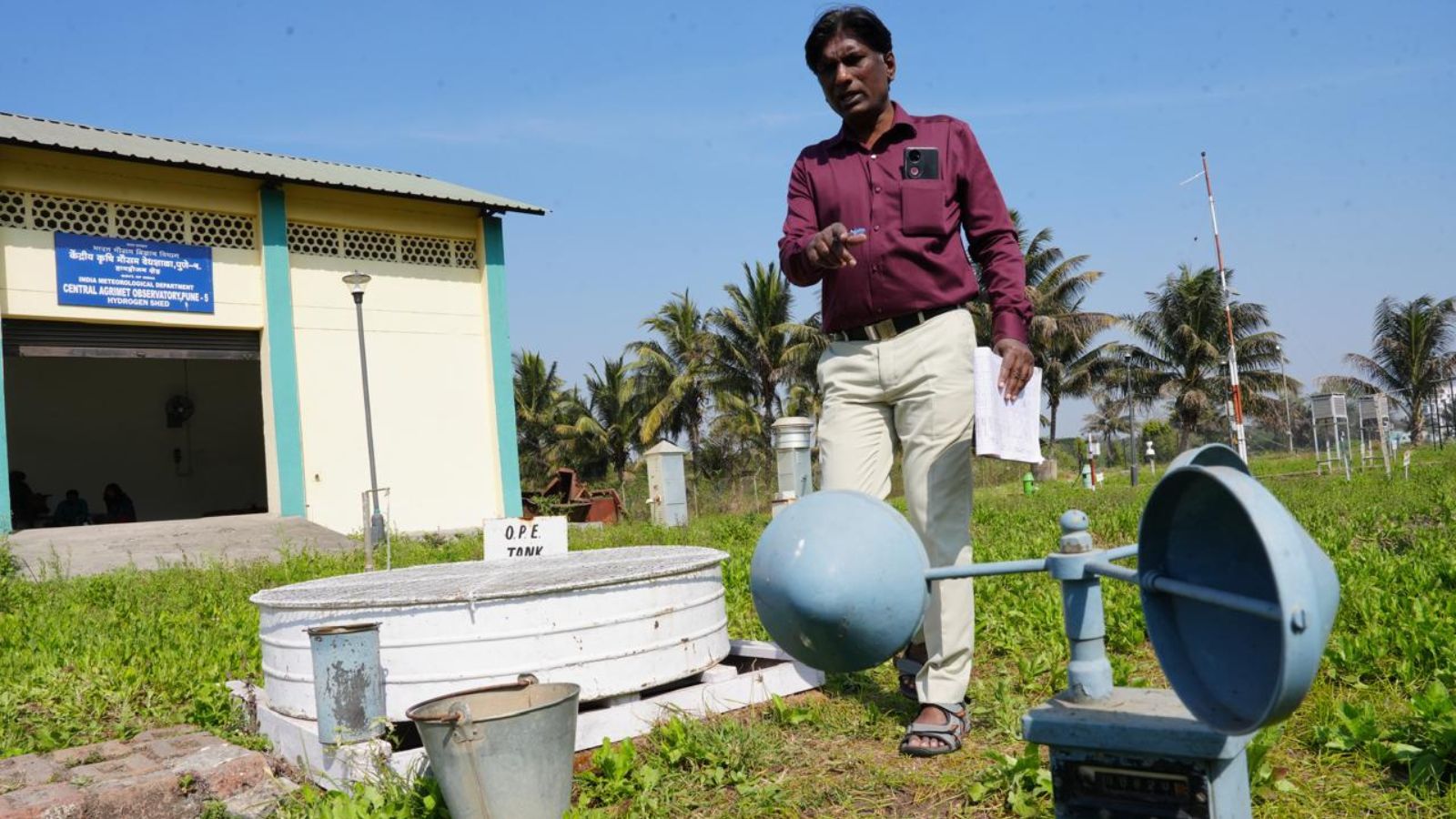
Scientists use many different tools to study the weather, and they record data every three hours.
Some tools are very old, like the one that uses sunlight to measure how cloudy the sky is.
New digital tools are also being used, but people still play a big role in studying the weather.

CAgMO releases hydrogen-filled balloons daily at 4:30 am to measure upper-air conditions.
The observatory has been operational since 1856 and is recognized by the World Meteorological Organisation.
Critical weather data is recorded every three hours, with key readings at 8:30 am and 5:30 pm.
CAgMO provides essential weather information to the Indian Air Force during conflicts and natural disasters.
The observatory uses both traditional and modern instruments to study weather patterns.
- Who
- Central Agro-meteorological Observatory (CAgMO) in Pune
- What
- Daily balloon launches and weather monitoring
- When
- Daily at 4:30 am and continuous monitoring
- Where
- Agriculture College campus, Shivajinagar, Pune
- Why
- To improve weather forecasting accuracy and provide critical data for various purposes
- Location
- Agriculture College campus, Shivajinagar, Pune
- Established
- 1856
- Balloon Weight
- 350 grams
- Hydrogen Weight
- 500 grams
- Balloon Altitude
- 25-30 km
- Critical Readings
- 8:30 am and 5:30 pm
- WMO Status
- Centennial observatory