

Archive · 15 Nov 2025
India's Demographic Shift: From Population Growth to Falling Fertility
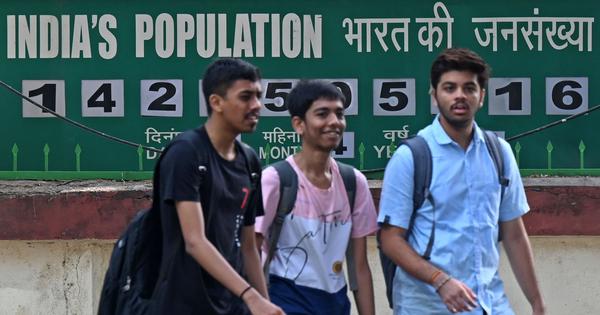
India is no longer just about having a lot of people; it's also changing how it grows.
For a long time, India's population was growing fast, but now it's slowing down.
This is because women are having fewer babies, even fewer than needed to keep the population the same.
Because fewer babies are being born, the number of young people is going down, and soon there will be more older people than children.
India used to have a chance to get a big economic boost because it had so many people of working age, but that chance is closing.
People in India are living longer and healthier lives, but as the population gets older, more people will pass away each year.
These changes are happening differently in different parts of India, with richer areas aging faster than poorer ones.

India has become the world's most populous nation, but its population growth rate is slowing significantly.
The Total Fertility Rate (TFR) has fallen below the replacement level of 2.1, indicating a future population decline.
India's child population is decreasing, and the 'demographic dividend' window, characterized by a large working-age population, is closing.
The country is undergoing an epidemiological transition, with a shift from communicable diseases to non-communicable diseases as leading causes of death.
Despite increased life expectancy, overall mortality rates are projected to rise as India's population ages, with regional disparities between states.
- Who
- India
- What
- Experiencing a significant demographic shift with slowing population growth, declining fertility rates below replacement level, a shrinking child population, a closing demographic window for economic growth, an epidemiological transition, and rising overall mortality rates as the population ages.
- When
- The article discusses recent trends and projections for the coming decades, highlighting milestones achieved in the early 2020s and future outlooks up to 2100.
- Where
- India, with specific mentions of differences between its southern/western states and northern/eastern states.
- Why
- Slowing population growth and declining fertility are attributed to increasing wealth, improved access to healthcare and education for women, and global trends. The rising mortality is linked to an aging population, while the epidemiological transition reflects improvements in communicable disease control and a rise in non-communicable diseases.
- World Population Rank
- 1 (surpassed China in early 2020s)
- Projected Peak Population
- 1.7 billion in early 2060s
- Annual Population Growth Rate (2020)
- Below 1%
- Total Fertility Rate (TFR)
- 1.9 (below replacement level of 2.1)
- Child Population (% under 14)
- Halved from 40% in early 1960s to 20% by 2025
- Working-Age Population Share (15-64)
- Peaking in next 2-3 years
- Projected Dependency Ratio (2026)
- 543 per 1,000 working-age individuals