

Archive · 17 Nov 2025
China's Chang'e-6 Mission Discovers Iron Oxide Crystals on Moon
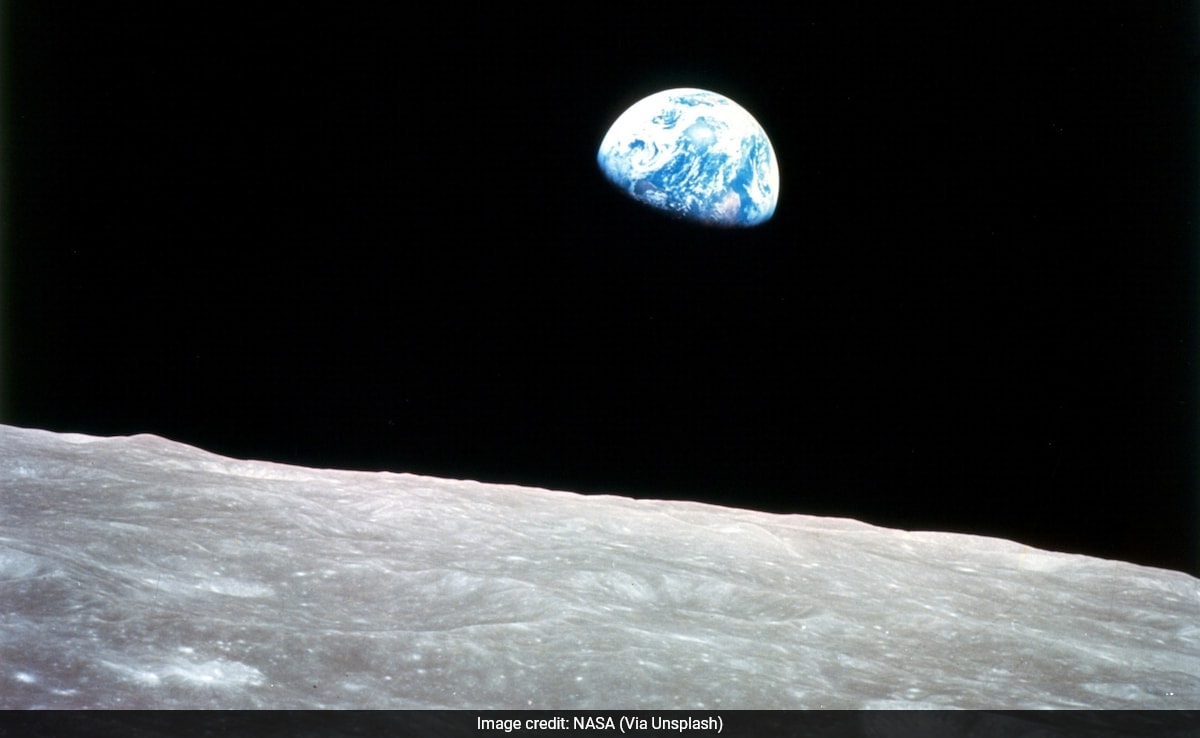
Scientists in China found tiny red crystals, called Iron oxide, on the Moon.
They brought these back using the Chang'e-6 spaceship.
This is a big surprise because scientists thought the Moon's air made it impossible for these kinds of crystals to form.
The crystals were found in a very old and large dent on the Moon called the SPA Basin.
The discovery suggests that giant crashes on the Moon might have made a special kind of atmosphere that allowed these crystals to grow.
This new knowledge helps us understand the Moon's history better and why some parts of it have strange magnetic fields.

Chinese researchers found tiny Iron oxide crystals (hematite and maghemite) in lunar soil for the first time.
The discovery was made using samples from the Chang'e-6 mission, returned in 2024.
These findings challenge previous assumptions about the Moon's reducing atmosphere preventing oxidizing mineral formation.
The crystals were located in the South Pole-Aitken (SPA) Basin, a massive ancient impact zone.
Researchers suggest that large impacts may have created temporary oxygen-rich conditions for Iron oxide formation.
- Who
- Chinese researchers from institutions including Shandong University and the Chinese Academy of Sciences
- What
- Discovered tiny Iron oxide crystals (hematite and maghemite) in lunar soil
- When
- Samples returned in 2024, with findings published recently.
- Where
- In samples from the South Pole-Aitken (SPA) Basin on the Moon
- Why
- To understand the Moon's chemical composition, evolution, its response to impacts, and magnetic anomalies.
Previous Beliefs
New Findings
Presence of Iron Oxide
Previous Beliefs
The Moon's atmosphere was believed to be too reducing for oxidizing minerals like Iron oxide to form.
New Findings
Tiny Iron oxide crystals (hematite and maghemite) have been found, providing direct evidence of their presence on the lunar surface.
Formation Mechanism
Previous Beliefs
Beliefs did not fully account for the formation of oxidizing minerals on the Moon.
New Findings
Massive impacts may create temporary, highly oxygenated atmospheres where Iron oxide can form through vapour-phase deposition.
- Discovery
- Tiny Iron oxide crystals (hematite and maghemite)
- Source of Samples
- Lunar soil from the Chang'e-6 mission
- Location of Samples
- South Pole-Aitken (SPA) Basin
- Publication
- Science Advances
- Key Observation
- Hematite may have been formed by massive impacts on the Moon.
- Potential Explanation
- Magnetic properties of minerals may explain magnetic anomalies around the SPA Basin.