

Archive · 26 Jul 2026
India's Hydrogen Train Completes 1,200 km, Saves 3,200 Litres of Diesel
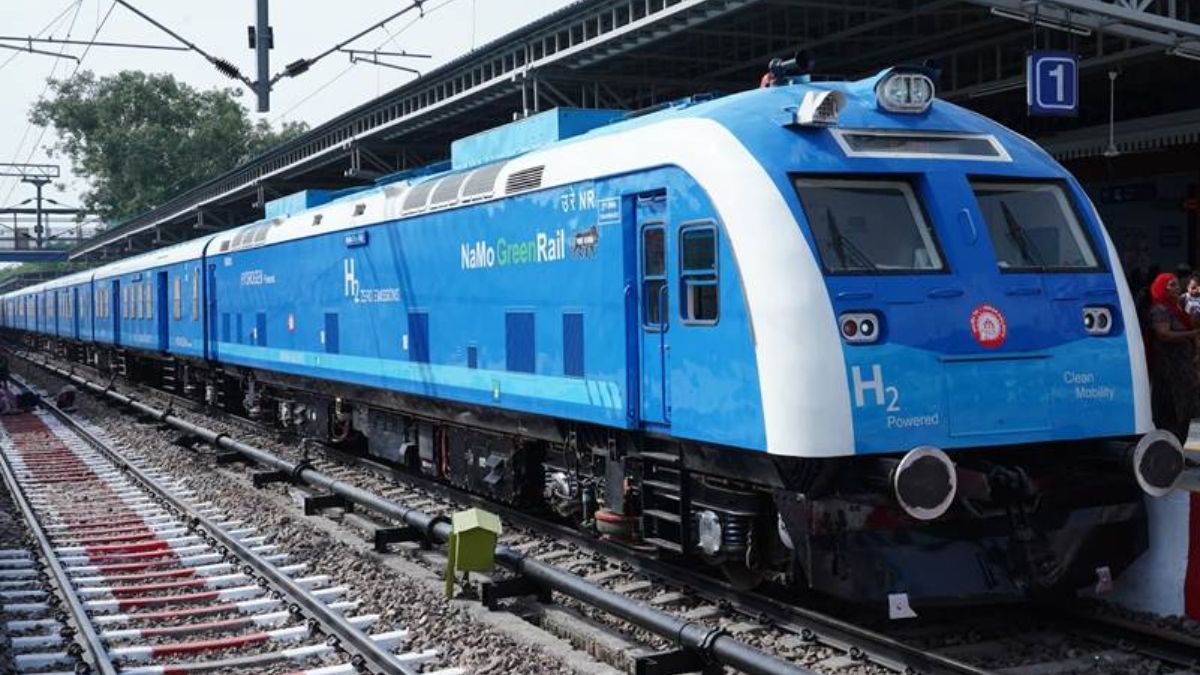
India has successfully tested its first hydrogen train, which traveled over 1,200 kilometres and saved more than 3,200 litres of diesel.
This train is special because it only emits water vapour, making it very clean for the environment.
It uses hydrogen to generate electricity and has advanced safety features.
The technology is completely developed in India, and the country has kept the rights to it.
This train is a big step towards using cleaner energy in transportation and could help India become a leader in this area.
However, there are still challenges related to the cost and environmental impact of producing and storing hydrogen.

India's first hydrogen train completed a 1,200 km journey, saving 3,200 litres of diesel.
The train emits only water vapour, making it a zero-emission, smoke-free option.
It generates electricity through a chemical reaction between hydrogen and oxygen.
The train has advanced safety features and is supported by lithium iron phosphate batteries.
India retains the intellectual property rights for this indigenous technology.
- Who
- Indian Railways
- What
- Successfully tested India's first hydrogen train
- When
- Recently (specific date not mentioned)
- Where
- Between Jind and Sonipat, with upcoming trials in Delhi
- Why
- To promote sustainable, zero-emission rail mobility and demonstrate India's commitment to clean transportation
Environmental Benefits
Technological and Economic Challenges
Environmental Impact
Environmental Benefits
The hydrogen train emits only water vapour, making it a clean and sustainable option for rail transportation.
Technological and Economic Challenges
The production and storage of hydrogen can still have environmental impacts, and the long-term sustainability of the technology needs further evaluation.
Economic Viability
Environmental Benefits
The train saves significant amounts of diesel, reducing operational costs and dependence on fossil fuels.
Technological and Economic Challenges
The initial investment and infrastructure required for hydrogen trains are high, which could be a barrier to widespread adoption.
- Distance Traveled
- 1,200 kilometres
- Diesel Saved
- 3,200 litres
- Power Output
- 2,400 kW
- Hydrogen Storage
- 3,000 kg
- Safety Features
- Multiple independent safety systems, automatic shut-off, continuous ventilation
- Intellectual Property
- Retained by India
Sources

India's first hydrogen train clocks 1,200 km, saves 3,200 litres of diesel

India's first hydrogen train clocks 1,200 km, saves 3,200 litres of diesel

India's first hydrogen train clocks 1,200 km, saves 3,200 litres of diesel