

Archive · 19 May 2025
Crickets Evolve to Evade Parasitic Fly in Hawaii
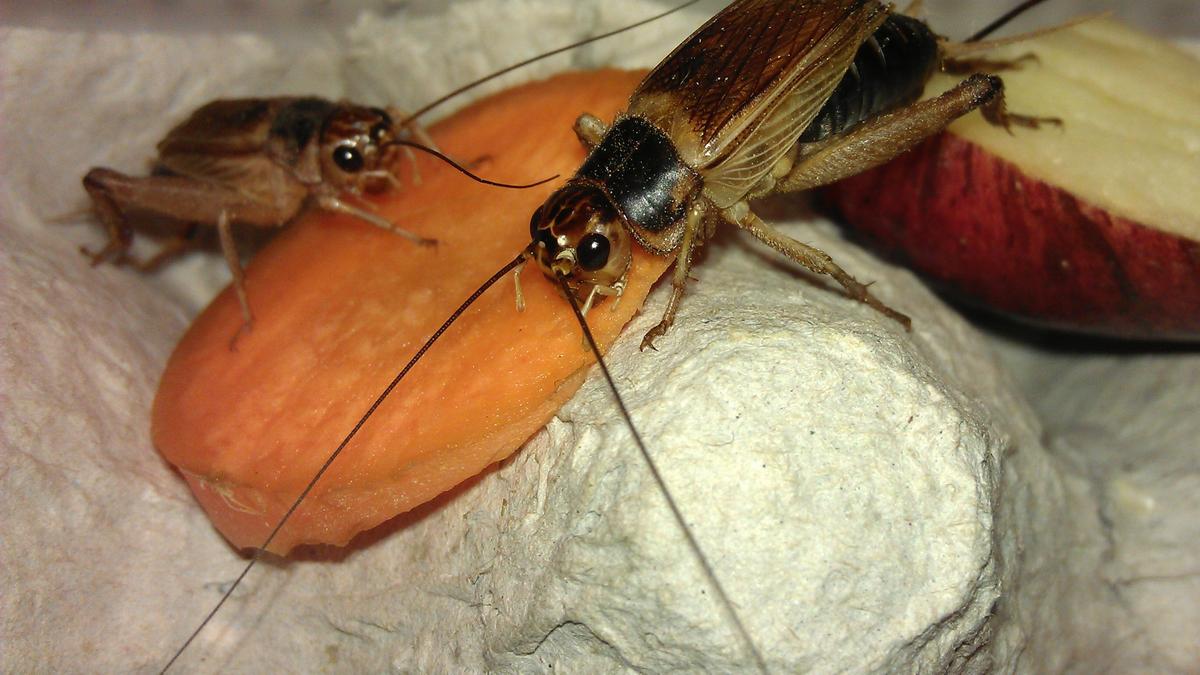
Imagine tiny crickets on Hawaii who sing to find a girlfriend.
But, a sneaky fly comes and lays eggs inside them!
To avoid this, the crickets started changing their songs.
Some went completely silent, others added new sounds like purrs.
The flies are also changing, they can now hear a wider range of cricket sounds to keep up.
It's like a fast game of hide-and-seek where both players are constantly changing how they play.
This shows how species can quickly adapt to survive changing conditions.

Pacific field crickets on the Hawaiian islands are evolving to avoid an invasive parasitoid fly.
The flies, called Ormia ochracea, hunt the crickets by homing in on their mating songs.
Some crickets have gone silent while others changed their songs to include purrs and rattles.
The flies have broadened their hearing range to track the changes in the cricket songs.
Evolution is happening rapidly in response to the changing environment.
- Who
- Pacific field crickets (Teleogryllus oceanicus) and the parasitoid fly called Ormia ochracea
- What
- Pacific field crickets are evolving their songs to avoid parasitic flies.
- When
- About 30 years ago
- Where
- Hawaiian islands
- Why
- To avoid being hunted by an invasive parasitoid fly.
Crickets
Flies
Evolutionary change in crickets
Crickets
The crickets have gone silent or changed their songs to avoid parasitic flies.
Flies
The crickets are making additional subdued purrs and rattles to avoid being hunted.
Evolutionary change in flies
Crickets
The flies are evolving to keep up with the crickets.
Flies
The flies have become more responsive to a broad range of sounds that might allow them to track a variety of changes in cricket song.
- Species
- Pacific field crickets
- Location
- Hawaii
- Threat
- Invasive parasitoid fly called Ormia ochracea
- Timeline
- 30 years ago
- Song Changes
- Frequency and amplitude
- Fly Hearing Range
- 6 to 20 kHz