Archive · 28 Oct 2025
India's Consumption Unlikely to Surge Despite Rising Gold Prices
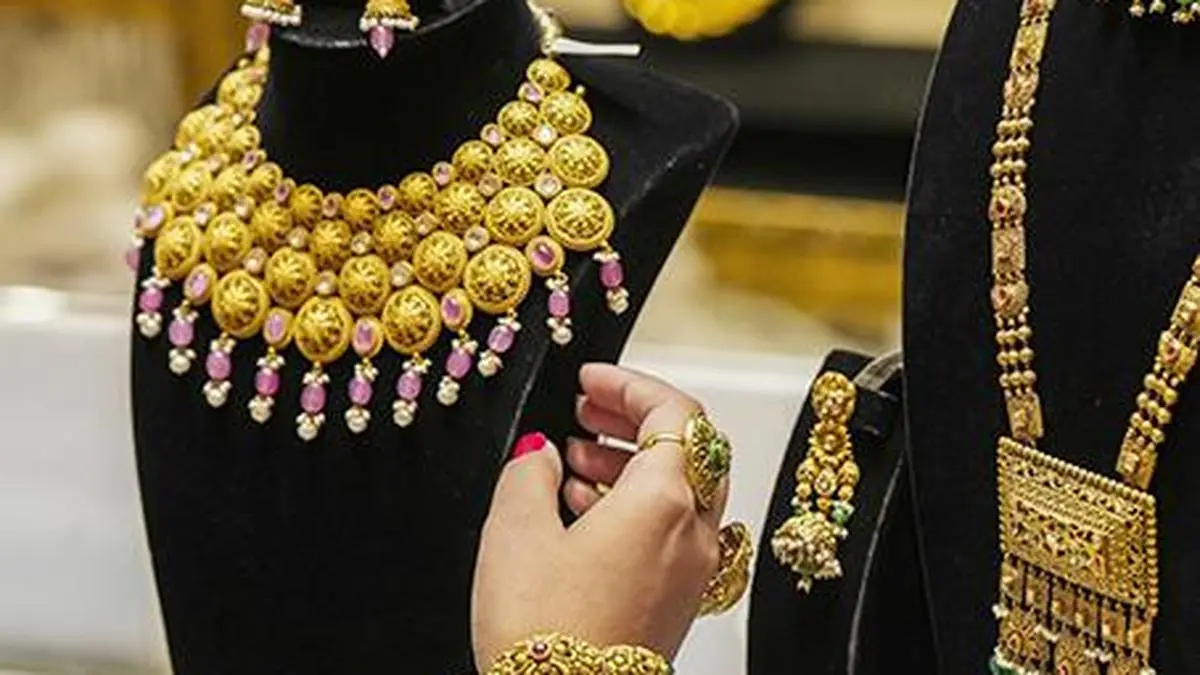
Imagine many families in India own gold, and its price has gone up a lot.
This makes their gold worth much more, like finding extra money in a piggy bank.
People might think this extra 'paper' money will make them spend more on things they want.
However, historical data shows this isn't usually true.
What really makes people spend more is when their actual income, the money they earn from work, goes up.
Even though gold is more valuable now, spending hasn't really increased much.
Sometimes, when gold prices rise, people might even borrow against their gold, which often means they are facing financial difficulties.
So, while gold is worth more, it's unlikely to make everyone go out and buy lots of new things.

Indian households collectively own 24,000 tonnes of gold, increasing their net worth significantly with rising prices.
Historical data since 2004 shows no consistent positive correlation between rising gold prices and aggregate consumption.
Consumption is predominantly driven by real income growth, which has decelerated in recent years.
Rising gold prices enable increased gold loans, which often reflect underlying household income distress rather than robust spending.
The wealth effect from gold price surges has a minimal impact on consumption compared to real income growth.
- Who
- Analysis of the potential impact of rising gold prices on Indian household consumption
- What
- Examination of whether increased household net worth and gold-backed loans due to surging gold prices can stimulate consumer spending.
- When
- Analysis covers historical data from 2004 to present, with specific phases noted as 2004-2012, 2012-2018, and since 2019.
- Where
- India
- Why
- To understand the relationship between gold price trends and aggregate consumption, particularly in light of subdued demand and income conditions.
Rising Gold Prices Boost Consumption
Rising Gold Prices Do Not Boost Consumption
Wealth Effect
Rising Gold Prices Boost Consumption
The increase in household net worth due to higher gold prices is expected to trigger a turnaround for India's consumption trajectory.
Rising Gold Prices Do Not Boost Consumption
The net-worth effect from rising gold prices has minimal impact on consumption; the wealth increase is largely notional unless gold is sold, which often occurs due to distress.
Gold Loans
Rising Gold Prices Boost Consumption
Elevated gold prices provide robust value for collateral against retail loans, serving as a channel to influence consumption demand.
Rising Gold Prices Do Not Boost Consumption
While higher gold prices may increase the quantum of gold loans, this typically reflects underlying household distress rather than a driver of robust consumer spending.
Historical Correlation
Rising Gold Prices Boost Consumption
During Phase 1 (2004-2012), surging gold prices coincided with rising consumption and income growth.
Rising Gold Prices Do Not Boost Consumption
Across three distinct phases since 2004, no significant positive correlation emerges between rising gold prices and aggregate consumption. In Phases 2 and 3, gold consumption consistently declined despite price movements, linked to lagging household income.
- Indian Household Gold Ownership
- 24,000 tonnes
- Gold's Share of World Gold Reserves (Jewellery)
- 11%
- Net Worth Increase (if gold prices doubled)
- ₹3.24 trillion
- Real Income Growth (FY24)
- 3.8%
- Household Savings Rate (National GNDI)
- 17.9%
- Financial Savings Rate (National GNDI)
- 5.1%
- Savings in Physical Gold (National GNDI)
- 0.2%