

Archive · 14 Sep 2026
India Bridges Iran-UAE Divide to Secure BRICS Declaration
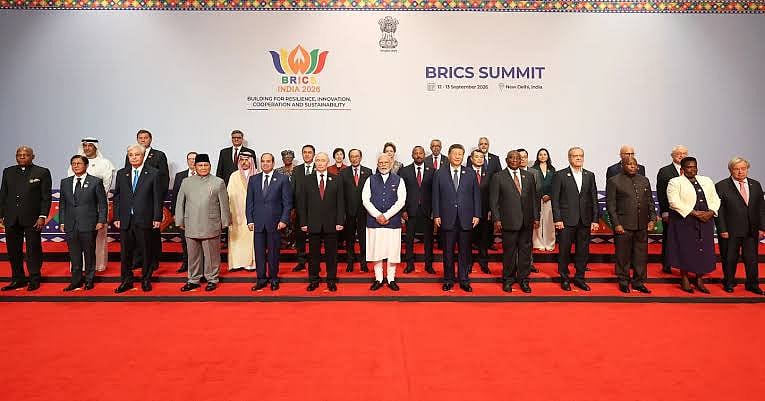
India was leading an important BRICS meeting.
The countries needed to agree on one shared statement.
Iran and the United Arab Emirates disagreed about how to describe recent attacks and conflicts.
The UAE wanted Iran named, while Iran wanted the United States and Israel mentioned.
Indian officials worked between the two countries to find wording both could accept.
They used ideas from an earlier Shanghai Cooperation Organisation statement.
The final document did not name the United States and included language about Israel withdrawing from Lebanon.
Officials said the long, 45-page document required negotiations until the last minute.

India secured a BRICS joint declaration on the summit’s first day after behind-the-scenes negotiations.
The United Arab Emirates wanted Iran named over attacks on Gulf territory, while Iran sought mention of United States-Israeli attacks.
Indian diplomats used draft alternatives and language drawn partly from the Shanghai Cooperation Organisation statement.
The final declaration avoided naming the United States and called for Israel to withdraw from Lebanon.
Officials said negotiations continued until the last minute on the 45-page declaration.
- Who
- India, Iran, the United Arab Emirates, and other BRICS members were involved, with Indian officials leading negotiations.
- What
- India secured agreement on a joint BRICS declaration despite disagreements between Iran and the United Arab Emirates.
- When
- The declaration was secured on the first day of the BRICS Summit, on Saturday; officials said drafting continued until the last minute.
- Where
- The negotiations took place around the BRICS Summit, with Indian officials shuttling between Iran and the United Arab Emirates.
- Why
- India sought language that addressed members’ concerns while protecting its own interests and preserving agreement on the declaration.
Iran’s Position
United Arab Emirates’ Position
How the conflict should be described
Iran’s Position
Iran wanted the declaration to mention United States-Israeli attacks.
United Arab Emirates’ Position
The United Arab Emirates wanted Iran named over attacks on Gulf territory.
Diplomatic compromise
Iran’s Position
Iran accepted wording that did not directly name the United States, while seeking language addressing Israel and regional conflict.
United Arab Emirates’ Position
The UAE accepted a formulation that avoided directly naming Iran, allowing the joint declaration to proceed.
- Document
- BRICS joint declaration
- Length
- 45 pages
- Key disagreement
- The UAE wanted Iran named over attacks on Gulf territory; Iran wanted United States-Israeli attacks mentioned.
- Drafting model
- The Shanghai Cooperation Organisation statement in Bishkek helped provide a structure.
- Final language
- The United States was not named, and Israel was asked to withdraw from Lebanon.
- India’s role
- As BRICS chair, India worked to reconcile members’ positions.
- Drafting process
- Officials said 90% to 95% of draft text is usually agreed before the foreign-ministerial level.