Archive · 18 Jul 2026
Argentina's Falklands Banner Sparks Debate

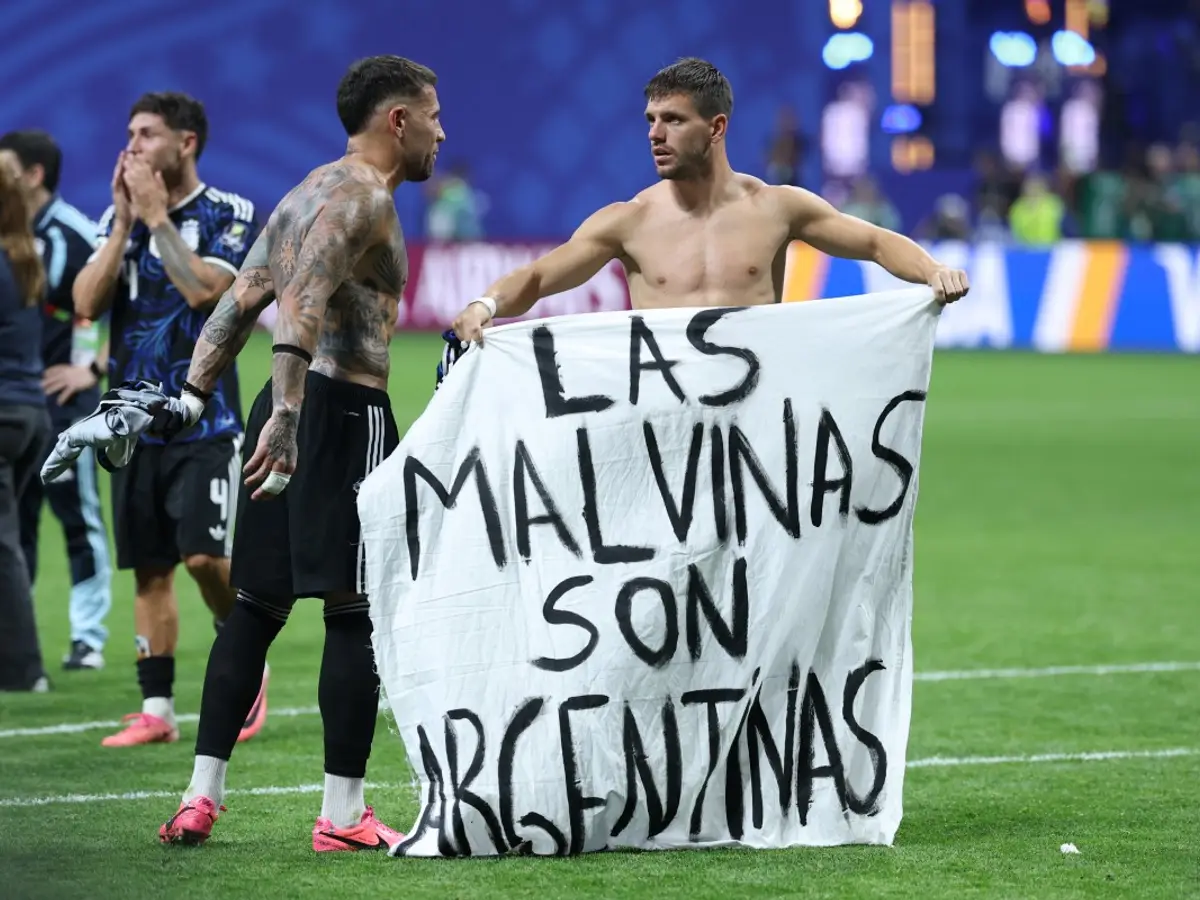
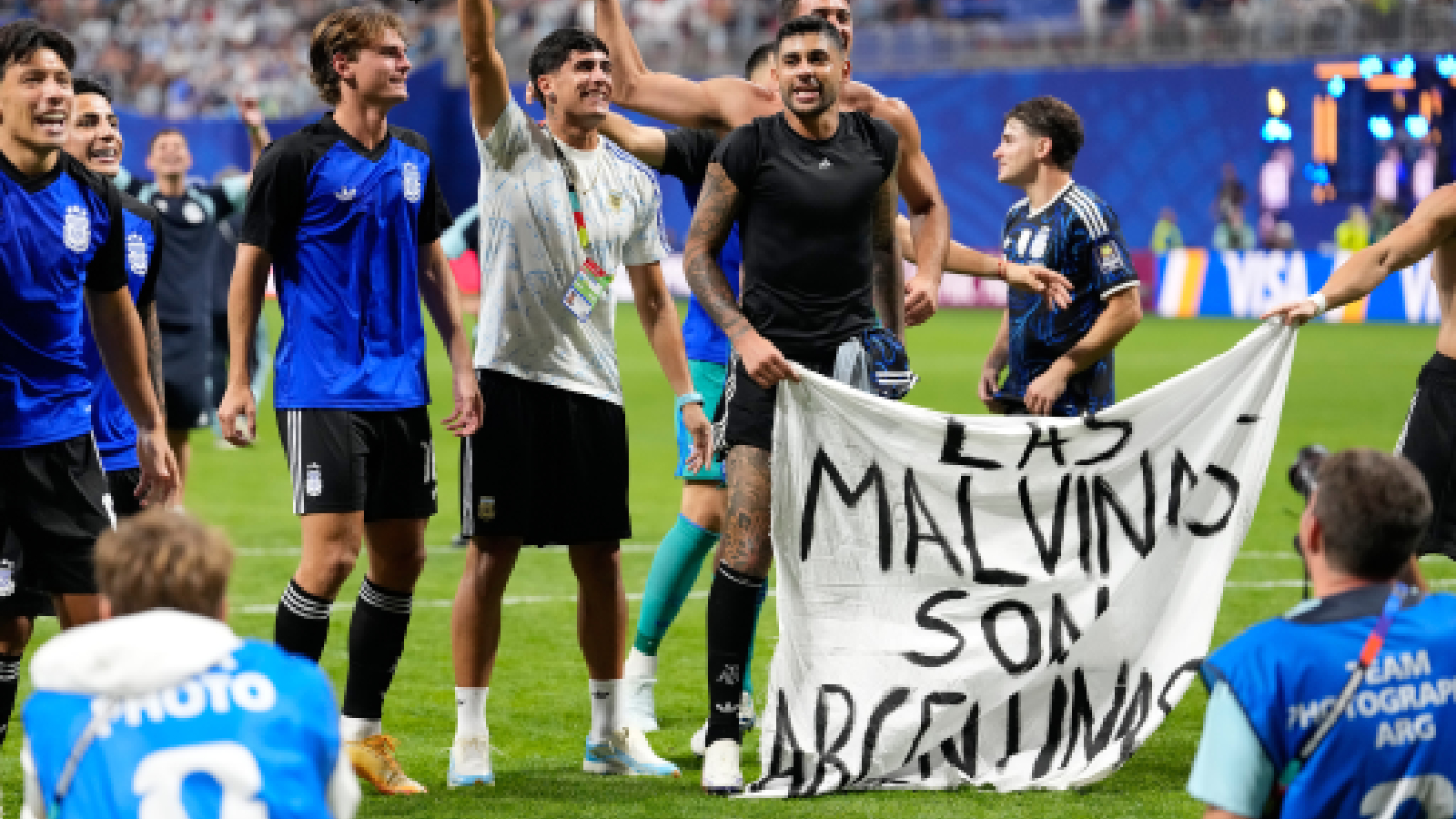
Argentina's football team showed a banner saying 'The Falklands are Argentine' after their World Cup win.
The White House said they have the right to free speech.
The UK government said it was against the rules and asked FIFA to investigate.
Argentina's president said it was okay but sports and politics should be separate.
There was a war over the Falklands in 1982, and both countries still argue over who owns the islands.
Argentina also complained about a British ship near the islands.

Argentina's FIFA team displayed a banner supporting their territorial claim to the Falklands after their World Cup semifinal win.
The White House defended the team's right to free speech under the First Amendment.
The British government called the banner display a violation of FIFA rules and asked for an investigation.
Argentina's President Javier Milei called the banner display 'perfectly valid and legitimate' but urged separating politics from sports.
Argentina faces potential disciplinary action from FIFA for breaching rules on political statements.
- Who
- Argentina's FIFA team, White House, British government, Argentina's President Javier Milei
- What
- Controversy over displaying a banner supporting Argentina's territorial claim to the Falklands
- When
- After Argentina's World Cup semifinal victory over England on July 15, 2026
- Where
- Atlanta, USA, and the Falkland Islands
- Why
- To assert Argentina's territorial claim to the Falklands, leading to a debate on free speech and political statements in sports
Argentina's Perspective
UK's Perspective
Banner Display
Argentina's Perspective
Argentina asserts its territorial claim to the Falklands, viewing the banner as a legitimate expression of national pride and historical grievance.
UK's Perspective
The UK sees the banner as a violation of FIFA rules and a political statement that should not be part of sports events.
Free Speech
Argentina's Perspective
Argentina and its supporters, including the White House, argue that the banner is a form of free speech protected under the First Amendment.
UK's Perspective
The UK government emphasizes that FIFA rules prohibit political statements during sporting events, prioritizing the apolitical nature of sports.
Historical Context
Argentina's Perspective
Argentina highlights the historical context of the 1982 war and ongoing territorial dispute, seeing the banner as a reminder of their claim.
UK's Perspective
The UK focuses on the current status of the Falklands as a British Overseas Territory, rejecting Argentina's claim and emphasizing the islands' self-determination.
- Banner Message
- Las Malvinas son Argentinas (The Falklands are Argentine)
- UK Response
- Called for FIFA investigation, deemed it a violation of rules
- Argentina's Stance
- President Milei called it 'perfectly valid and legitimate'
- Potential Consequences
- FIFA disciplinary action for breaching political statement rules
- Historical Context
- 1982 war over Falklands, 649 Argentines and 255 Britons died
- White House Statement
- Defended Argentina's right to free speech under the First Amendment
- White House Spokesperson
- Andrew Giuliani, Executive Director of the World Cup Task Force