Archive · 3 Jan 2026
Galaxy Frogs Presumed Dead from Photo Tourism

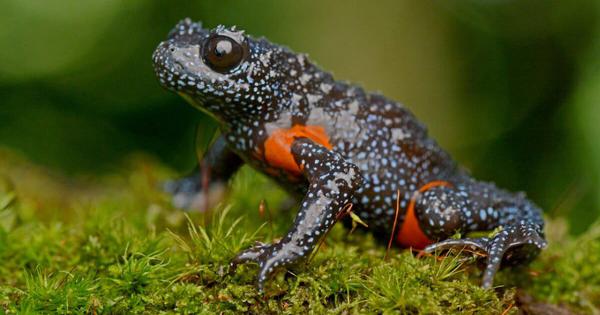
Galaxy frogs are tiny, beautiful frogs that live under logs in the Western Ghats of India.
They are very rare and hard to find.
Recently, seven of these frogs disappeared and are presumed dead.
This happened because many photographers came to take pictures of them.
The photographers moved logs, handled the frogs, and used bright camera flashes, which disturbed the frogs' home and possibly harmed them.
Scientists say we need rules to protect these frogs and other wildlife from such disturbances.
They suggest that photographers should not touch or move animals and should use gentle lights to take pictures.
Some experts even say it's best to leave rare animals like galaxy frogs alone to keep them safe.
Amphibians are important because they help us understand the health of our environment.
They are disappearing because of habitat loss, disease, and climate change.
Scientists are working to protect them by creating special ponds and breeding them in zoos.

Seven galaxy frogs are presumed dead due to disturbances caused by photographers in their habitat.
Photographers moved logs, handled frogs, and used high-powered camera flashes, altering the frogs' microhabitat.
The study suggests establishing ethical standards for nature and conservation photography to reduce negative impacts on wildlife.
Galaxy frogs require precise ecological conditions to survive and are vulnerable to extinction.
Experts recommend leaving rare species like galaxy frogs alone to prevent disturbances that could harm them.
- Who
- Galaxy frogs (Melanobatrachus indicus), researchers, photographers
- What
- Presumed death of seven galaxy frogs due to photo tourism
- When
- Between June 2020 and May 2022
- Where
- Forest patch in the Western Ghats, Kerala, India
- Why
- Disturbance and behavioural changes caused by photographers
- Species
- Galaxy frogs (Melanobatrachus indicus)
- Habitat
- Under rotten logs in Kerala’s Western Ghats
- Size
- 2 cm to 3.5 cm
- Discovery Year
- 1878
- Conservation Status
- Vulnerable to extinction (IUCN)
- Study Publication Date
- December 17, 2025
- Study Journal
- Herpetology Notes
- Study Authors
- K P Rajkumar, Benjamin Tapley, Jyoti Das, Sandeep Das, P S Easa