

Archive · 16 Sep 2025
Volcanic Ash Layers Refine Human Evolution Timeline in East Africa
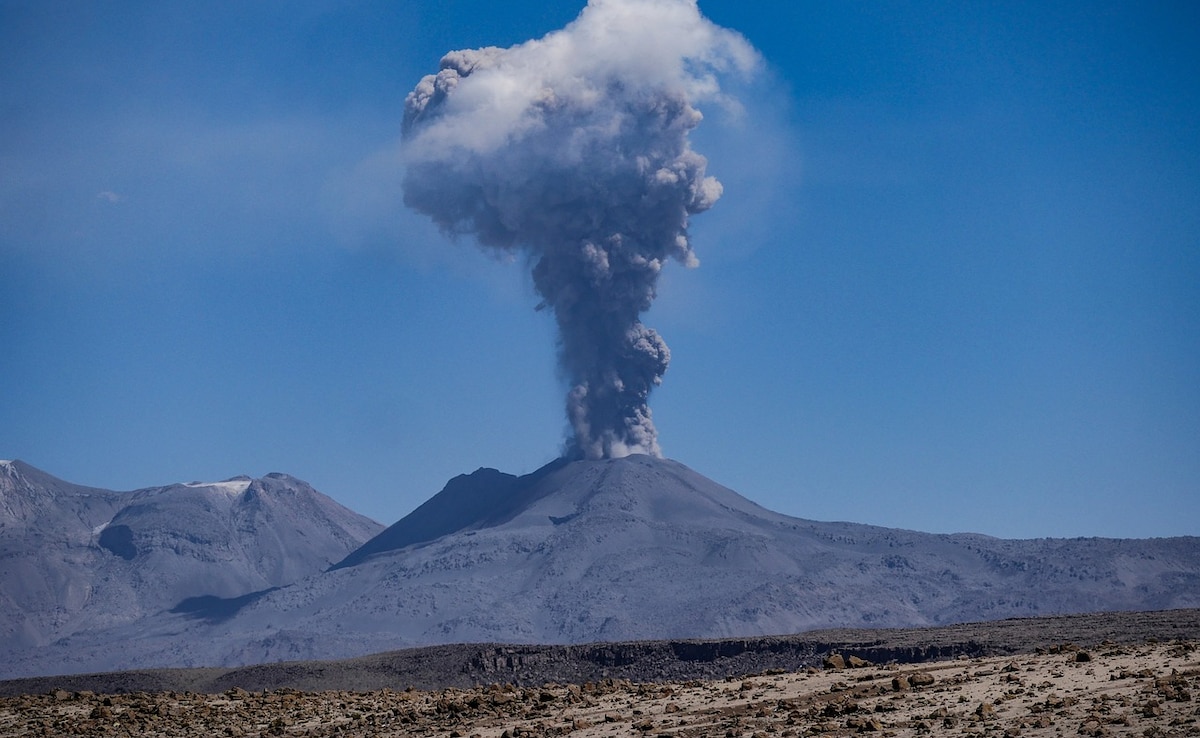
Imagine early humans walking around and volcanoes erupting, leaving behind ash.
This ash is like a time stamp!
Scientists study these ash layers, which trap fossils, to understand when our ancestors lived.
By precisely dating the ash, they can figure out the age of the fossils.
New methods using special tools help scientists to tell ash layers apart, even if they look similar.
This helps determine how old tools and fossil sites are, providing key answers about how humans evolved, like how new tool technologies and species emerged.

Researchers refined the timeline of human evolution by studying volcanic ash layers.
The study focused on the Turkana Basin in Kenya and the Konso Formation in Ethiopia.
Volcanic ash layers act as geological time stamps for fossils.
Advanced techniques were used to precisely date and analyze the ash layers.
The findings provide a better understanding of when early humans lived and the environment they lived in.
- Who
- Researchers studying early human evolution.
- What
- Refined the dating of volcanic ash layers to improve the timeline of human evolution.
- When
- Ongoing, with specific studies mentioned concerning the Nariokotome tuffs.
- Where
- Turkana Basin in Kenya and Konso Formation in Ethiopia.
- Why
- To understand when, where, and in what environmental conditions early humans lived.
- Study Focus
- Refining the timeline of human evolution using volcanic ash layers.
- Location
- Turkana Basin, Kenya and Konso Formation, Ethiopia
- Key Tool
- Laser-based mass spectrometry for trace element analysis.
- Fossil Site
- Nadung'a site (prehistoric butchering site)
- Findings
- Refined age estimates for volcanic ash layers, including the Nariokotome tuffs.