3 weeks ago
Judge Warns Trump Attorney General of Contempt Over Epstein Files
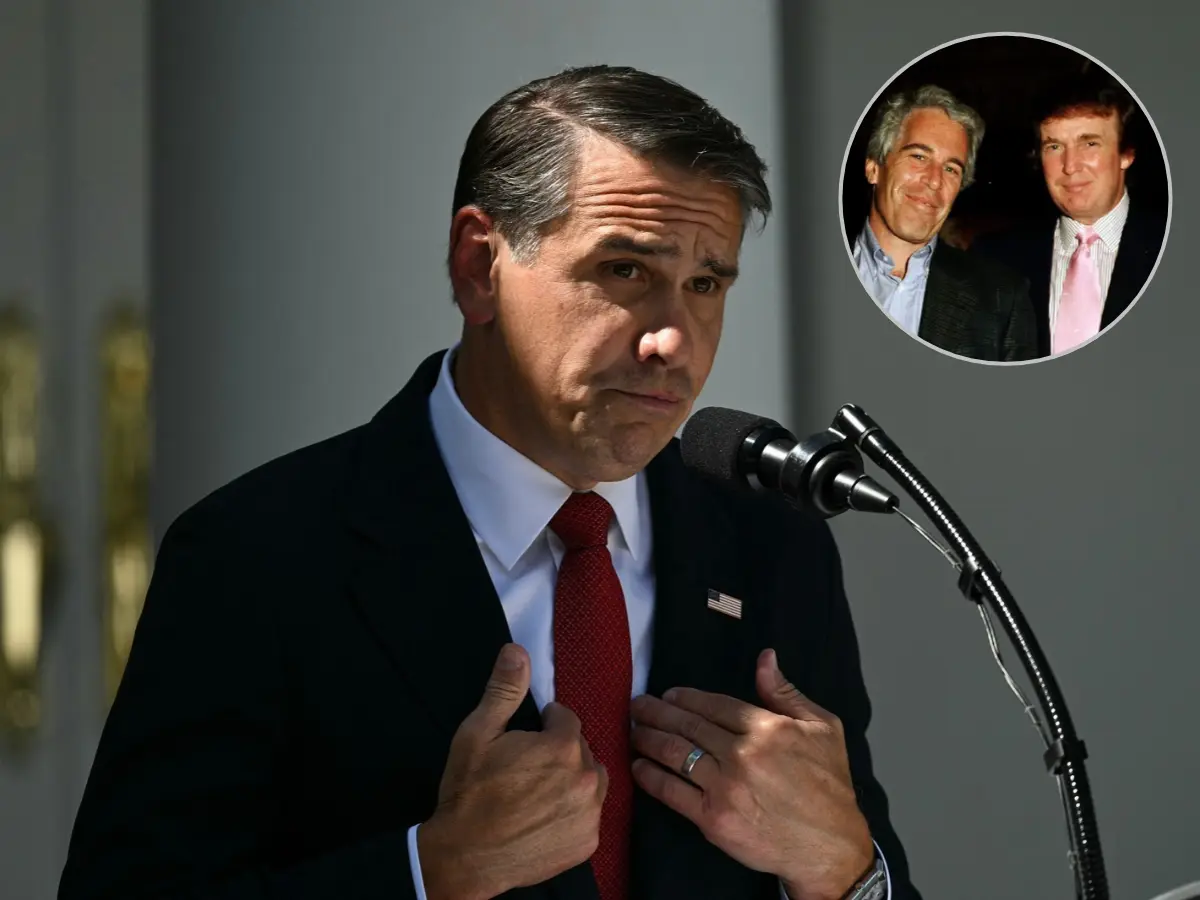
A judge is checking whether the Justice Department followed orders about releasing Jeffrey Epstein-related records.
The judge warned Attorney General Todd Blanche that the department could be punished for not following those orders.
This punishment is called civil contempt.
The judge said it is too early to impose that punishment now.
He agreed that some information should be hidden to protect survivors.
However, he said the department did not properly explain some other redactions.
He also disagreed with withholding handwritten FBI notes just because similar typed reports had been released.
The Justice Department says it followed the law and is trying to protect victims' identities.

US District Judge Emmet Sullivan warned Attorney General Todd Blanche that the DOJ could face civil contempt proceedings over delays involving Epstein-related files.
Sullivan said contempt would be premature now but could become appropriate if the Justice Department fails to follow renewed court directives.
The judge accepted some redactions protecting survivors' privacy but found the DOJ's explanations inadequate for others and ordered private review of additional material.
Sullivan rejected the DOJ's justification for withholding handwritten FBI interview notes and for not reviewing records written in foreign languages.
The Justice Department said its redactions comply with the law and accused the lawsuit of seeking to expose victims' identities.
- Who
- US District Judge Emmet Sullivan, Attorney General Todd Blanche, the Justice Department, and journalist Katie Phang are central to the dispute.
- What
- A federal court is reviewing whether the Justice Department complied with orders concerning the release, review, and redaction of Epstein-related files.
- Where
- In federal court in the United States.
- When
- Wednesday, September 16; the year is not specified in the article.
- Why
- Katie Phang's lawsuit alleges that the Justice Department has not fully complied with the Epstein Files Transparency Act and related court orders.
Court and lawsuit
Justice Department
Compliance with court orders
Court and lawsuit
Judge Sullivan warned that contempt could become appropriate if the DOJ does not comply with renewed directives, while Katie Phang alleges incomplete compliance.
Justice Department
The DOJ maintains that its filings and review process support its handling of the records.
Redactions
Court and lawsuit
Sullivan found that some redactions were insufficiently justified and ordered more material for private review.
Justice Department
The DOJ says its redactions comply with the law and are necessary to protect victims' identities.
Withheld records
Court and lawsuit
Sullivan rejected withholding handwritten FBI notes because similar typed reports had been released and rejected the explanation for not reviewing foreign-language material.
Justice Department
The DOJ argued that substantially similar documents could be withheld and that first-level reviewers could not practically assess foreign-language material.
Key facts
- Judge
- US District Judge Emmet Sullivan
- Attorney general
- Todd Blanche
- Case trigger
- A lawsuit filed by independent journalist Katie Phang
- Potential consequence
- Civil contempt proceedings against the Justice Department
- Records at issue
- Jeffrey Epstein-related files, redactions, handwritten FBI interview notes, and foreign-language material
- Judge's order
- Additional material must be submitted for private in camera review
- DOJ position
- The department says its redactions comply with the law and protect victims' identities
Quotes
DOJ spokesperson
Spokesperson for the US Department of Justice
“Courts have the inherent power to enforce compliance with their lawful orders through civil contempt”
 wionews.com
“Our filings will speak for themselves.”
wionews.com
Sources
Related news

Trump DOJ Says It Won’t Regulate Artificial Intelligence

Justice Department Told to Use ‘Super Intelligence’ Instead of AI

Alec Baldwin’s Civil Rights Lawsuit Over Rust Prosecution Dismissed

Trump Considers Jay Clayton for White House AI Czar

FBI Director Patel Defends Crime Record Amid Senate Scrutiny