

Archive · 23 Aug 2026
Blue Flag Beach Push Displaces Communities and Violates Coastal Rules
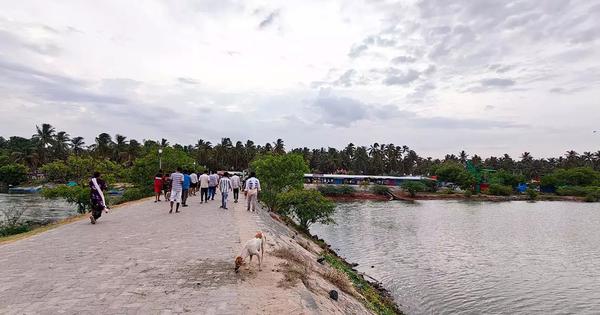
India is improving some beaches so they can receive a Blue Flag environmental certificate.
The projects add facilities such as pathways, toilets, parking areas and waste-management systems.
In some places, building these facilities has damaged dunes, wetlands and other sensitive coastal areas.
At Eden Beach, officials removed many small food stalls run by local people.
The stall owners said the beach was their main source of income.
Some beaches also began charging visitors, which changed how nearby residents used them.
Officials and Blue Flag organizers say the goal is to protect beaches and support tourism.
Critics say the projects should give local fishing and trading communities a much bigger role.

Eden Beach authorities evicted roughly 50 local stalls as part of Blue Flag compliance efforts.
Residents and experts say beach infrastructure projects have damaged dunes, wetlands and coastal ecosystems.
Padubidri development included reclamation for parking and facilities that extended into the Kamini river and intertidal area.
Entry fees and restricted access have reduced community use of beaches and affected fishing, recreation and livelihoods.
Government representatives say Blue Flag is an environmental standard, while critics argue its implementation favors commercial operators over local communities.
- Who
- The Indian government, coastal authorities, beach managers, local communities, fishing groups, stall owners and environmental experts are involved.
- What
- Blue Flag beach development and certification projects have led to infrastructure construction, stall evictions, access restrictions and alleged coastal-regulation violations.
- When
- The projects began developing selected beaches from 2018; the Eden Beach stall eviction occurred in February 2026, and a coastal-authority directive was issued there in March 2026.
- Where
- The report examined Eden Beach in Puducherry, Kappad Beach in Kerala and Padubidri Beach in Karnataka.
- Why
- The projects aim to meet Blue Flag criteria, improve environmental management and safety, and promote tourism and local economies.
Community and Environmental Critics
Government and Blue Flag Advocates
Environmental impact
Community and Environmental Critics
Residents and experts say construction has violated coastal rules, damaged sand dunes and intertidal areas, and disrupted natural erosion and sediment cycles.
Government and Blue Flag Advocates
Government programs describe the projects as efforts to protect and conserve coastal and marine ecosystems through improved management.
Local livelihoods and access
Community and Environmental Critics
Fishing communities and stall owners say they have lost access to common spaces, income and traditional activities, while entry fees and commercial tenders favor larger businesses.
Government and Blue Flag Advocates
Officials and project managers say the facilities support tourism, generate revenue for maintenance and provide employment, including for cleaning staff and lifeguards.
Infrastructure model
Community and Environmental Critics
Critics argue that vague regulatory exemptions allow permanent or damaging structures to be approved after construction and that local communities have too little say.
Government and Blue Flag Advocates
The National Operator of Blue Flag India says Blue Flag is a standard rather than an infrastructure project and that newer beach developments are intended to be simpler and less infrastructure-heavy.
- Blue Flag criteria
- The certification is based on 33 criteria covering environmental education, water quality, beach management and safety.
- Indian beach selection
- The Union government selected 13 beaches in 2019 for facility and infrastructure development linked to certification.
- Eden certification
- Eden Beach received Blue Flag certification in 2021.
- Coastal regulation
- The 2019 Coastal Zone Regulation notification permits certain temporary tourism facilities at least 10 metres from the High Tide Line, subject to planning requirements.
- Padubidri development
- Satellite imagery and reporting indicated reclamation of part of the Kamini river for a parking lot and other facilities.
- Eden stalls
- An inspection listed 43 food stalls as violations and recommended relocating them.
- Kappad entry fee
- A proposed Rs 50 entry fee was reduced to Rs 25 for the general public and Rs 10 for residents of Chemanchery Panchayat after protests.
- Coastal funding
- The projects were initially supported through a World Bank-backed Integrated Coastal Zone Management project, which ended in 2020.