

Archive · 10 Nov 2025
Wars Fueling Antibiotic-Resistant Bacteria Spread, Global Health Threat Grows
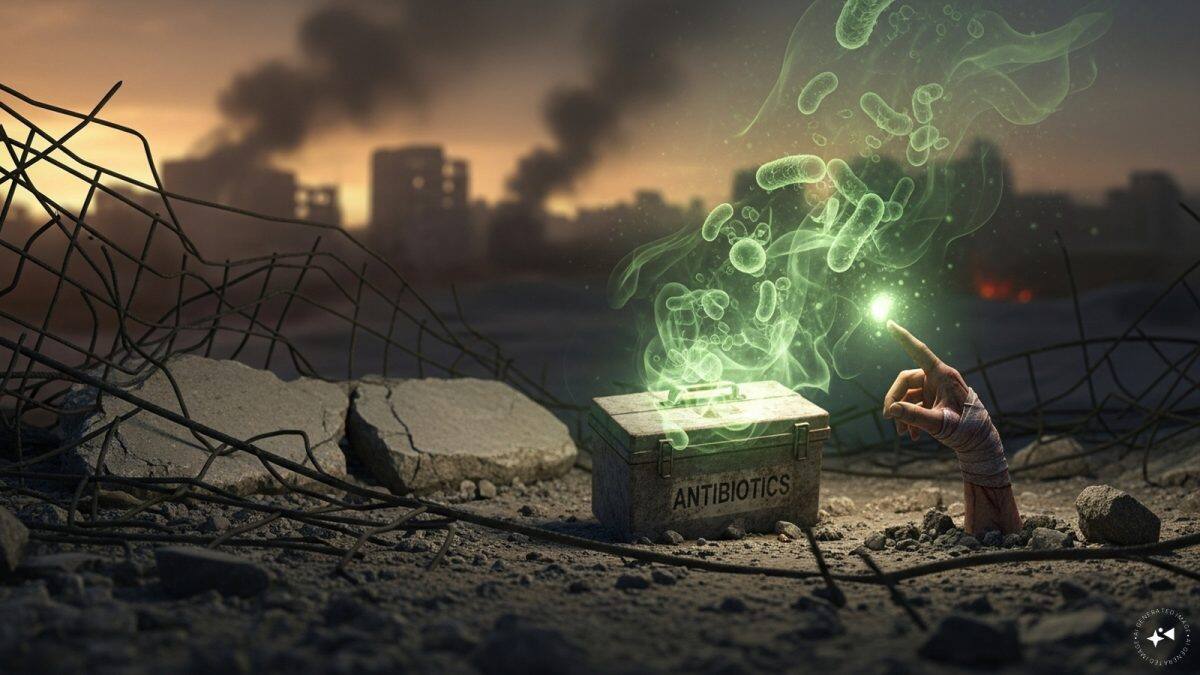
Imagine that when we get sick, doctors give us special medicines called antibiotics to kill tiny germs.
But sometimes, the germs learn how to hide from the medicine.
This is called antibiotic resistance.
Wars in places like Ukraine, Gaza, and Syria make it much easier for these super-germs to grow and spread.
This is because hospitals and clean water systems are broken, and many soldiers get hurt, creating open wounds where germs can grow.
Doctors have to use their strongest medicines, which can make the germs even stronger.
This is a big problem because if we can't fight infections, even a small cut could become very dangerous.
Experts are worried that if we don't find new ways to fight these super-germs, many more people could get sick and die in the future, even when there is no war.
It's like a race to find new medicines before the germs get too strong for us to beat.

Wars in Ukraine, Gaza, and Syria are accelerating the spread of antibiotic-resistant bacteria.
Damaged health infrastructure, medicine shortages, and combat wounds create ideal conditions for resistant microbes.
Infections like multidrug-resistant Klebsiella pneumoniae and Acinetobacter baumannii are surging in conflict zones.
Antimicrobial resistance (AMR) is a growing global threat, with millions of deaths linked to it annually.
Experts warn that without urgent action and new antibiotic innovation, drug-resistant infections could claim millions more lives by 2050.
- Who
- Bacteria, specifically multidrug-resistant strains like Klebsiella pneumoniae and Acinetobacter baumannii, and global health authorities.
- What
- A significant increase in antibiotic-resistant bacteria due to conditions in war zones, posing a growing global health threat.
- When
- Currently, with projections indicating worsening trends by 2050.
- Where
- Primarily in conflict zones like Ukraine, Gaza, and Syria, but with implications for global health.
- Why
- Warfare damages health infrastructure, leads to medicine shortages, and creates contaminated wounds, fostering the growth and spread of resistant bacteria.
- Areas of Conflict
- Ukraine, Gaza, Syria
- Key Bacteria
- Klebsiella pneumoniae, Acinetobacter baumannii
- Consequences
- Tenfold rise in lethal infections, increased AMR
- Contributing Factors
- Damaged infrastructure, medicine shortages, contaminated wounds
- Projected Deaths by 2050 (if trends continue)
- 169 million from drug-resistant infections
- Current Annual Deaths from AMR
- Nearly 5 million