

Archive · 5 Nov 2025
Meet the Secretary Bird: The Snake-Stomping Predator of Africa
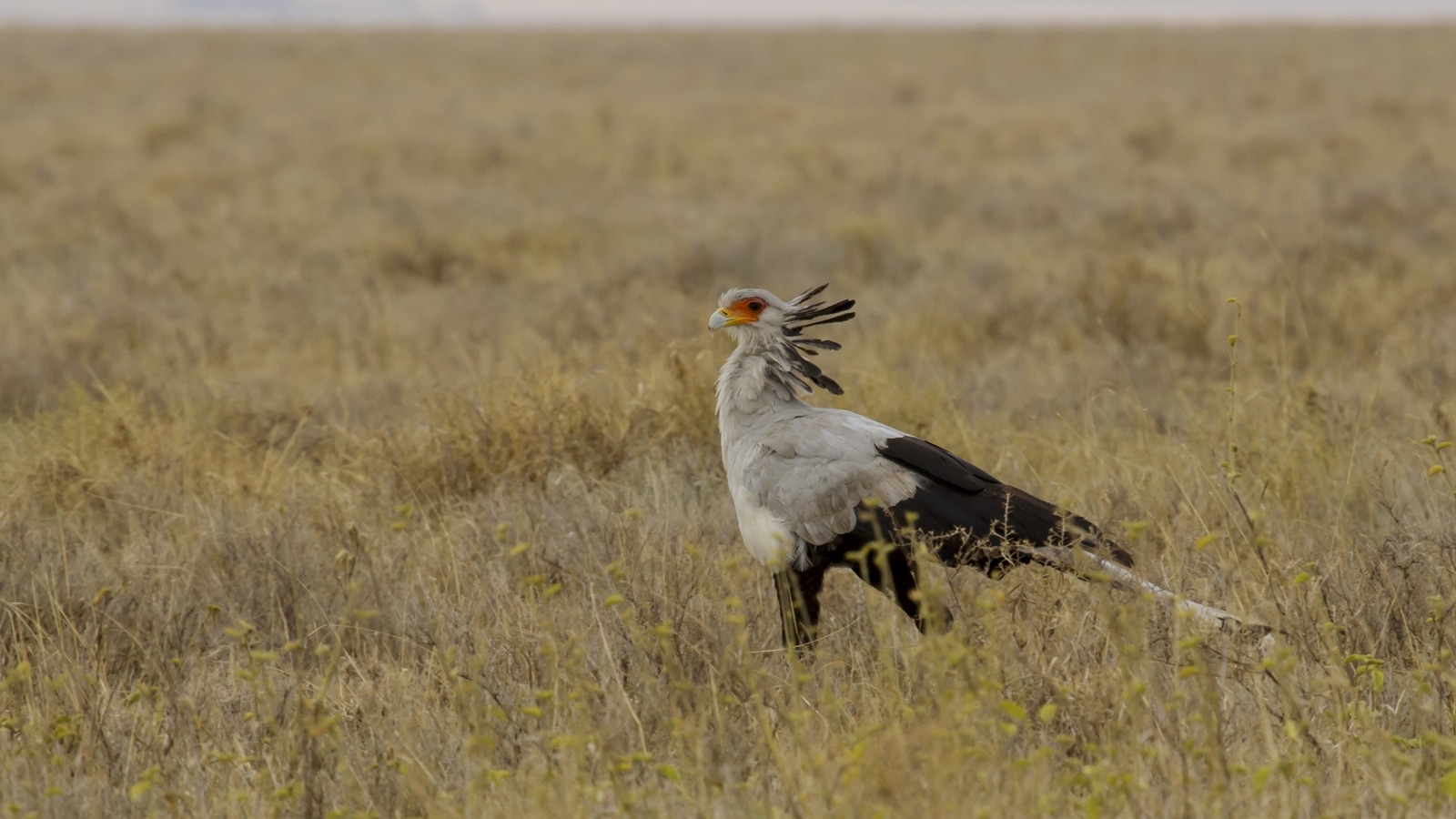
Imagine a bird with super long legs and a fancy feather crown that walks around on the ground instead of flying all the time.
This bird is called a secretary bird, and it's like a super-fast karate expert for snakes!
When it finds a snake, it doesn't grab it with its talons like other birds of prey.
Instead, it uses its long legs to stomp on the snake really hard and fast, sometimes with the force of its whole body weight!
Its legs are tough so the snake can't bite it.
While they are famous for eating snakes, they eat other small animals too.
Sadly, these amazing birds are in trouble because their homes are disappearing, and they are now endangered.

Secretary birds, found in sub-Saharan Africa, hunt by stomping prey, primarily snakes, with powerful kicks.
These tall birds have long, scaled legs that protect them from bites and deliver strikes with up to five times their body weight in force.
While known for killing snakes, their diet also includes insects, rodents, lizards, frogs, and other small animals.
They inhabit open grasslands and savannas, hunting on foot and using their wings for distraction.
Secretary birds are listed as Endangered due to habitat loss from agriculture and urban development.
- Who
- Secretary birds
- What
- Hunt and kill prey, especially snakes, by stomping on them with powerful kicks.
- When
- The hunting process occurs during the day on open plains.
- Where
- Sub-Saharan Africa, specifically in grasslands and savannas.
- Why
- They have evolved unique adaptations for this hunting style, including long, scaled legs and the ability to deliver fast, powerful strikes to subdue prey.
- Scientific Name
- Sagittarius serpentarius
- Habitat
- Grasslands and savannas of sub-Saharan Africa
- Hunting Method
- Stomps prey, particularly snakes, with powerful kicks
- Diet
- Insects, rodents, lizards, frogs, small birds, snakes, mongooses, young hares
- Conservation Status
- Endangered (IUCN Red List)
- Incubation Period
- 2-3 months for young to fledge