Archive · 2 Aug 2025
Deep Sea Discovery: Alien-Like Ecosystem Found in Darkness
Imagine a hidden world, far, far down in the ocean, much deeper than where the Titanic sank!
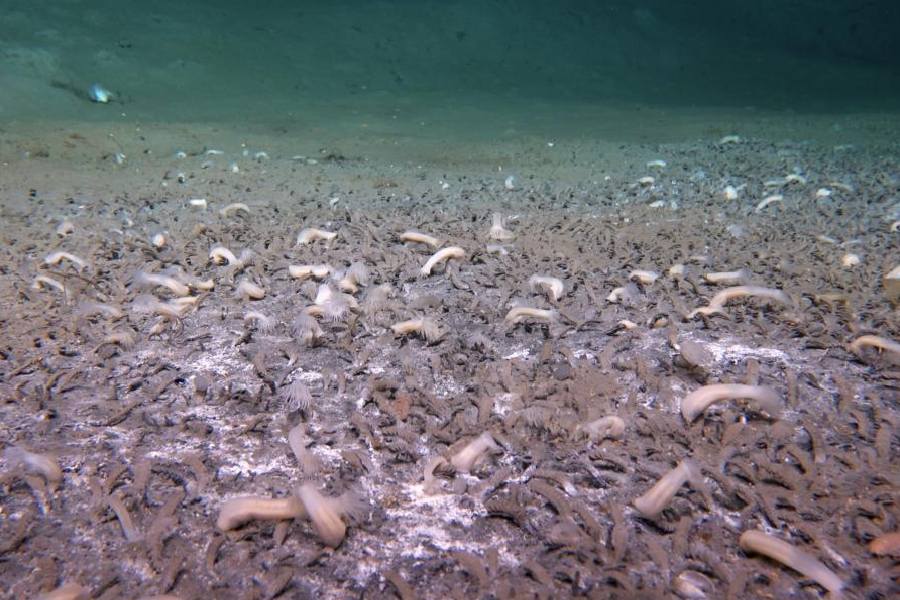
Scientists found living creatures like tube worms and snails there.
Because sunlight can't reach, these creatures use a special trick called chemosynthesis.
They get energy from chemicals like methane and hydrogen sulfide.
It shows life can live in tough places, in complete darkness.
Scientists now wonder where else such life might be, maybe even in space!

Scientists discovered a chemosynthetic ecosystem in the northwest Pacific Ocean at 31,000 feet.
This ecosystem, deeper than the Titanic wreckage, thrives in complete darkness.
Life forms utilize chemosynthesis, converting methane and hydrogen sulfide into organic matter.
The discovery includes tube worms and marine snails thriving on chemical energy.
This finding proves life can survive in extreme conditions, possibly extending beyond Earth.
- Who
- Scientists from the Chinese Academy of Sciences.
- What
- Discovery of a chemosynthetic ecosystem in the deep ocean.
- When
- Recently, as the discovery was published in the journal Nature.
- Where
- Northwest Pacific Ocean, at a depth of 31,000 feet.
- Why
- To understand how life thrives in extreme environments.
Conventional Understanding
New Discovery
Energy Source
Conventional Understanding
Life requires sunlight for photosynthesis.
New Discovery
Life can thrive using chemosynthesis in darkness.
- Depth of Discovery
- 31,000 feet
- Location
- Northwest Pacific Ocean
- Energy Source
- Chemosynthesis (methane, hydrogen sulfide)
- Creatures Found
- Tube worms, marine snails
- Research Team
- Chinese Academy of Sciences
- Method of Exploration
- Submersible Fendouzhe
- Publication
- Nature