

Archive · 29 Jun 2025
The Evolution of Fighter Jets: A Generational Overview
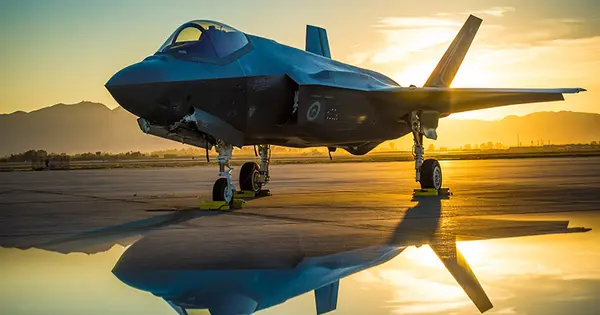
Imagine airplanes that fight in the sky.
They started out simple, like the ones in old movies, using jet engines instead of propellers.
Over time, they got faster and could shoot missiles.
Newer ones have special computers and can work together with other planes.
Some are even designed to be invisible to radar, like super-secret agents!
These modern jets can do many different jobs in the air, helping keep us safe.

Fighter jet technology has evolved significantly over eight decades.
Early jets (1940s-1950s) were simple, with piston engines replaced by jet propulsion.
Subsequent generations saw advances in speed, radar, and missile technology.
Later generations incorporated digital systems, network-centric warfare, and stealth.
Fifth-generation jets focus on stealth, advanced sensors, and network warfare.
- Who
- Not explicitly mentioned.
- What
- Evolution of fighter jet technology over multiple generations.
- When
- From the 1940s to present day.
- Where
- Not explicitly mentioned.
- Why
- To understand how fighter jets have adapted to changing warfare demands.
- First Generation
- 1940s-1950s: Jet propulsion, simple systems.
- Second Generation
- 1950s-1960s: Supersonic speeds, radar, missiles.
- Third Generation
- 1970s-1980s: Versatile, digital avionics.
- Fourth Generation
- 1990s onwards: Network-centric warfare, multi-role functionality.
- Fifth Generation
- Stealth, integrated avionics, supercruise.