

Archive · 20 Sep 2026
Vaishnaw Warns of Cyberattacks as India Expands Semiconductor Capabilities
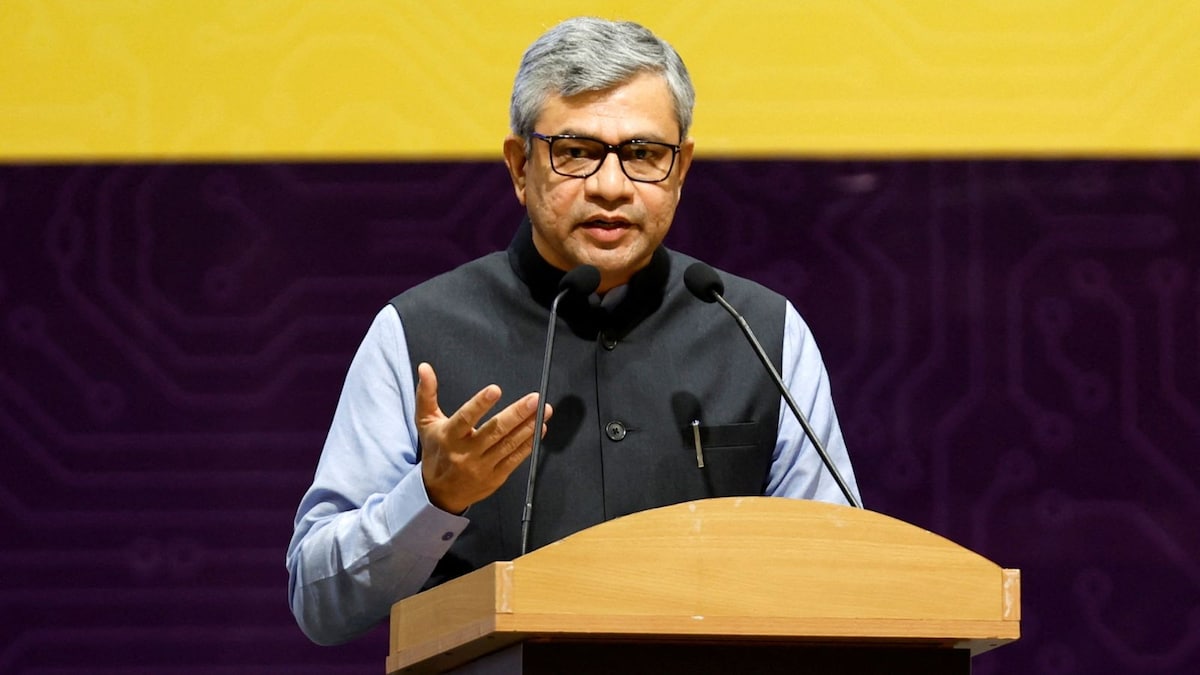
India is trying to become a bigger maker and designer of computer chips.
Technology Minister Ashwini Vaishnaw warned that this growth could attract cyberattacks or other disruptions.
He said some established players might see India’s rise as a threat.
He asked chip companies and deeptech startups to stay alert and protect their work.
The industry said it understood the warning and would take suitable steps.
India’s Semicon 2.0 programme provides ₹1,27,500 crore to expand the chip sector.
The programme covers chip design, factories, packaging, equipment, materials, research and worker training.
Several companies have announced major investment plans in India.
The government says India has received substantial investment interest under the programme, although reports cited different totals.

Ashwini Vaishnaw urged India’s semiconductor industry and deeptech startups to prepare for cyberattacks, geopolitical threats and other disruptions.
He said India’s growing ability to design and manufacture chips could be viewed as a threat by established interests in the global semiconductor value chain.
Vaishnaw said the industry had acknowledged the risks and would take appropriate protective measures.
India’s Semicon 2.0 programme, approved with an outlay of ₹1,27,500 crore, supports chip design, fabs, packaging, equipment, materials, research and talent development.
Investment announcements include Applied Materials’ proposed $5 billion plan, Lam Research’s ₹10,000-crore proposal, Tata Electronics’ Dholera vendor park and Fujifilm’s ₹800-crore materials plant.
- Who
- IT Minister Ashwini Vaishnaw, India’s semiconductor industry and deeptech startups.
- What
- Vaishnaw warned the industry to prepare for cyberattacks, geopolitical threats and other disruptions that could target India’s semiconductor expansion.
- When
- The comments were made on September 19, 2026; one report was published on September 20, 2026.
- Where
- The warning concerns India’s role in global semiconductor and electronics supply chains.
- Why
- India is expanding its ability to design and manufacture chips, which Vaishnaw said could face opposition from established interests.
India’s Semiconductor Expansion
Security and Geopolitical Risks
Building a broader chip ecosystem
India’s Semiconductor Expansion
Government incentives, engineering capabilities and investor interest are helping India expand beyond assembly and testing into design, fabrication, packaging, equipment, materials and talent development.
Security and Geopolitical Risks
Vaishnaw said India’s emergence as a chip designer and manufacturer could be viewed as a threat by established interests in the global value chain.
Industry preparedness
India’s Semiconductor Expansion
The government and industry said companies had taken note of the warning and would adopt appropriate protective measures.
Security and Geopolitical Risks
The minister cautioned that cyberattacks, geopolitical threats and other disruptions could come from countries or players opposed to India’s rise.
- Minister
- Ashwini Vaishnaw, India’s Minister for Electronics and Information Technology
- Semicon 2.0 outlay
- ₹1,27,500 crore
- First-phase projects
- Twelve semiconductor manufacturing projects worth more than ₹1.64 lakh crore were approved
- Commercial production
- Five first-phase projects, including those involving Micron, Kaynes and CG Semi, were reported to be in commercial production
- Investment interest
- Reports cited approximately ₹1 lakh crore in commitments or about $11–12 billion in investment interest under Semicon 2.0
- Major corporate plans
- Applied Materials proposed a $5 billion plan through 2035, while Lam Research proposed ₹10,000 crore
- Additional projects
- Tata Electronics announced a 363-acre vendor park at Dholera, and Fujifilm announced an ₹800-crore semiconductor materials plant

