

Archive · 17 Dec 2025
21-million-year-old sea cow species found in Qatar
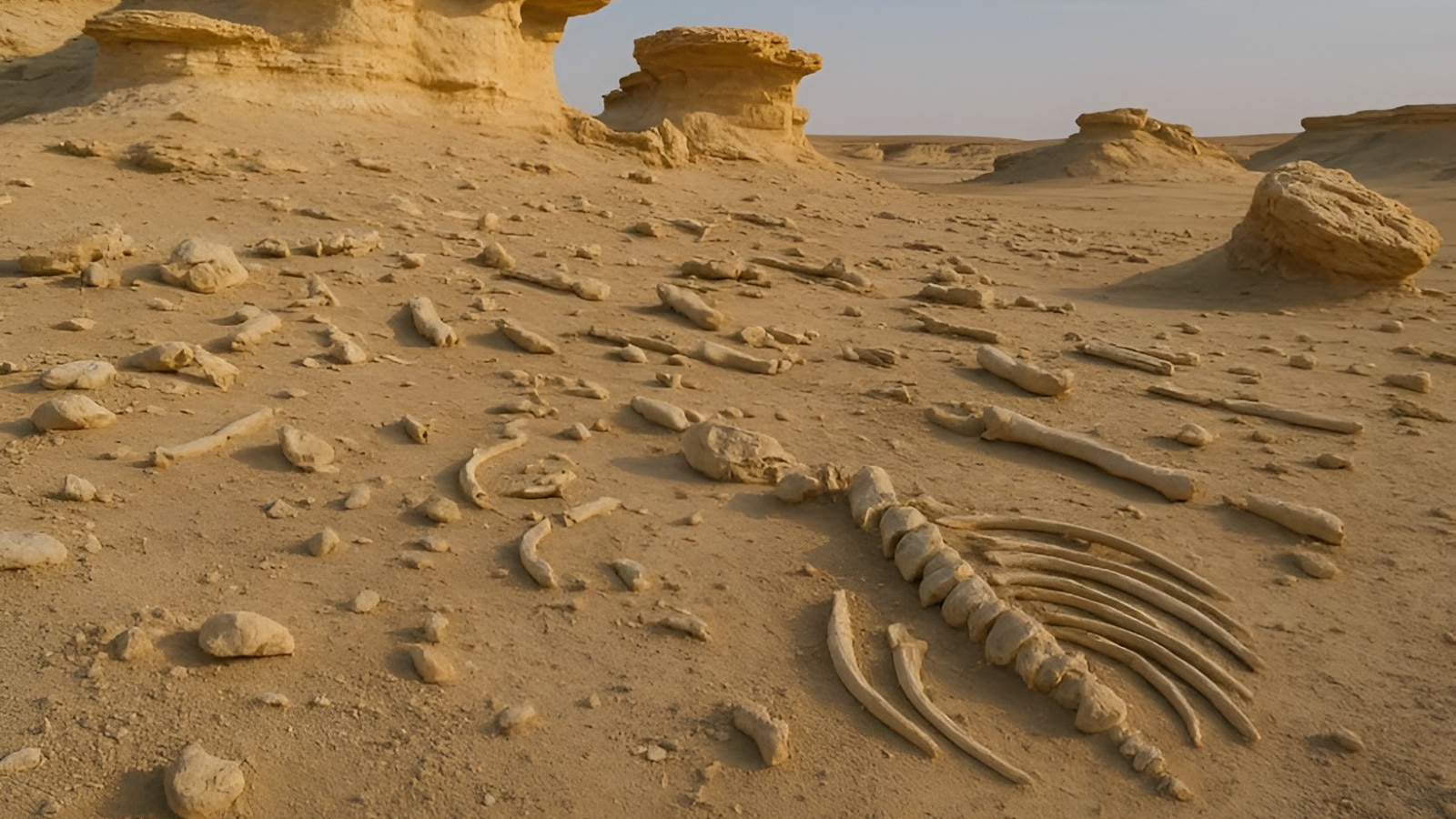
A long time ago, some scientists found a lot of bones in a desert in Qatar.
They thought they were from ancient reptiles.
Later, other scientists looked at the bones again and found out they were from a 21-million-year-old sea cow.
The place where they found the bones is called the 'Dugong Cemetery'.
The scientists were very surprised because they didn't know there were so many bones there.
It's like finding a big treasure of old animal bones!

Scientists discovered a 21-million-year-old sea cow species in Qatar's Al Maszhabiya region.
The site was initially surveyed 50 years ago, with bones mistakenly thought to be from ancient reptiles.
In the early 2000s, scientists from the Smithsonian Institution and Qatar Museums re-examined the site.
The area is nicknamed the 'Dugong Cemetery' due to the abundance of bones.
Ferhan Sakal, an archaeologist, led the excavation and was surprised by the richness of the bonebed.
- Who
- Scientists from the Smithsonian Institution and Qatar Museums
- What
- Discovered a 21-million-year-old sea cow species
- When
- Early 2000s (re-examination), 50 years ago (initial discovery)
- Where
- Al Maszhabiya region, southwestern Qatar
- Why
- To resolve the mystery of the scattered bones
- Discovery Location
- Al Maszhabiya region, southwestern Qatar
- Discovery Year
- Early 2000s
- Organizations Involved
- Smithsonian Institution, Qatar Museums
- Nickname of the Site
- Dugong Cemetery
- Age of Fossils
- 21 million years old
- Initial Assumption
- Ancient reptile bones
- Lead Archaeologist
- Ferhan Sakal