

10 hrs ago
Siddhartha Khemka Outlines Nifty Targets and Selective Investment Strategy
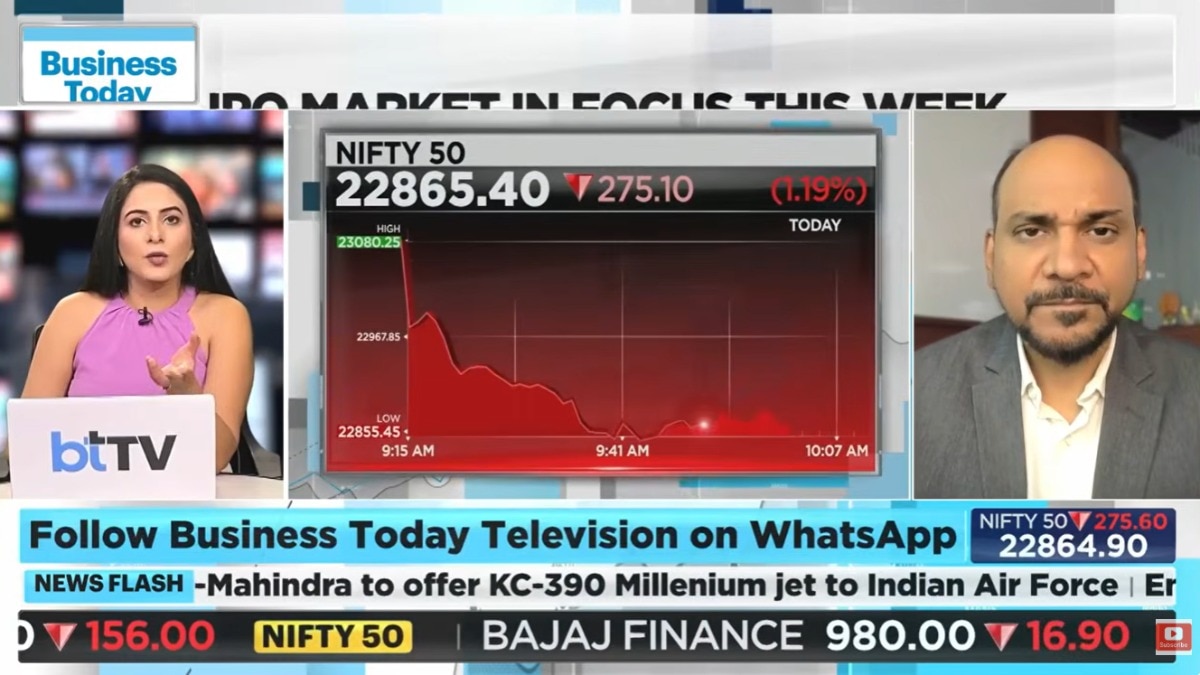
The stock market is going through a correction, which means prices have fallen.
Siddhartha Khemka thinks the market may move sideways for about three months.
He expects Nifty could recover to 23,000–24,000 by the end of the year.
He also believes Nifty could reach 25,000–26,000 by the end of FY27.
Khemka says this fall could be a chance for people investing for one or two years or longer.
He advises investors not to buy every mid-cap and small-cap stock.
Instead, they should choose companies carefully, especially those linked to domestic manufacturing.
He sees pharma, some IT and FMCG stocks as possible options, but recommends caution with banks and NBFCs.

Siddhartha Khemka expects Nifty to potentially recover toward 23,000–24,000 by year-end.
He projects Nifty could reach 25,000–26,000 by the end of FY27.
Khemka expects the market to remain sideways and consolidate over the next three months.
He recommends selectively choosing mid- and small-cap stocks, with domestic manufacturing a key theme.
Khemka favors pharma, selected IT and FMCG stocks, while advising caution on banks and NBFCs.
- Who
- Siddhartha Khemka, who provided the market outlook and investment recommendations.
- What
- Khemka discussed Nifty targets, market conditions and sector preferences during the correction.
- Where
- The Indian stock market, represented by the Nifty index.
- When
- During the current market session; he also gave outlooks for the next three months, year-end and FY27-end.
- Why
- He said the correction could offer long-term investors an opportunity to accumulate selectively.
Key facts
- Current Nifty level
- Around 22,782
- Current session move
- Down 356 points from the previous close
- Year-end outlook
- Potential recovery toward 23,000–24,000
- FY27-end target
- 25,000–26,000
- Near-term market view
- Likely to remain sideways over the next three months
- Preferred sectors
- Pharma, selected IT and FMCG stocks
- Cautious sectors
- Banks and NBFCs, particularly during a rate-hike cycle
Sources
Related news

Expert Urges Investors to Buy Indian Market Dip
HDFC Bank, TVS Motor Emerge as Top Picks Amid Correction

Indian Equities May Re-Rating as Earnings Momentum Builds

Nifty Faces Crucial Test After Six Weeks of Losses

Anand Rathi Analyst Names Three Stocks Under ₹200

Nifty Ends Winning Streak as 23,500 Resistance Holds Firm

Vaishali Parekh recommends three intraday stocks amid market selloff

Motilal Oswal Recommends 50:40:10 Equity Allocation Framework

Nifty 50 Falls Below 23,000 as Volatility Surges
Foreign Investors Increase Selling as Nifty Hits April Low

Nifty Falls Below 23,000 as Bears Target Lower Support
