

Archive · 25 May 2025
Underwater City Discovery May Rewrite the History of Civilization
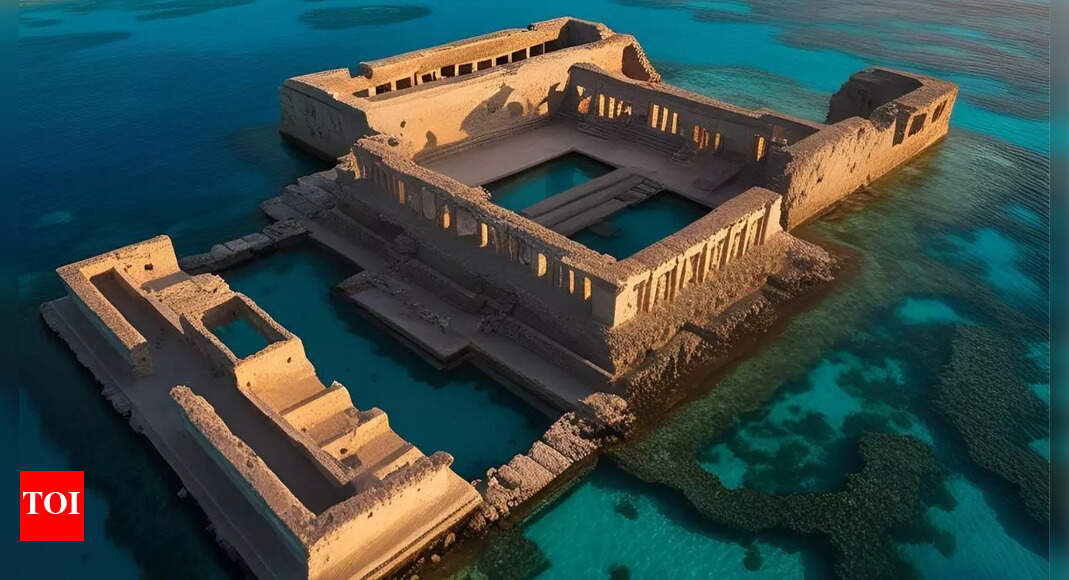
Scientists found a possible ancient city under the sea near India.
They used special tools to see what's there and found buildings, pottery, and bones.
The city might be very old, even older than civilizations we already knew about.
Some scientists think it's a big discovery that could change what we know about the beginning of civilization, while others aren't so sure because the way they dated the items, as well as natural forces, may have played a role in the formation of the city.

An underwater city was discovered in the Gulf of Khambhat, off the coast of India.
The discovery was made by the National Institute of Ocean Technology (NIOT) in 2000.
The submerged site includes large geometric structures and artifacts like pottery and human remains.
Artifacts were carbon-dated to be approximately 9,500 years old.
Some experts propose the findings could predate the Indus Valley Civilization, which could indicate the existence of a previously unknown advanced civilization.
- Who
- Indian marine researchers from the National Institute of Ocean Technology (NIOT).
- What
- An ancient submerged city with structures and artifacts, potentially predating the Indus Valley Civilization.
- When
- Discovered in December 2000; artifacts dating back approximately 9,500 years.
- Where
- Gulf of Khambhat, off the coast of western India.
- Why
- To challenge the current understanding of early civilization.
Advocating the Discovery
Skeptical Perspectives
Reliability of dating methods
Advocating the Discovery
Supports the use of carbon dating
Skeptical Perspectives
Doubts about the accuracy of carbon dating and the possibility of natural processes shaping the site.
- Location
- Gulf of Khambhat, off western India
- Discovery Date
- December 2000
- Depth
- Approx. 120 feet underwater
- Size of Site
- 5 miles long, 2 miles wide
- Artifacts Found
- Pottery, beads, sculptures, human remains
- Estimated Age of Artifacts
- Nearly 9,500 years old