

Archive · 30 Jul 2025
Bengali Fish Cuts: A Culinary Tradition
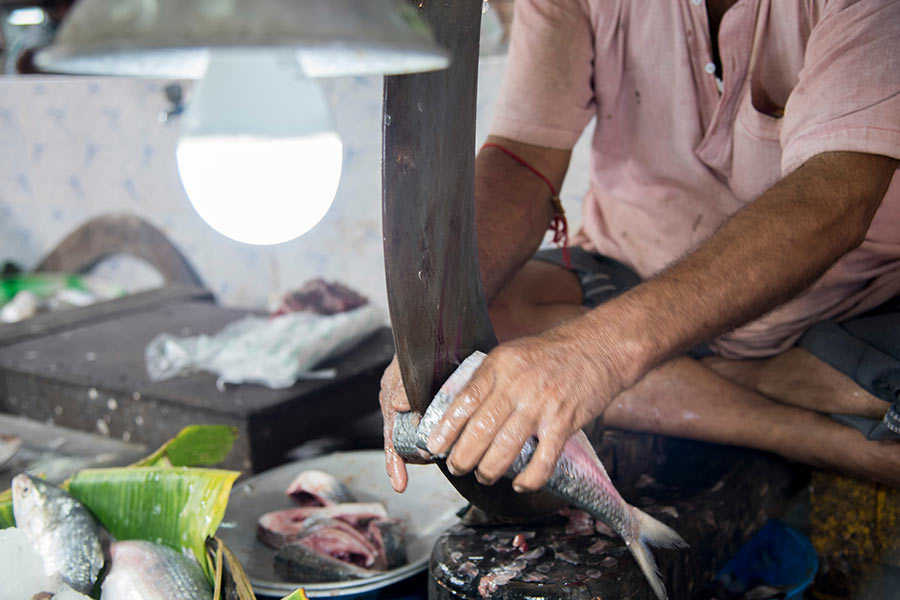
Bengali cooking uses different fish cuts, each with its own flavor.
The gada is the meaty part for frying.
The peti is the fatty belly, the tastiest for many.
The lyaja is the bony tail, often cooked with veggies.
The muro is the fish head, used to make dishes with more flavor.
These cutting styles are a tradition passed down through generations of Bengali cooks.

Bengali cuisine utilizes specific fish cuts: gada, peti, lyaja, and muro, for unique flavors.
Gada (upper back) is meaty, ideal for frying or slow-cooked dishes, often used in auspicious meals.
Peti (belly) is the fatty, flavorful part, perfect for dishes like macher kalia.
Lyaja (tail-end) is bony but flavorful, often used in light machher jhol with vegetables.
Muro (head) adds intensity and depth to dishes like muri ghonto, considered sacred.
- Who
- Bengali people.
- What
- Bengali fish cutting techniques using gada, peti, lyaja, and muro.
- When
- The techniques have been passed down through generations.
- Where
- Bengali cuisine and other cities where Bengalis live.
- Why
- To create unique flavors and textures in dishes.
Value of Specific Cuts
Less Glamorous Cuts
Preference for Different Parts
Value of Specific Cuts
Peti (belly) is the crown jewel, the tastiest part.
Less Glamorous Cuts
Lyaja is less glamorous but more meaty and bony.
- Fish Cuts
- Gada, Peti, Lyaja, Muro
- Gada
- Upper back portion, for frying/slow-cooking
- Peti
- Fatty belly, releases oil, rich taste
- Lyaja
- Tail-end, bony, often with vegetables
- Muro
- Fish head, adds intensity, considered sacred