Archive · 5 Jun 2025
Milky Way and Andromeda Collision Less Likely

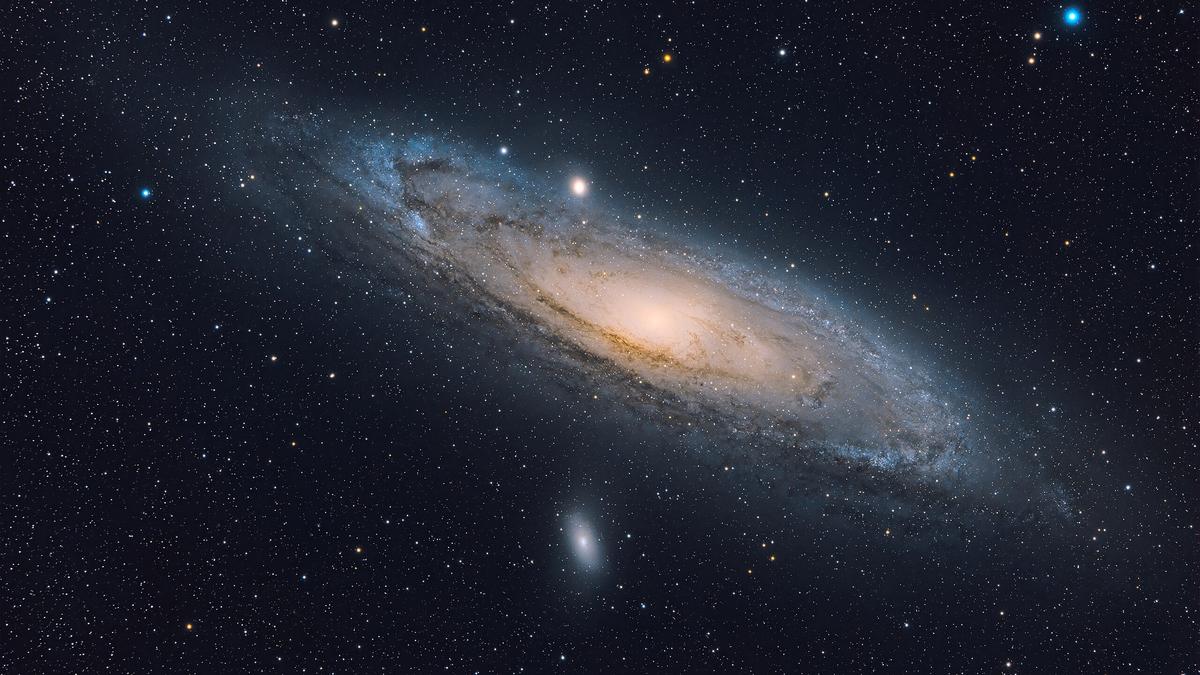
Scientists are studying whether our galaxy, the Milky Way, will crash into another galaxy called Andromeda.
They used to think it was going to happen, but now they think it might not, or at least not for a long time.
There is a 50/50 chance of them colliding in the future.
This new research, using telescopes, helps scientists understand what will happen to our galaxy.
Even if the galaxies don't crash, the sun will run out of fuel and might destroy Earth before anything happens between galaxies.

Astronomers reassessed the likelihood of a collision between the Milky Way and Andromeda galaxies.
The probability of a collision is now estimated at 50% within the next 10 billion years.
The study used data from the Hubble Space Telescope and the Gaia spacecraft.
The sun is expected to run out of energy in about 5 billion years.
Past predictions suggested a collision was inevitable.
- Who
- Astronomers, including Till Sawala and team.
- What
- Astronomers reassessing the probability of the Milky Way and Andromeda galaxies colliding.
- When
- Potential collision in the next 10 billion years.
- Where
- The Milky Way and Andromeda galaxies.
- Why
- To understand the future of the Milky Way and potential galactic interactions.
Prior Predictions
Current Findings
Collision Likelihood
Prior Predictions
Past theories suggested a collision was highly probable.
Current Findings
New research indicates a 50% chance of collision within the next 10 billion years.
- Collision Probability
- 50% chance in the next 10 billion years
- Observational Tools
- Hubble Space Telescope, Gaia spacecraft
- Key Researcher
- Lead Author Till Sawala
- Galaxies Involved
- Milky Way and Andromeda