

Archive · 23 Jul 2025
Mumbai Train Blasts Verdict: High Court Overturns Convictions
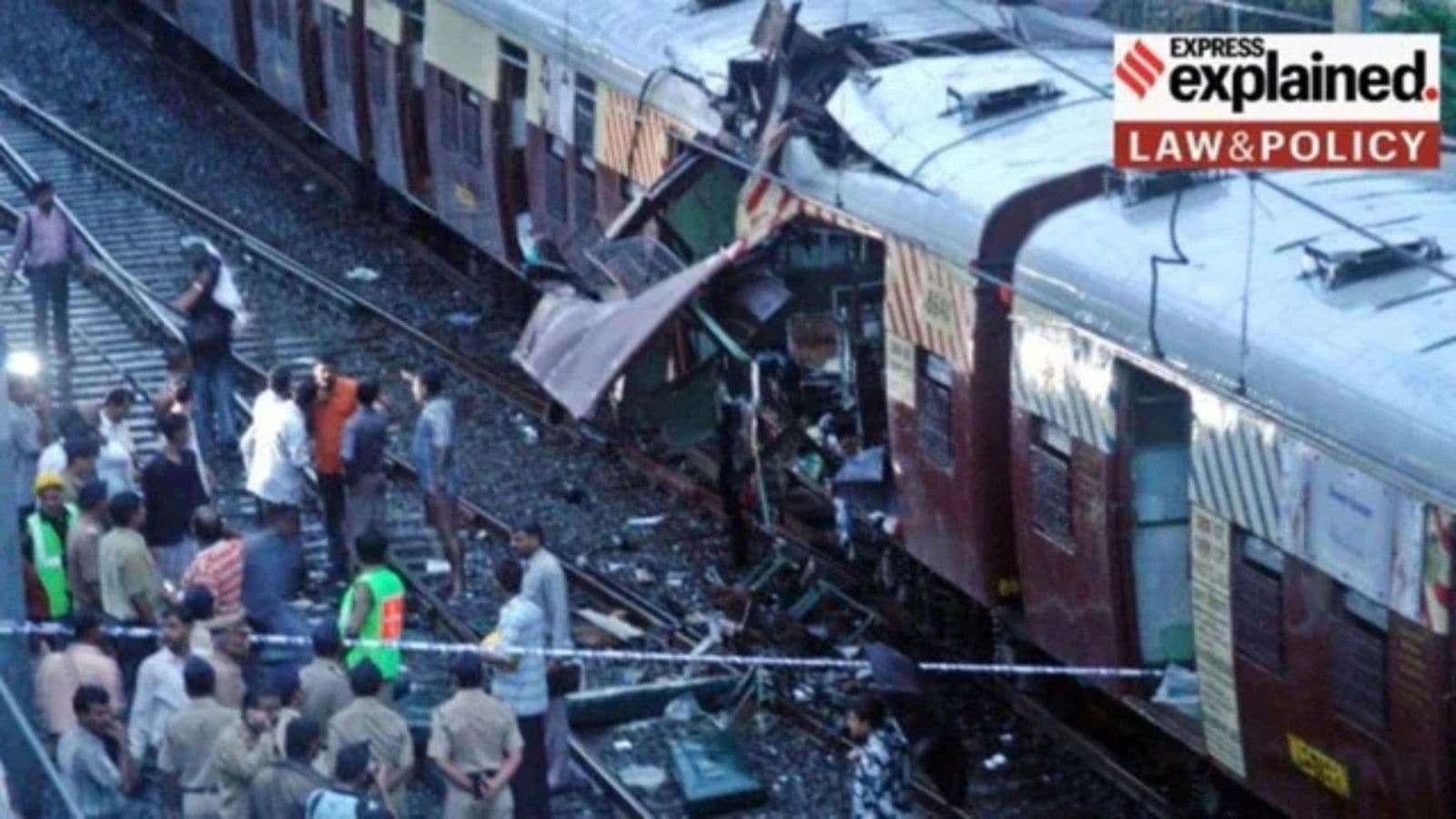
Imagine a big court case about a train bombing.
A special court said some people did it and put them in jail.
But, another, higher court looked at all the evidence again.
This new court said the first court was wrong!
They found the confessions, or the statements the accused made, might have been forced out of them, and some of the witnesses weren't very reliable.
Also, some important phone records weren't shown to the court.
So, the higher court let everyone go free, saying there wasn't enough good evidence to say they were guilty.

Bombay High Court acquitted all 12 men previously convicted in the 2006 Mumbai train blasts case.
The High Court's findings contradicted the special MCOCA court's 2015 verdict, which had convicted 12 of 13 accused.
The High Court questioned the validity of confessional statements, citing potential torture and similarities.
The High Court expressed concerns about the prosecution's reluctance to provide call data records.
The High Court ruled against the reliability of eyewitness accounts and the official who conducted the test identification parade.
- Who
- The Bombay High Court and a special MCOCA court. The accused in the 2006 Mumbai train blasts.
- What
- Bombay High Court acquitted 12 men previously convicted in the 2006 Mumbai train blasts case.
- When
- The High Court made its ruling recently, overturning the 2015 convictions.
- Where
- Mumbai, India. The Mumbai train blasts case.
- Why
- The High Court found the evidence used to convict the accused in the first trial was questionable.
Bombay High Court
Special MCOCA Court
Confessional Statements
Bombay High Court
Confessional statements were extracted through torture and unreliable.
Special MCOCA Court
The special court accepted all confessions as true.
Use of torture
Bombay High Court
The accused had succeeded in establishing the fact of torture inflicted on them to extort confessional statements.
Special MCOCA Court
The Special Court said there was "no evidence" for torture.
Call Data Records
Bombay High Court
The High Court expressed concerns about the CDR and the reluctance of prosecution to provide these details.
Special MCOCA Court
The special court wasn't that concerned about the CDRs
Reliability of eyewitnesses
Bombay High Court
Eyewitnesses were not trustworthy.
Special MCOCA Court
The special court took the accounts of all eyewitnesses, including Parmar, into consideration
Official who conducted the identification parade
Bombay High Court
Conducted test identification parade when his appointment had lapsed.
Special MCOCA Court
was an SEO when he conducted the parade
- Event
- 2006 Mumbai train blasts
- Previous Convictions
- 12 out of 13 accused
- Reversal
- Bombay High Court acquitted all 12
- Key Issues
- Confessional statements, eyewitness testimony, call data records
- Confessions
- High Court found the truthfulness in doubt, special court accepted them
- Test Identification Parade
- High Court found invalid; special court deemed valid