

Archive · 7 Sep 2026
Wildfires and heat waves threaten global air-quality gains
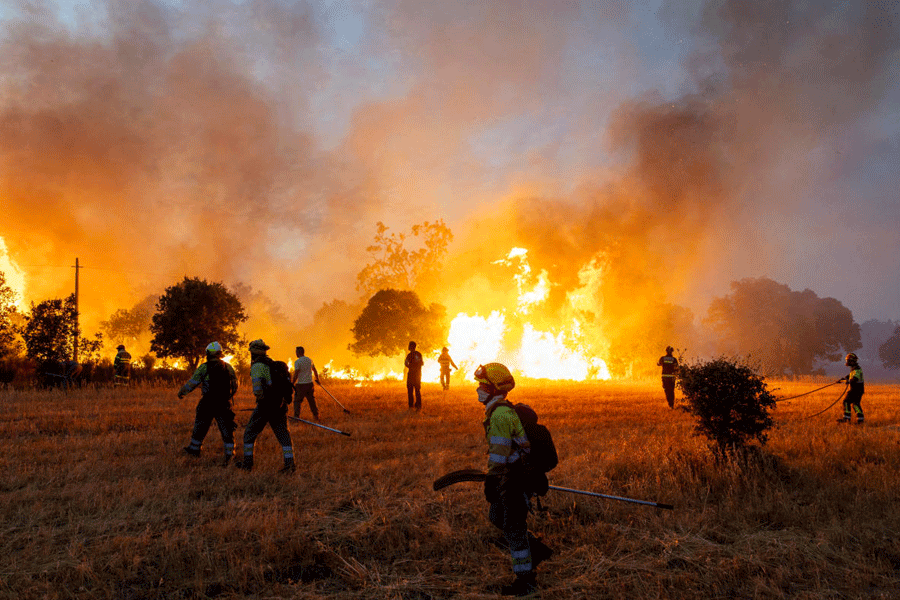
The World Meteorological Organization studied how climate change and air pollution are connected.
It warned that hotter weather can make wildfires more frequent and intense.
Wildfire smoke can travel to places far from the fire.
The smoke contains tiny particles called PM2.5 that can hurt the lungs and heart.
Ground-level ozone is another harmful pollutant discussed in the report.
Some countries have reduced pollution from factories and vehicles, but wildfire pollution is growing.
Extreme smoke events have become three times more common since the 1990s.
The report says meeting air-quality goals may become harder as the climate warms.
It recommends that countries fight climate change and air pollution together.

The World Meteorological Organization warned that intense wildfires and heat waves could undermine progress on air quality and public health.
Wildfires are becoming a larger pollution source as regulations reduce industrial and transport emissions in many developed countries.
The report highlighted PM2.5 and ground-level ozone, which are linked to respiratory and cardiovascular disease.
Extreme fire-smoke events have tripled globally since the 1990s and may have contributed to nearly 100,000 additional annual deaths from 2010 to 2018.
The WMO urged coordinated climate and air-pollution policies and improved monitoring of pollutants and aerosols.
- Who
- The World Meteorological Organization, with comments from its scientific officer Lorenzo Labrador.
- What
- The WMO warned that increasingly intense wildfires and heat waves could undermine air-quality improvements and harm public health.
- When
- The warning was reported on Monday, September 7; the report discussed 2025 pollutant concentrations and mortality estimates from 2010 to 2018.
- Where
- The report identified impacts and pollution hotspots in parts of Europe, northern Canada, parts of Russia, western-central Africa and northwestern Spain.
- Why
- Climate change is making extreme heat and wildfires more frequent, intense and longer-lasting, increasing harmful air pollution.
- Key pollutants
- Fine particulate matter, or PM2.5, and ground-level ozone.
- Health risks
- The pollutants are linked to respiratory and cardiovascular disease; wildfire particles can also cause body-wide inflammation and pulmonary disease.
- Smoke trend
- Extreme fire-smoke events have tripled globally since the 1990s.
- Estimated deaths
- Wildfire smoke may have contributed to nearly 100,000 additional deaths annually between 2010 and 2018.
- 2025 hotspots
- PM2.5 concentrations were above long-term averages in northern Canada, parts of Russia and western-central Africa; northwestern Spain was a hotspot after exceptional late-summer fires.
- Additional monitoring needs
- The WMO called for better tracking of black carbon, microplastics and other pollutants and aerosols.
- Recommended response
- The agency urged countries to coordinate climate and air-pollution policies rather than address them separately.
