

Archive · 31 Jan 2026
Rare Galapagos Albatross Sighting in California
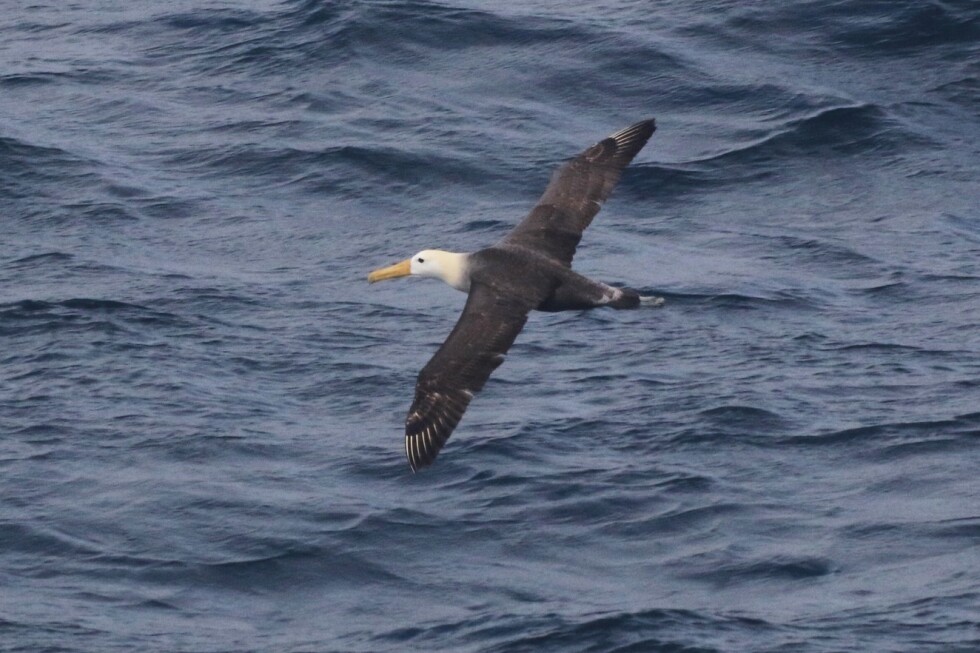
Scientists were very surprised to see a big bird called a waved albatross near California.
This bird usually lives near the Galapagos Islands, which are very far away.
The bird has a wingspan as wide as a small car and spends most of its life flying over the ocean.
Scientists don't know why this bird came so far north.
It might have been pushed by a storm or just decided to explore.
The bird is very rare and in danger of disappearing.
Scientists are watching to see if more of these birds come to California, which could mean something is changing in their environment.

A waved albatross, native to the Galapagos Islands, was spotted 23 miles off the California coast, marking only the second recorded sighting north of Central America.
The bird, with an 8-foot wingspan, is considered a 'vagrant' as it is far outside its typical range.
Scientists are unsure why the albatross ventured so far north, with possible explanations including storms, a rambling spirit, or environmental factors.
The waved albatross is critically endangered, with a lifespan of up to 45 years and a diet primarily consisting of fish, squid, and crustaceans.
The sighting could be a sign of environmental changes affecting the bird's usual habitat, as other species have been seen moving north due to warming temperatures.
- Who
- Scientists on a research vessel and marine ornithologist Tammy Russell
- What
- Sighting of a waved albatross, a species native to the Galapagos Islands, in California
- When
- Recently spotted, with a possible previous sighting in October
- Where
- 23 miles (37 kilometers) off the coast of Point Piedras Blancas, California
- Why
- Reasons for the albatross's presence in California are unclear; possible explanations include being driven by a storm, a rambling spirit, or environmental factors
- Species
- Waved Albatross
- Location
- 23 miles off Point Piedras Blancas, California
- Distance from Home
- 3,000 miles (4,800 kilometers) from Galapagos Islands
- Wingspan
- Up to 8 feet (2.4 meters)
- Conservation Status
- Critically Endangered
- Lifespan
- Up to 45 years
- Diet
- Fish, squid, and crustaceans