

Archive · 19 May 2025
Fossil of Flying Dinosaur Unlocks Secrets of Bird Flight
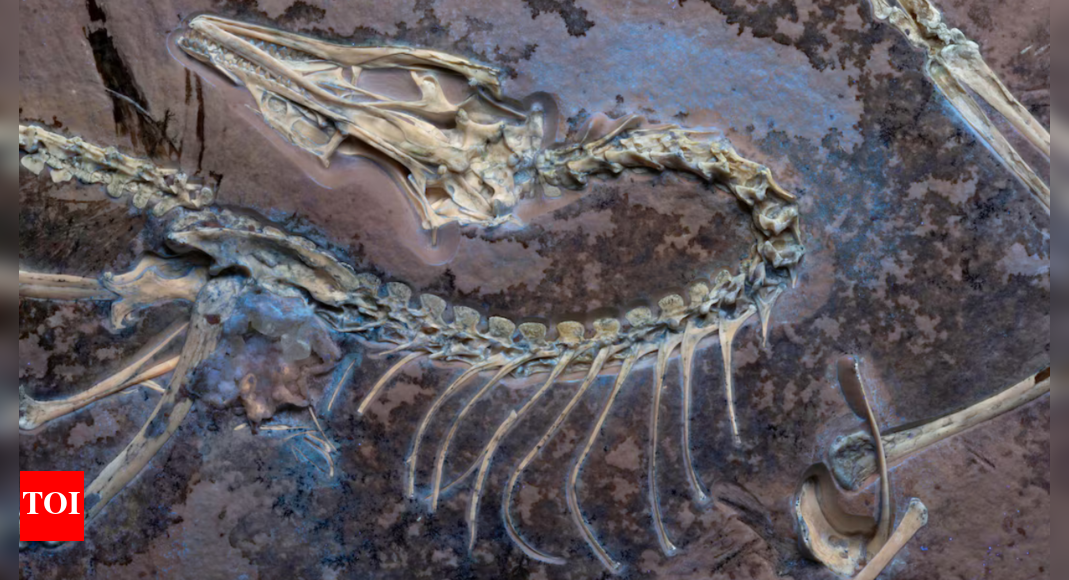
Imagine a small dinosaur, Archaeopteryx, that lived 150 million years ago, was the first bird.
This dinosaur had special feathers that helped it fly.
Scientists studied a well-preserved fossil, revealing that this dinosaur had a long upper arm bone, and new feathers.
These features allowed it to generate lift and move through the air, probably for short flights or gliding.
The fossil also showed bird-like features like a flexible beak.
This discovery is a big step in understanding how birds evolved from dinosaurs, because this creature was able to fly while its close cousins could only dream.

A newly analyzed Archaeopteryx fossil provides insights into early bird flight.
The fossil reveals specialized tertial feathers, crucial for flight.
Archaeopteryx had asymmetric feathers and a long upper arm bone.
CT scans showed features like a flexible upper beak, and scales.
The fossil confirms Archaeopteryx as a legitimate flyer.
- Who
- Archaeopteryx, a feathered dinosaur.
- What
- The discovery of a well-preserved Archaeopteryx fossil reveals secrets of the first bird flight.
- When
- 150 million years ago.
- Where
- Found in Germany’s Solnhofen limestone.
- Why
- To understand how birds evolved from dinosaurs.
- Dinosaur Name
- Archaeopteryx
- Time Period
- 150 million years ago
- Location of Discovery
- Germany
- Key Features
- Feathers, long upper arm bone, cranial kinesis