2 weeks ago
Israeli Settlers Divert Palestinian Water to Fill West Bank Pool
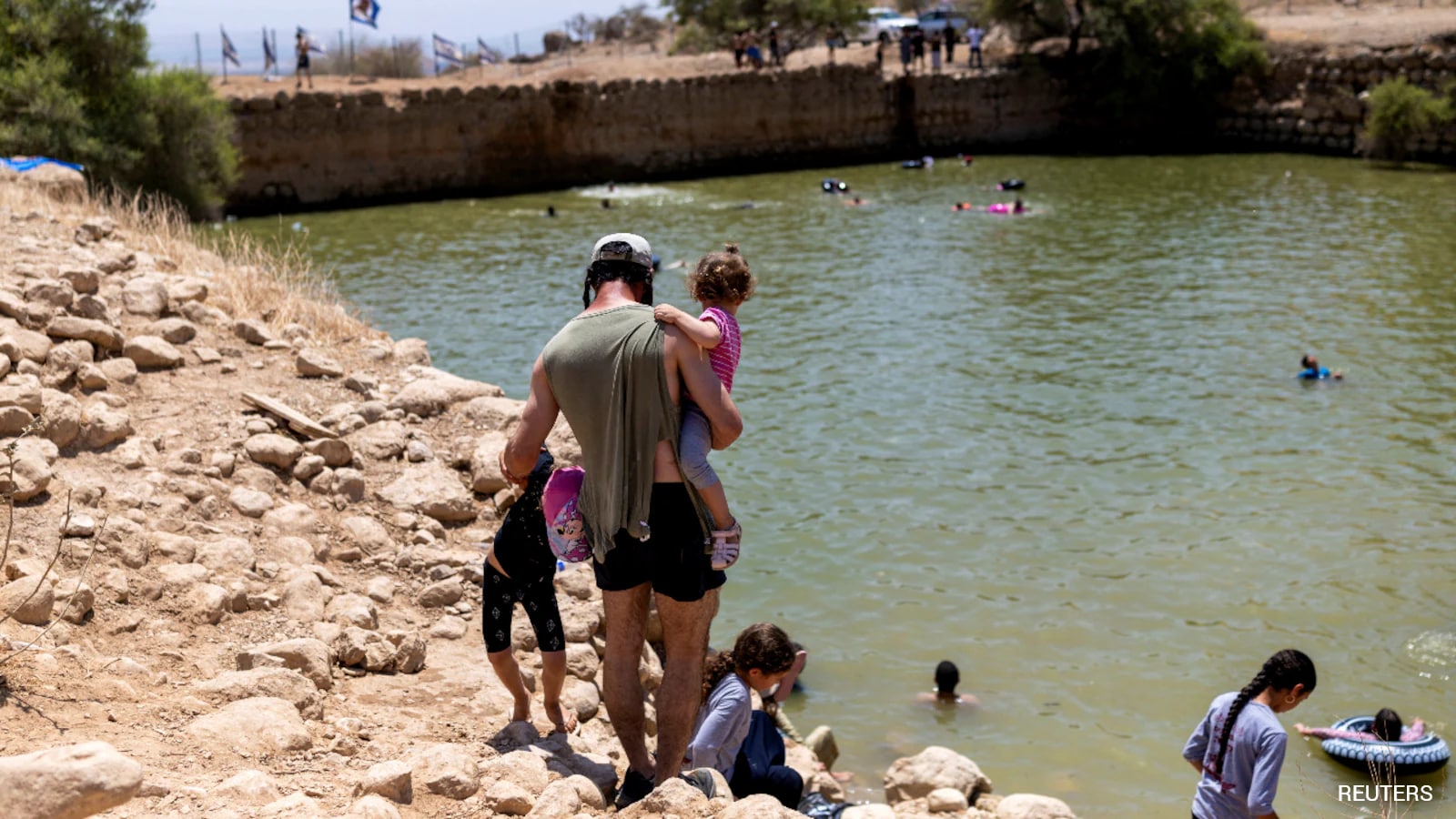
In the West Bank, there is a village called Fasayil where farmers have used water from a natural spring for a very long time.
That water helped them grow food like eggplants, zucchini and watermelons and filled their home taps.
This summer, a group called Israeli settlers took the water and poured it into an old pool so people could swim in it.
The farmer who owns the land, Saad Nemer, says his water is still cut off, so he cannot plant his crops and many families may lose their work.
That is not the only place: the United Nations counted at least 160 times this year when settlers damaged places that give Palestinians water.
Palestinians say this is a 'water war,' a way to make their lives so hard that they have to leave their land.
Israel's finance minister gave about one million dollars to fix up the old pool, which settlers say belonged to an ancient king named Herod.
An archaeologist says nobody really knows who built the pool and filling it with water may hurt the old site.
Many countries say Israeli settlements in the West Bank are against international law, but Israel says the land is disputed, not occupied.
Even a popular picnic spot near Nablus was taken over by hundreds of settlers this summer.

Israeli settlers seized a Palestinian farmer's irrigation pipeline near Fasayil in June and diverted spring water into an ancient pool promoted as an Israeli tourist attraction.
Farmer Saad Nemer says his water supply remains cut off, leaving his greenhouses unplanted and many families facing loss of work and livelihoods in the Jordan Valley village.
United Nations data shows settlers attacked at least 160 water and sanitation sites across the West Bank this year, part of what Palestinians describe as a systematic 'water war.'
Israel's far-right Finance Minister Bezalel Smotrich pledged about 3 million shekels ($1 million) for restoring 'Herod's Pools,' while archaeologist Alon Arad says the pool's provenance is unclear and filling it damages the archaeology.
Settlers say the West Bank belongs to the Jewish people, while the United Nations and most governments deem settlements illegal and Israel argues the territory is disputed, not occupied.
- Who
- Israeli settlers such as Yishai Shreiber, Fasayil farmer Saad Nemer, Palestinian Authority water official Adel Yassin, settler leader Eliav Libi, and Israel's Finance Minister Bezalel Smotrich
- What
- Settlers diverted a spring that irrigated Palestinian farmland near Fasayil into an ancient pool, cutting off the village's water supply and promoting the site as an Israeli tourist attraction
- Where
- Fasayil in the Jordan Valley, West Bank; also Qusra and Wadi al-Badhan near Nablus
- When
- From June, when the irrigation pipeline was seized, through mid-August; the Reuters report was published August 14
- Why
- Palestinians say it is part of a systematic 'water war' to force them off their land, while settler Yishai Shreiber said the West Bank belongs to the Jewish people
Palestinians and international community
Israeli settlers and government
Seizure of the spring water
Palestinians and international community
Settlers are stealing a vital water source to make Palestinian life in the West Bank untenable; the farmer says his 2025 COGAT document and 1957 title deed map show the spring and pool sit on his land.
Israeli settlers and government
Settler Yishai Shreiber said the West Bank belongs to the Jewish people, that Palestinians who do not accept Jewish authority should leave, and the site is being developed as an Israeli tourist attraction.
Heritage of the pool
Palestinians and international community
Archaeologist Alon Arad of Emek Shaveh says the pool's provenance is unclear and filling it with water is damaging an archaeological site while creating the feeling that the West Bank is exclusively Jewish.
Israeli settlers and government
Settlers say the pool belonged to the biblical-era Jewish king Herod, and Finance Minister Bezalel Smotrich pledged about 3 million shekels ($1 million) for its restoration and development.
Legal status of settlements
Palestinians and international community
The United Nations and most governments consider the settlements illegal under international law related to military occupation, and more than 150 UN member states recognize a Palestinian state encompassing the West Bank and Gaza Strip.
Israeli settlers and government
Israel argues the West Bank is disputed rather than occupied, and Smotrich says massive settlement construction is aimed at burying the idea of a Palestinian state.
Key facts
- Location
- Fasayil, Jordan Valley, West Bank
- Water and sanitation sites attacked this year
- At least 160 (United Nations data)
- Government funding pledged
- 3 million shekels (~$1 million) by Finance Minister Bezalel Smotrich for 'Herod's Pools'
- Springs under settler control in northern Jordan Valley
- About 95%, per researcher Fares Foqahaa
- Land ownership evidence
- 2025 COGAT document and pre-occupation 1957 title deed map shown by Saad Nemer
- Other affected locations
- Qusra (three homes besieged, water and electricity cut off); Wadi al-Badhan near Nablus
- Recognition of Palestinian statehood
- More than 150 of 193 UN member states
- Report details
- Reuters report by Pesha Magid, published August 14
Quotes
Yishai Shreiber
Israeli settler who swam in the pool
“"Our water supply remains cut off to this day, depriving us of the water we depend on for our homes, our livelihoods, and our agricultural land."”
 NDTV
NDTV
 theprint.in
“"Now that they see this entire mass of people, all these large groups of Jews coming here to bathe, they are afraid to come here."”
NDTV
theprint.in
Sources
Related news

Israel Bolsters Troops in Settler-Besieged West Bank Village

Qusra Settler Siege Exposes Intensifying West Bank Tensions

Netanyahu Condemns Settler Attack as Qusra Residents Report Abuse
Israeli troops hold positions in settler-besieged West Bank homes

Why Israel Fails to Curb Spiralling West Bank Settler Violence

Huckabee Warns Israeli Settlers Over Palestinian American Property

India’s SIP Boom Meets Years of Modest Market Returns
Americans Oppose Trump’s Canada Tariffs and Lake America Renaming

How Indian News Photographs Became National Visual Memory

Meta Removes Scam Ads After India Flags Porn Malware Bait

X’s Transparency Pledge Collides With India’s Secrecy Rules