

Archive · 9 Oct 2026
GST Council Clears Procedural Overhaul, Keeps Rates Unchanged
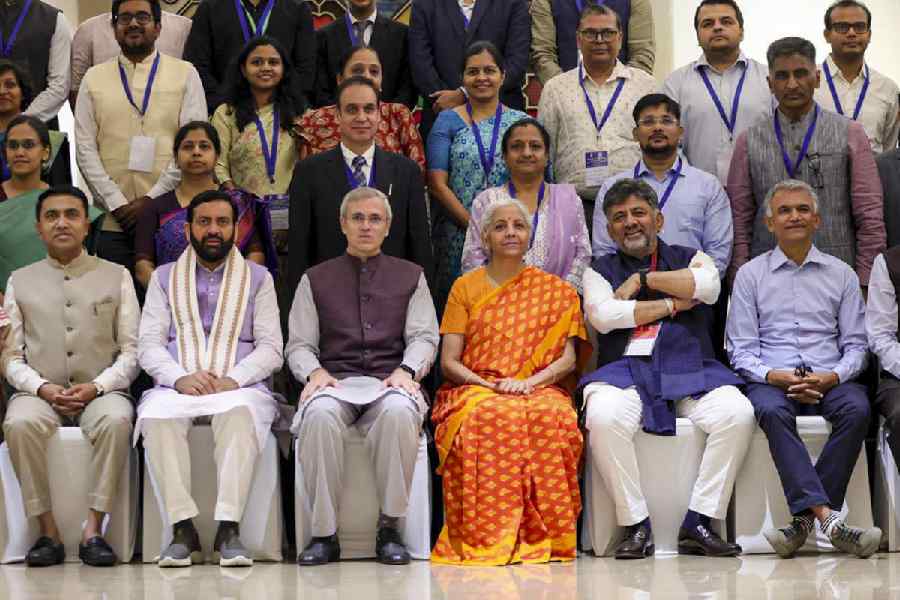
India’s GST Council agreed to change many of the rules for handling taxes, but it did not change tax rates.
The changes are meant to make tax paperwork easier for businesses.
Many refund claims are expected to be processed more quickly after computer-based risk checks.
The Council also proposed that tax officers should no longer be able to arrest taxpayers under GST provisions.
It recommended that criminal prosecution start only when the amount involved is at least ₹5 crore, and that the general penalty be lower.
Trucks should be stopped only when officials have specific information and approval.
Some eligible businesses could register more quickly, and some small businesses may file one return each year while paying tax quarterly.
Officials will study how to protect genuine buyers when suppliers fail to pay tax.
Jharkhand also called for changes to how coal taxation and the costs of mineral-producing states are handled.

At its 57th meeting, the GST Council approved major process reforms while leaving tax rates unchanged.
Refund claims will be acknowledged within 10 days; risk-based processing is expected to release or clear 90% within three working days after acknowledgement or risk checks.
The Council proposed ending GST officers’ arrest powers, raising the prosecution threshold from ₹1 crore to ₹5 crore, and cutting the general penalty from ₹25,000 to ₹10,000.
Goods in transit may be stopped only on specific intelligence with prior authorisation, and inspections will be limited to origin and destination states.
Measures also include faster registration for eligible applicants, expanded input tax credit and refunds, and a proposed annual-return option for certain small businesses.
- Who
- The GST Council, chaired by Union Finance Minister Nirmala Sitharaman; Jharkhand Finance Minister Radha Krishna Kishore also raised proposals.
- What
- The Council approved or recommended a broad set of GST process reforms while leaving tax rates unchanged.
- When
- At the 57th GST Council meeting, held on a Thursday; the process changes are scheduled to take effect on April 1, 2027.
- Where
- New Delhi, India.
- Why
- The reforms are intended to ease compliance, speed refunds, reduce physical intervention and improve certainty for taxpayers.
Support for taxpayer protections
Issues still under consideration
Input tax credit when suppliers default
Support for taxpayer protections
The Centre supports safeguards that would let genuine buyers retain credit when suppliers default.
Issues still under consideration
Some states sought further deliberation, so the Council referred the issue to an officers’ committee for a report within three months.
Coal taxation and mineral-producing states
Support for taxpayer protections
The GST destination principle directs tax on coal to consuming states.
Issues still under consideration
Jharkhand proposed keeping coal outside GST so states could levy VAT and creating a framework to recognise resource-origin states’ costs.
- Meeting
- 57th GST Council meeting.
- Tax rates
- Unchanged at the meeting.
- Refund acknowledgement
- The deadline is proposed to fall from 15 days to 10 days; applications without an acknowledgement or deficiency memo in that period will be deemed acknowledged.
- Refund processing
- The Council expects 90% of eligible claims to be released or cleared within three working days following risk checks or acknowledgement, as described by the articles.
- Prosecution threshold
- Recommended increase from ₹1 crore to ₹5 crore.
- General penalty
- Recommended reduction from ₹25,000 to ₹10,000.
- Small-business return option
- A proposed optional scheme for businesses with turnover up to ₹5 crore that sell exclusively to consumers: quarterly tax payments and one annual return.
- Implementation
- The process-related changes are scheduled to come into force on April 1, 2027.

