Archive · 25 Aug 2026
Sensex, Nifty Slip as US-Iran Tensions Lift Volatility
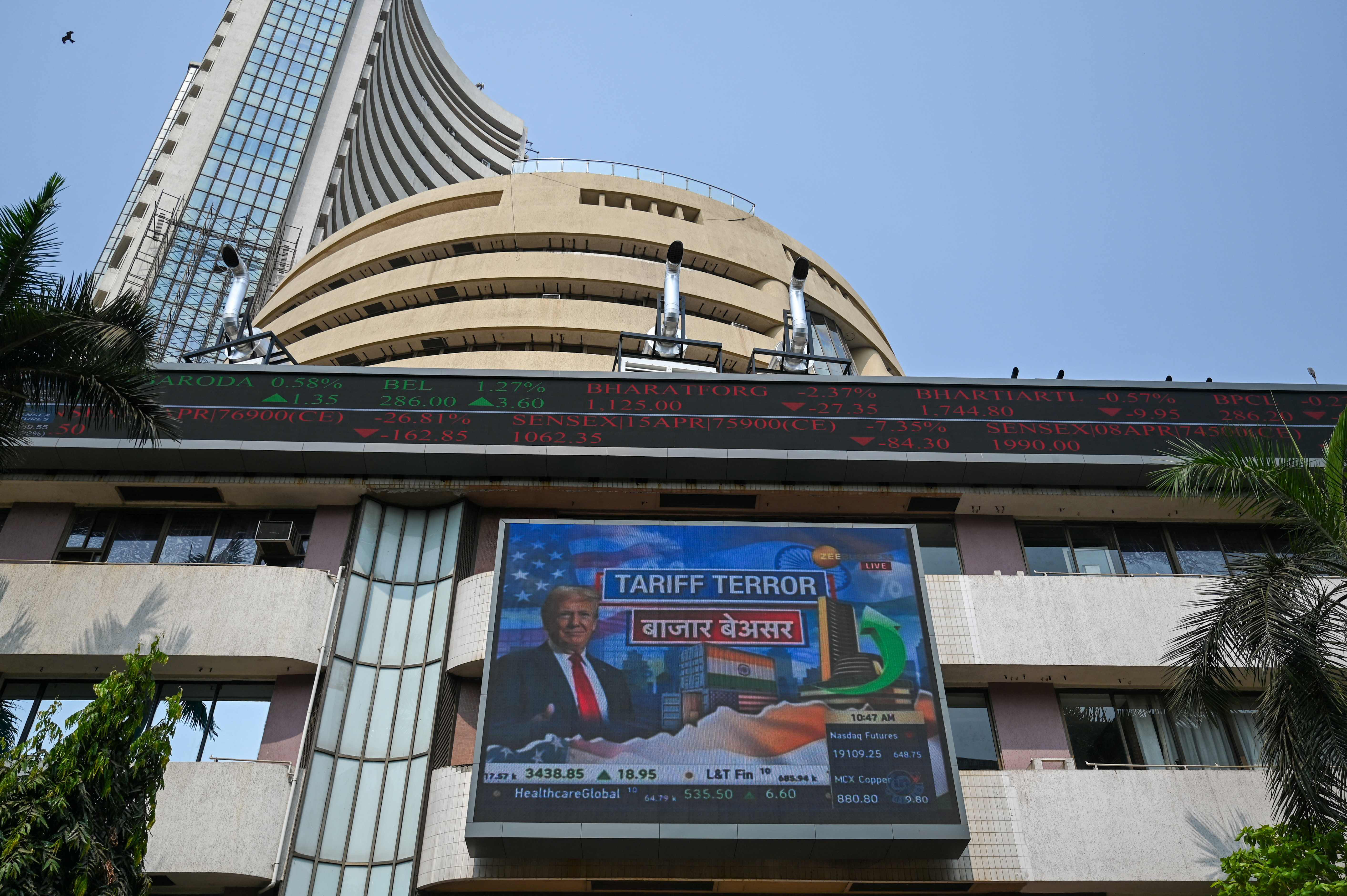
Indian stock markets went down on Monday and started Tuesday lower.
The Sensex and Nifty are numbers that show how groups of large Indian companies are performing.
Investors were worried about new US sanctions against Iran.
They were also concerned that the conflict could affect oil supplies and raise oil prices.
Brent crude stayed above $90 for a barrel.
Higher oil prices and weaker markets in other countries made investors more cautious.
Some banking and financial shares fell on Monday.
Metal, telecommunications and several other shares gained.
Experts said prices could move more sharply because of global tensions and monthly market-position changes.

The Sensex fell 171.72 points, or 0.22%, to close Monday at 77,369.11.
The Nifty declined 32.95 points, or 0.14%, to finish at 24,219.05, below 24,250.
Indian markets opened lower Tuesday, with the Sensex at 77,336.32 and Nifty at 24,179.50.
Investors reacted to renewed US-Iran tensions, anticipated sanctions, Middle East concerns and crude prices above $90 a barrel.
Brent crude traded at $92.49 on Tuesday after easing to $92.80 on Monday; analysts warned of heightened volatility.
- Who
- Indian investors, companies in the Sensex and Nifty, the United States and Iran were central to the reports.
- What
- Indian benchmark indices declined amid renewed US-Iran tensions, anticipated sanctions, global market weakness and elevated crude prices.
- When
- The main decline occurred on Monday, while early and later Tuesday trading was also lower.
- Where
- The declines occurred on Indian stock exchanges, alongside weakness in several Asian markets.
- Why
- Geopolitical tensions, possible disruption to Iranian oil supplies, concerns around the Strait of Hormuz, high crude prices and weaker global equities reduced risk appetite.
US sanctions and economic pressure
Iranian response and market risks
Sanctions strategy
US sanctions and economic pressure
The United States announced what officials described as an intensified or potentially toughest-ever sanctions campaign against Iran and its trading partners after a 60-day ceasefire window expired.
Iranian response and market risks
Iran was reported to be considering a response that could include halting Gulf oil exports, raising concerns about further escalation.
Oil supply impact
US sanctions and economic pressure
US sanctions were presented as a way to increase economic pressure on Tehran.
Iranian response and market risks
Market commentators said investors feared tighter Iranian oil supplies and continuing tensions around the Strait of Hormuz, which could keep crude prices elevated.
- Sensex Monday close
- 77,369.11, down 171.72 points or 0.22%
- Nifty Monday close
- 24,219.05, down 32.95 points or 0.14%
- Sensex intraday low
- 77,201.66, down 339.17 points or 0.43%
- Tuesday early trading
- Sensex fell 30 points to 77,336.32; Nifty fell 38.80 points to 24,179.50
- Brent crude
- $92.80 per barrel after a 1.68% Monday decline; $92.49 and 0.35% higher in Tuesday trading
- Foreign institutional investors
- Bought equities worth Rs 1,181.66 crore on Monday; separate exchange data showed sales of Rs 542.71 crore on Friday
- Monday sector performance
- Insurance, PSU banks, housing finance and financial services declined, while metal, telecommunications, commodities, realty and oil and gas gained
- Market outlook
- Analysts expected heightened volatility, including potentially sharper price swings during monthly expiry-related trading
Sources
Sensex, Nifty Fall Amid Renewed US-Iran Tensions, Higher Crude Prices

Stock Markets Today: Sensex, Nifty Dip Amid US-Iran Standoff, High Crude Prices

Benchmarks track global weakness amid simmering geopolitical conflict