

Archive · 11 Nov 2025
Bihar Elections: Promises of Development vs. Reality of Patronage Politics
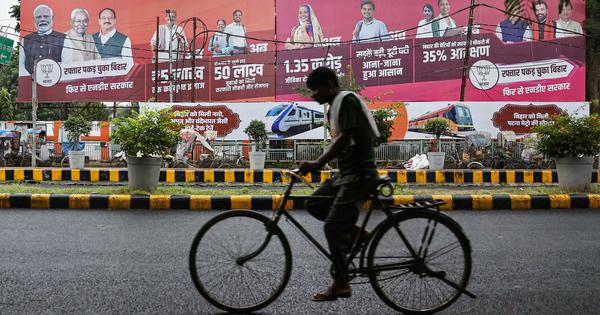
Imagine a state that's like a really smart student who never gets to show what they know.
Bihar is full of young, hardworking people who go to other places to build things and send money home, but their own state is still struggling.
For a long time, politicians have promised to fix things during elections, but instead of making the state better for everyone, they've focused on helping their friends and giving out small favors.
Schools are missing teachers and hospitals are missing doctors.
People are working hard, but the state isn't creating enough jobs or opportunities for them to use their talents at home.
The author suggests that instead of just giving out money or promises, the government needs to focus on making things work better.
This means making sure buildings get built and maintained, and that farmers can sell their crops for a fair price.
They also suggest making villages smarter with things like good internet and clean water.
The main idea is to change from a system where politicians help their buddies to one where they are judged on how well they actually get things done for the people.

Bihar, despite its youthful and enterprising population and significant remittances from migrant workers, ranks low in economic and social indicators due to persistent patronage politics and institutional failures.
The state's economy remains fragile, with low per capita income and lagging literacy, health, and infrastructure, while manufacturing and agriculture productivity are weak.
Political contests in Bihar have historically focused on controlling resources rather than effective utilization, leading to a cycle of poor governance and populism.
Proposed reforms include outcome-based budgeting, decentralizing power and funds to local bodies, creating professional District Development Cells, and scaling up agricultural infrastructure.
The author advocates for a shift from redistribution and welfare to productivity and wealth creation, suggesting a 'Smart Village Mission' to boost rural economies and reduce migration.
- Who
- Politicians, bureaucrats, and citizens of Bihar, including migrant workers and marginalized communities.
- What
- An analysis of Bihar's persistent underdevelopment despite abundant human potential, attributing it to patronage-driven politics and weak institutions, and proposing reforms focused on productivity, accountability, and decentralization.
- When
- Three generations after India's independence, with a focus on upcoming election seasons and the need for future governments to implement reforms.
- Where
- Bihar, India
- Why
- To break free from a cycle of poor governance, populism, and patronage that has stifled the state's economic and social progress despite its youthful and enterprising population.
- State Focus
- Bihar, India
- Key Issue
- Balancing development promises with persistent patronage politics
- Economic Indicators
- Per capita income a third of national average, lags in literacy, health, infrastructure
- Employment
- Agriculture employs over 60% of workforce, contributes about a fifth of output; manufacturing is 10%
- Migration
- Significant outflow of ambitious youth due to joblessness
- Consumption Gap Closure
- Scheduled Caste, Scheduled Tribe, backward classes, and Muslim households have closed consumption gaps
- Proposed Reforms
- Outcome-based budgeting, decentralization to local bodies, District Development Cells, Farmer Producer Organisations, Smart Village Mission

