

Archive · 31 Oct 2025
Japan Considers Nuclear Submarines After South Korea's Acquisition
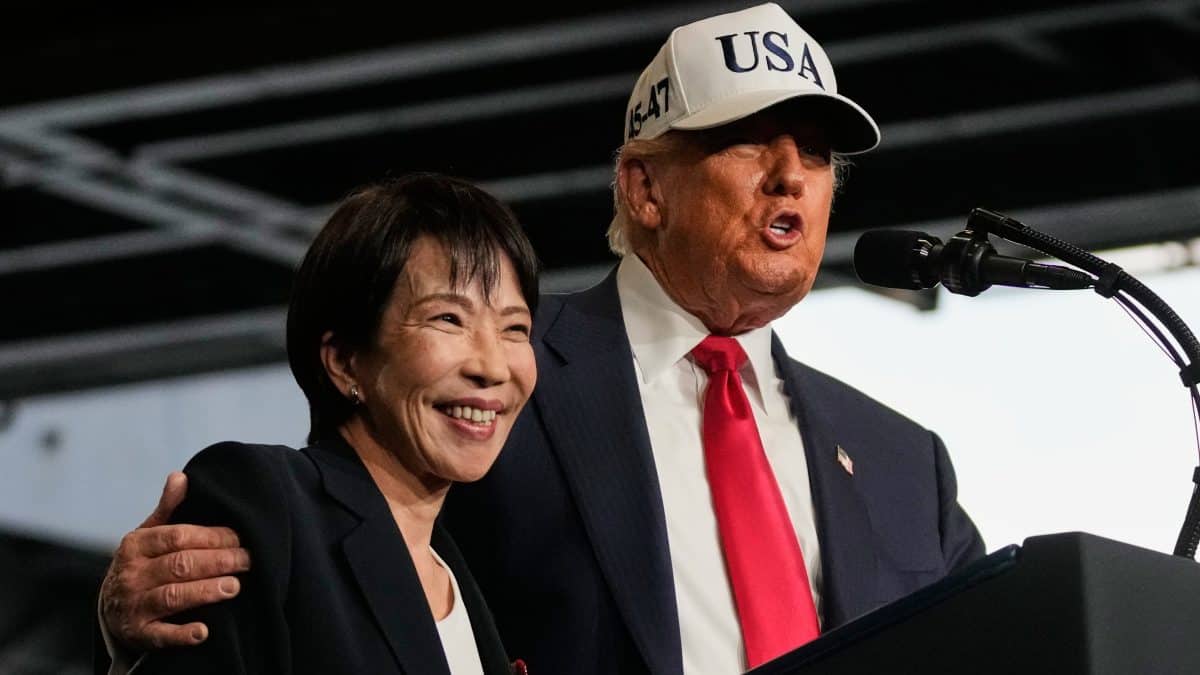
Imagine countries are playing a game where they have special underwater boats called submarines.
Japan and South Korea currently use regular boats (diesel submarines), but China has super-powered ones (nuclear submarines) that can go further and stay underwater longer.
Recently, the US President said it was okay for South Korea to get these super-powered boats too.
Now, Japan is thinking about getting them as well.
Their leaders say they are looking at all options, even 'next-generation propulsion,' because they need to protect a big ocean area.
Having these advanced submarines would help Japan keep up with other countries and protect its own waters better, though they are very expensive.

Japan is considering the acquisition of nuclear-powered submarines.
This consideration follows a decision by US President Donald Trump to allow South Korea to procure nuclear submarines.
China operates nuclear submarines in the East and South China Seas, and the western Pacific.
Japan's Prime Minister Sanae Takaichi has stated that 'all options will be considered without ruling anything out' regarding defense capabilities.
Japan faces the challenge of defending a larger maritime territory compared to South Korea and is exploring advanced propulsion for its submarines.
- Who
- Japan
- What
- is considering acquiring nuclear-powered submarines
- When
- Following US President Donald Trump's approval for South Korea to acquire them
- Where
- Primarily concerning the Pacific region and East Asia
- Why
- To balance the influence of China and Russia, and to keep pace with regional military developments including South Korea's new acquisition and China's nuclear submarine operations.
Arguments for Nuclear Submarines
Challenges and Considerations
Regional Military Balance
Arguments for Nuclear Submarines
Acquiring nuclear submarines is necessary for Japan to balance the influence of China and Russia, especially with South Korea now possessing them.
Challenges and Considerations
The necessity is debated given the expense, and current diesel submarines, potentially upgraded, might suffice for regional defense.
Capability and Cost
Arguments for Nuclear Submarines
Nuclear submarines offer superior long-distance operational capabilities, crucial for defending Japan's larger maritime territory.
Challenges and Considerations
Nuclear submarines are significantly more expensive, raising questions about their cost-effectiveness for Japan's defense needs, particularly in its surrounding waters.
US Strategy and Alliance Role
Arguments for Nuclear Submarines
As the US may increasingly rely on allies for Pacific security, Japan needs advanced capabilities to fulfill its role.
Challenges and Considerations
There is a potential for the US to entrust more security to allies, which could shift the focus and responsibility for Pacific defense among its partners.
- Current Submarine Power
- Japan and South Korea operate diesel-powered submarines
- US Role
- US provides nuclear submarine capabilities to allies
- China's Presence
- China operates nuclear submarines in East/South China Seas and Western Pacific
- Australia's Plan
- Acquiring nuclear-powered submarines under AUKUS
- Japan's Consideration
- Open to nuclear-powered submarines, exploring 'next-generation propulsion'