Archive · 24 Jan 2026
India's Tricolour: Journey to Civic Right
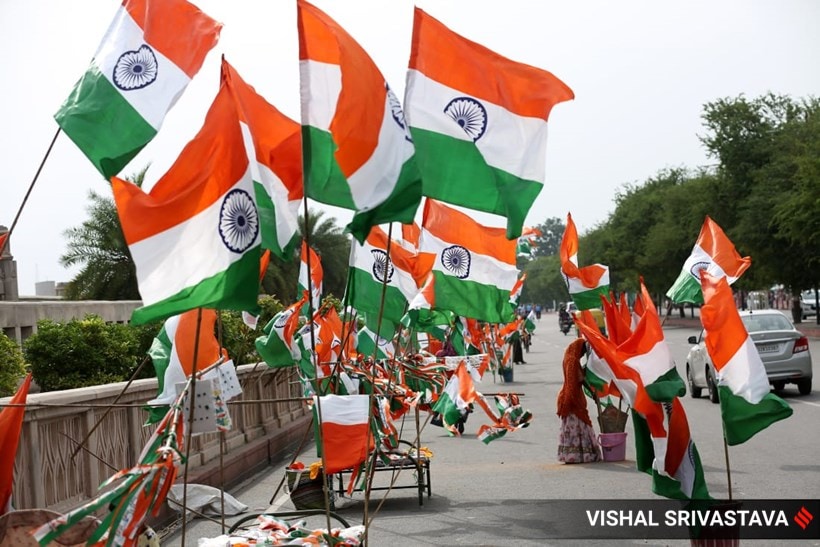
The Indian national flag, known as the tricolour, has a special meaning for Indians.
It started as a symbol of freedom during India's independence.
For a long time, only government officials could display the flag.
But in 1993, Naveen Jindal decided to fly the flag at his factory every day.
The government said he couldn't, so he went to court.
The Delhi High Court and later the Supreme Court ruled that citizens have the right to fly the flag with respect all year round.
This made the flag a symbol that belongs to all Indians.
Today, the Flag Foundation of India helps people connect with the flag by installing big flags all over the country.
Flying the flag is not just about pride; it's about remembering our duties and being part of India's democracy.

India received its national flag on July 22, 1947, as a symbol of independence and freedom.
Naveen Jindal challenged the government's restriction on flying the national flag, leading to a landmark Supreme Court judgment on January 23, 2004, recognizing the right to fly the flag as part of freedom of speech and expression.
The Delhi High Court ruled in 1995 that citizens could display the national flag all year round, which was later upheld by the Supreme Court.
The Flag Foundation of India, established by Naveen and Shallu Jindal, has installed 200 monumental National Flags across India to connect the flag with the people.
Flying the national flag is seen as an act of civic responsibility and a reminder of constitutional duties and democratic participation.
- Who
- Naveen Jindal, Supreme Court of India, Delhi High Court, Flag Foundation of India, Indian citizens
- What
- The journey of the Indian national flag from a state-controlled symbol to a citizen's constitutional right
- When
- Key dates include July 22, 1947, September 22, 1995, January 23, 2004, and the 20th anniversary of the parliamentary amendment
- Where
- India
- Why
- To recognize the fundamental right to fly the national flag as part of the freedom of speech and expression, and to democratize the national flag
- Date of Flag Reception
- July 22, 1947
- Landmark Supreme Court Judgment
- January 23, 2004
- Delhi High Court Judgment
- September 22, 1995
- Parliamentary Amendment
- 20th anniversary of amendment to the Prevention of Insults to National Honour Act, 1971
- Flag Foundation of India Achievement
- Installation of 200 monumental National Flags across India
- First National Flag Designer
- Sister Nivedita (Vajra Flag)
- Constitutional Article Cited
- Article 19(1)(a)