

Archive · 1 Jun 2025
From Ganja to Green Farms: Odisha Region's Transformation
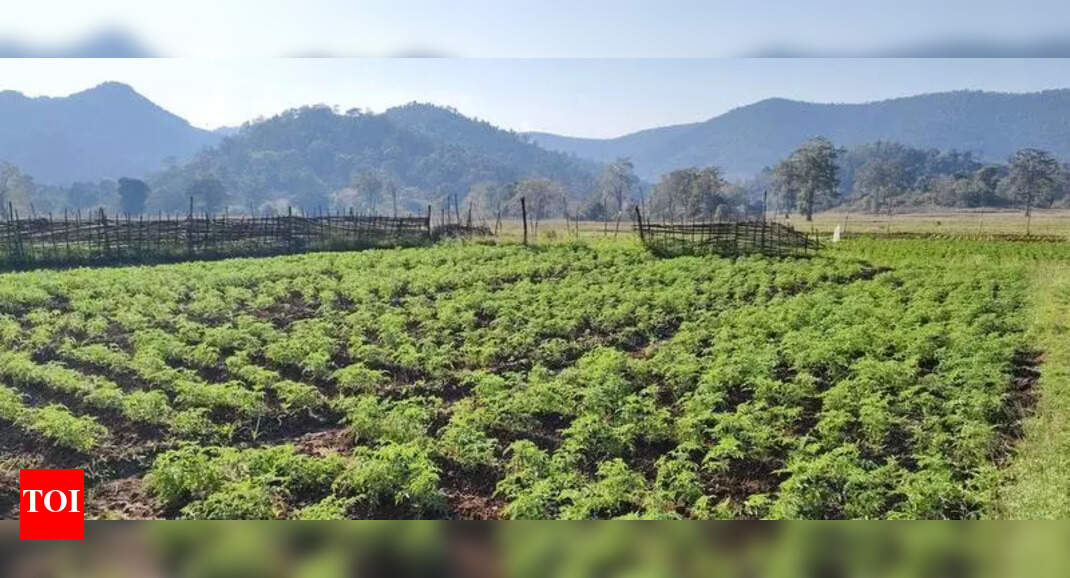
Once a place where people grew illegal plants, a region in India is now changing.
The government and local groups are helping farmers grow healthy food like vegetables instead.
At first, some farmers were unsure, but they started to see that they could make money and live a better life.
They grow things like eggplants and chilies.
The government is helping by building things like dams and teaching farmers how to grow these new crops.
Now, the area has crops, and farmers are very proud of their work.

Swabhiman anchal in Malkangiri district is transforming from a Maoist hotbed and illegal ganja cultivation site to a region embracing sustainable agriculture.
The transformation is led by the Malkangiri administration and ITDA, replacing cannabis farming with alternative vegetable farming.
752 farmers across 68 villages now grow various crops using organic methods, selling produce in local markets and to institutions.
Infrastructure development includes check dams and irrigation, alongside free seeds and training to support the shift.
Value addition and processing units are being set up for turmeric, tamarind, and jackfruit to increase income and market access.
- Who
- The Malkangiri administration, Integrated Tribal Development Agency (ITDA), and local farmers.
- What
- Transformation of Swabhiman anchal from ganja cultivation to sustainable agriculture.
- When
- The transformation is ongoing, with initiatives launched during the 2024-25 rabi and summer seasons.
- Where
- Swabhiman anchal, Malkangiri district, Odisha
- Why
- To transition from illegal ganja cultivation and distress migration to sustainable agriculture and self-reliance.
- Location
- Swabhiman anchal, Malkangiri district, Odisha
- Villages Involved
- 151
- Panchayats Involved
- 9
- Farmers Involved
- 752
- Crops Grown
- Groundnuts, brinjal, beans, chili, onion, cauliflower, bitter gourd, pumpkin, sweet corn
- Key Schemes
- SETU
- Dragon Fruit Farming
- 37.5 acres by 36 farmers