

Archive · 31 Dec 2025
Interstellar Comet 3I/ATLAS Offers Glimpse into Ancient Star
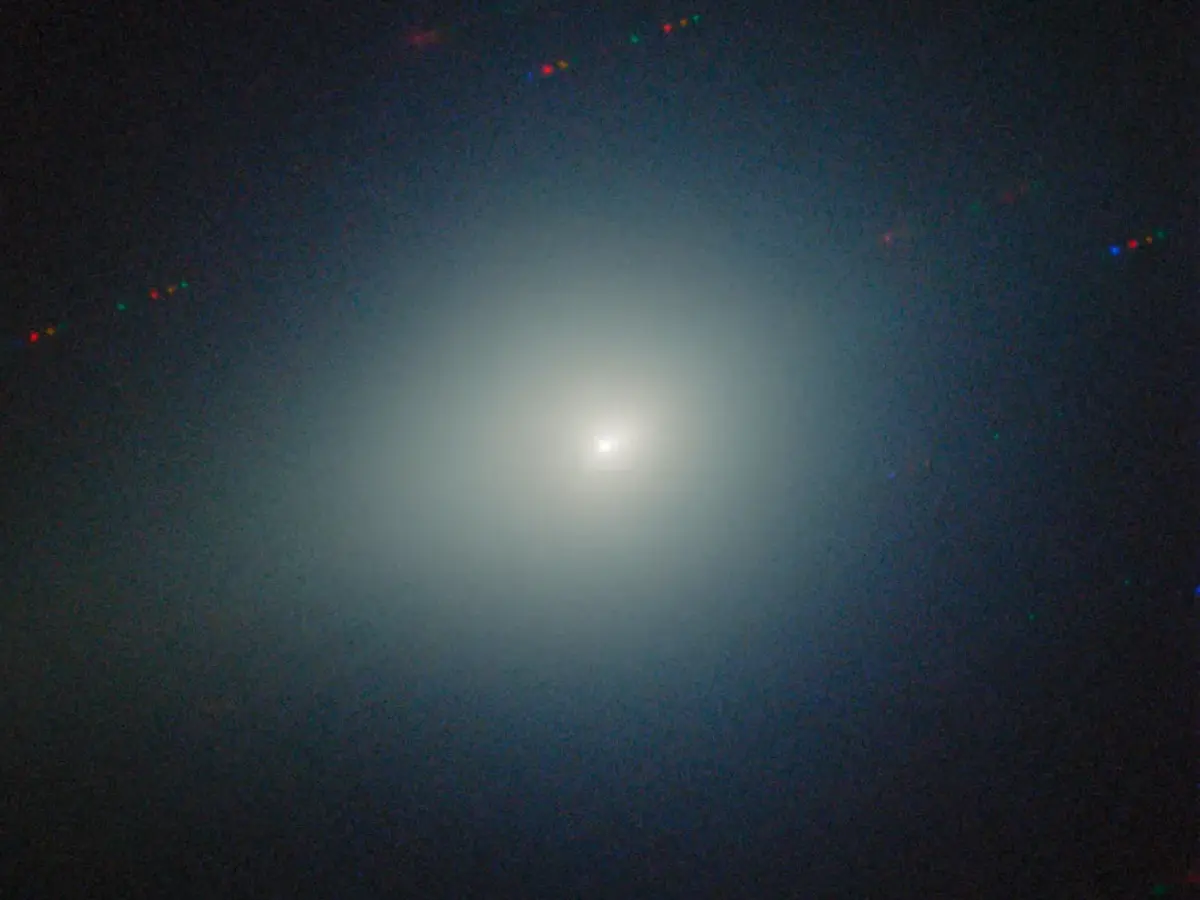
Scientists have found a special comet named 3I/ATLAS that came from outside our solar system.
This comet is very old, between 8 and 14 billion years, which is much older than our solar system.
It might have come from a star that is no longer around.
The comet has two tails made of ice and dust, and it has special metals like nickel and iron.
Scientists are studying it to learn about how planets form in other parts of the galaxy.
They have a special model to understand more about this comet and others like it.
This is a rare chance for scientists to learn about the past of our galaxy.

Interstellar comet 3I/ATLAS is estimated to be between 8 and 14 billion years old, much older than our solar system.
The comet may have originated from a star that no longer exists.
Associate Professor Michele Bannister and her team are studying the comet's composition, which includes ice, dust, and unusual amounts of atomic nickel and iron.
The comet has two tails: one tail and one anti-tail, both reflecting sunlight.
The UC team, in collaboration with the University of Oxford, developed the Ōtautahi-Oxford model to study interstellar objects and their properties.
- Who
- Associate Professor Michele Bannister and her team at the University of Canterbury, in collaboration with Professor Chris Lintott at the University of Oxford
- What
- Studying the interstellar comet 3I/ATLAS
- When
- Discovered in July 2025
- Where
- Milky Way galaxy
- Why
- To understand the building blocks of planet formation in other parts of the galaxy and learn about an ancient star that may no longer exist
- Comet Name
- 3I/ATLAS
- Age
- 8 to 14 billion years old
- Discovery Date
- July 2025
- Research Team
- University of Canterbury and University of Oxford
- Composition
- Ice, dust, atomic nickel, and iron
- Tails
- One tail and one anti-tail