

2 hrs ago
Advocate Seeks Contempt Action Against Election Commission Chief
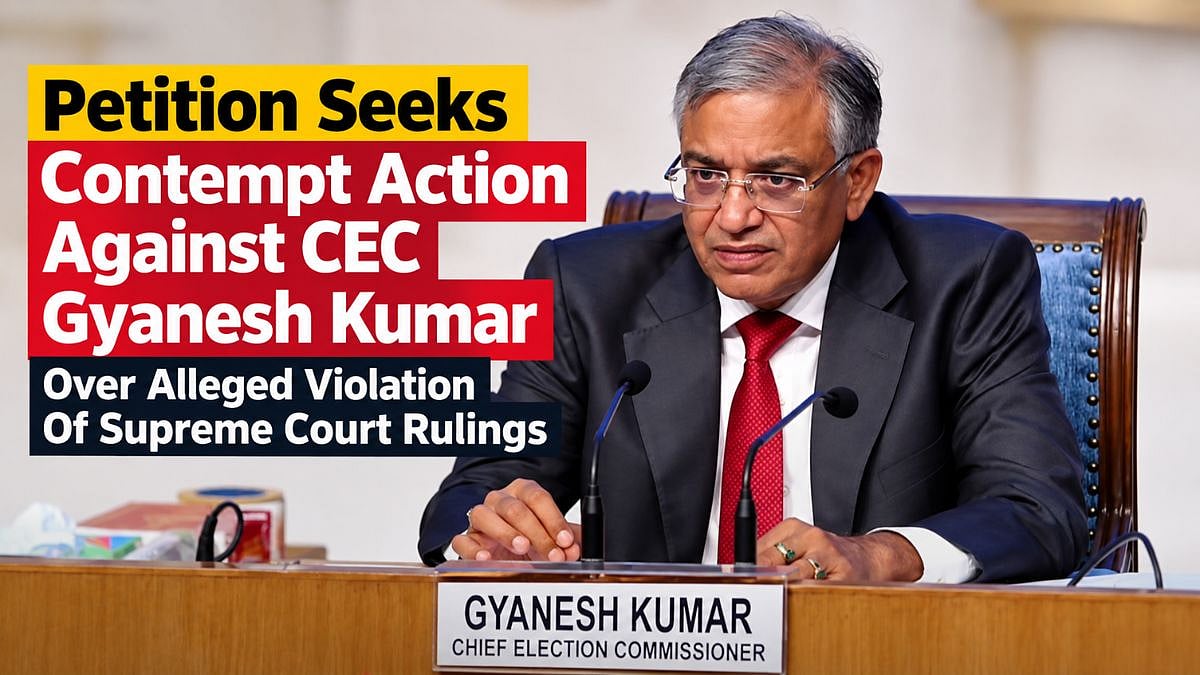
An advocate has asked India’s Attorney General to allow a contempt case against Chief Election Commissioner Gyanesh Kumar.
He says some election decisions were made without the other two Election Commissioners.
The disputed issues include voter registration forms, electoral-roll changes and access to voter databases.
The advocate says this may conflict with Supreme Court rulings about how the Election Commission must work.
Those rulings describe the CEC as a first among equals, rather than an absolute boss.
The Election Commission denies that there is a serious disagreement inside the body.
It says members can raise questions while decisions are being prepared, but the final decisions were unanimous.
No court has yet found the CEC guilty of contempt, and the Attorney General must first decide whether to give consent.

Advocate Brajesh Singh asked Attorney General R Venkataramani to approve criminal contempt proceedings against CEC Gyanesh Kumar.
Singh alleges Kumar bypassed Election Commissioners Sukhbir Singh Sandhu and Vivek Joshi in decisions involving voter rolls and election administration.
The allegations cite Supreme Court rulings requiring the Election Commission to function as a multi-member body with the CEC as first among equals.
The Election Commission rejected claims of an institutional rift, saying differing views were normal and final decisions were unanimous.
The request follows reports that Sandhu and Joshi recorded objections on at least 14 occasions over 10 months.
- Who
- Advocate Brajesh Singh has sought action against Chief Election Commissioner Gyanesh Kumar; Attorney General R Venkataramani’s consent is required to proceed.
- What
- A request has been made to initiate criminal contempt proceedings over alleged violations of Supreme Court rulings governing the Election Commission.
- Where
- The proposed contempt proceedings would be instituted before the Supreme Court of India if consent is granted.
- When
- The request was made on September 24, 2026, after reports published on September 23 about objections within the Election Commission.
- Why
- Singh alleges that decisions were taken without the effective involvement of the other Election Commissioners, contrary to Supreme Court requirements for a multi-member Election Commission.
Petitioner's allegations
Election Commission's response
Internal decision-making
Petitioner's allegations
Brajesh Singh alleges that the CEC bypassed the other Election Commissioners and issued decisions or communications in the name of the Full Commission.
Election Commission's response
The Election Commission says differing views and observations are normal during institutional deliberations and maintains that final decisions were unanimous.
Authority of the CEC
Petitioner's allegations
Singh argues that Supreme Court rulings require the Commission to operate as a multi-member body, with the CEC acting as first among equals rather than as an absolute authority.
Election Commission's response
The Election Commission characterizes the reported disagreements as operational queries, inputs and suggestions raised during the drafting stage.
Voter-roll administration
Petitioner's allegations
Singh says changes to voter data and electoral rolls without the other Commissioners’ involvement could affect electoral transparency and judicial scrutiny.
Election Commission's response
The Commission has not accepted that these issues demonstrate a constitutional breach and says the matters were resolved through unanimous final decisions.
Key facts
- Petitioner
- Advocate Brajesh Singh
- Respondent
- Chief Election Commissioner Gyanesh Kumar
- Consent sought from
- Attorney General for India R Venkataramani
- Legal provisions cited
- Section 15(1)(b) and Section 2(c) of the Contempt of Courts Act, 1971, and Rule 3 of the 1975 Supreme Court contempt rules
- Reported objections
- Election Commissioners Sukhbir Singh Sandhu and Vivek Joshi reportedly objected on at least 14 occasions over 10 months
- Disputed issues
- Form 6, electoral-roll additions and deletions, and centralised access to the electoral-roll database
- Current status
- No contempt finding has been made; Attorney General’s consent is the next step
Sources
Related news
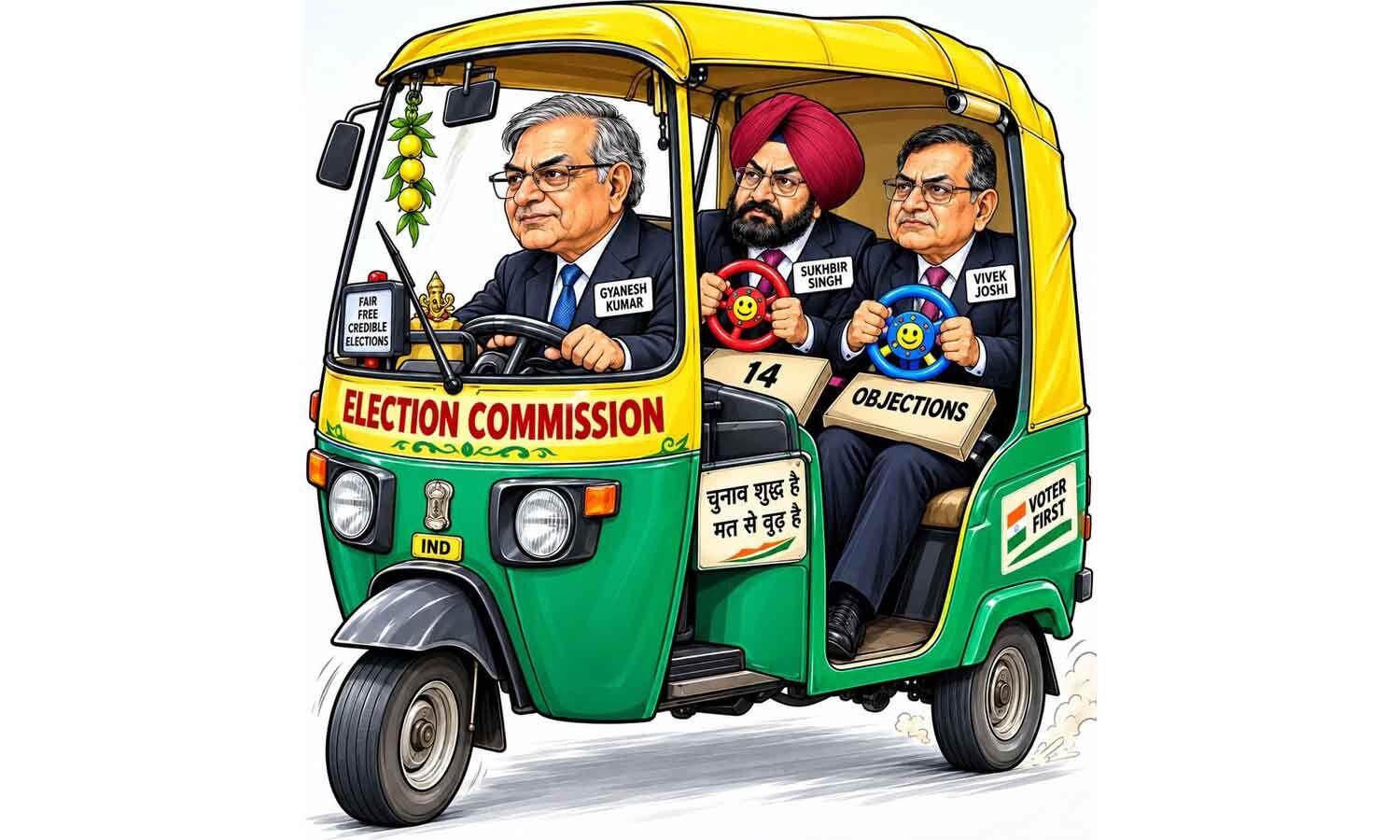
Opposition Demands CEC Gyanesh Kumar’s Removal Over SIR Dissent

Opposition demands CEC removal after reported Election Commission dissent

Two Election Commissioners Raise 14 Objections Over SIR Decisions
Election Commission Says SIR Decisions Were Unanimous Despite Objections

CPI(M) Seeks Gyanesh Kumar’s Removal, Immediate SIR Halt
Opposition Plans Third Motion to Remove Election Chief
Rahul Gandhi Links Vote Chori To Lawmaking Legitimacy
Election Commission Faces Credibility Test Over SIR Dispute
Rahul Gandhi Demands Gyanesh Kumar Resign, Alleges Election Rigging

Rahul Gandhi Escalates Attack in Election Commission Row

Election Commission Faces Controversy Over SIR and CEC Removal Motion