

Archive · 24 Sep 2025
UPSC Mains Questions: Free Movement Regime and H-1B Visas
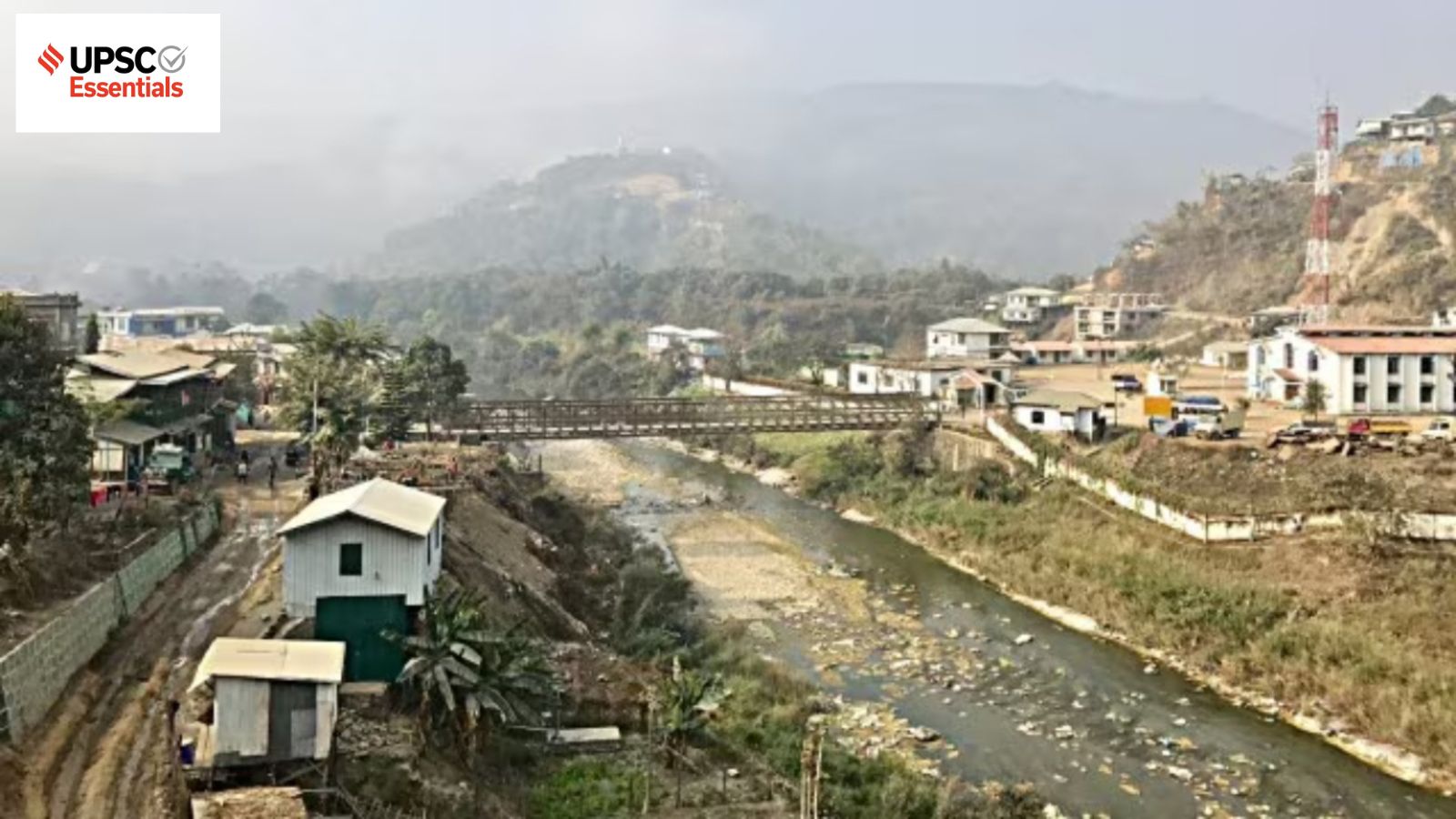
Imagine people living on the India-Myanmar border can cross into each other's countries without needing a visa, up to a certain distance.
This is like a special agreement.
On the other hand, the US has a program called H-1B, which lets companies hire skilled workers from other countries.
Many of these workers come from India.
This has created discussions in the US about immigration.
Recently, companies hiring under the H-1B program are now required to pay a higher minimum salary for each foreign worker.
Some people think the H-1B program brings great talent to the US, while others worry it might affect the job market for American workers.
Overall, this issue highlights how global movement and worker programs are connected to politics.

FMR allows border residents to travel short distances without visas.
The India-Myanmar border stretches 1,643 km across northeastern states.
H-1B visas enable US companies to employ foreign skilled workers.
Indians are the largest beneficiaries of the H-1B program.
US firms hiring under H-1B visas are now required to pay $100,000 minimum.
- Who
- Indians and Myanmarese border residents; US employers and skilled workers
- What
- Free Movement Regime (FMR) along India-Myanmar border and H-1B visa impacts
- When
- FMR implemented in 2018; H-1B program ongoing
- Where
- India-Myanmar border and United States
- Why
- FMR aims to facilitate border interactions. H-1B to fill skills gaps.
- FMR Agreement
- Allows border residents to travel 16 km without a visa (now 10 km)
- India-Myanmar Border Length
- 1,643 km
- H-1B Visa Program
- Allows US firms to hire foreign workers in specialized fields.
- Indian Beneficiaries (H-1B)
- Account for over 70% of approved petitions
- Salary Threshold for H-1B
- $100,000 annually, recent requirement