Archive · 20 Nov 2025
India's Deep-Sea Ambitions: Manned Submersible & Underwater Lab

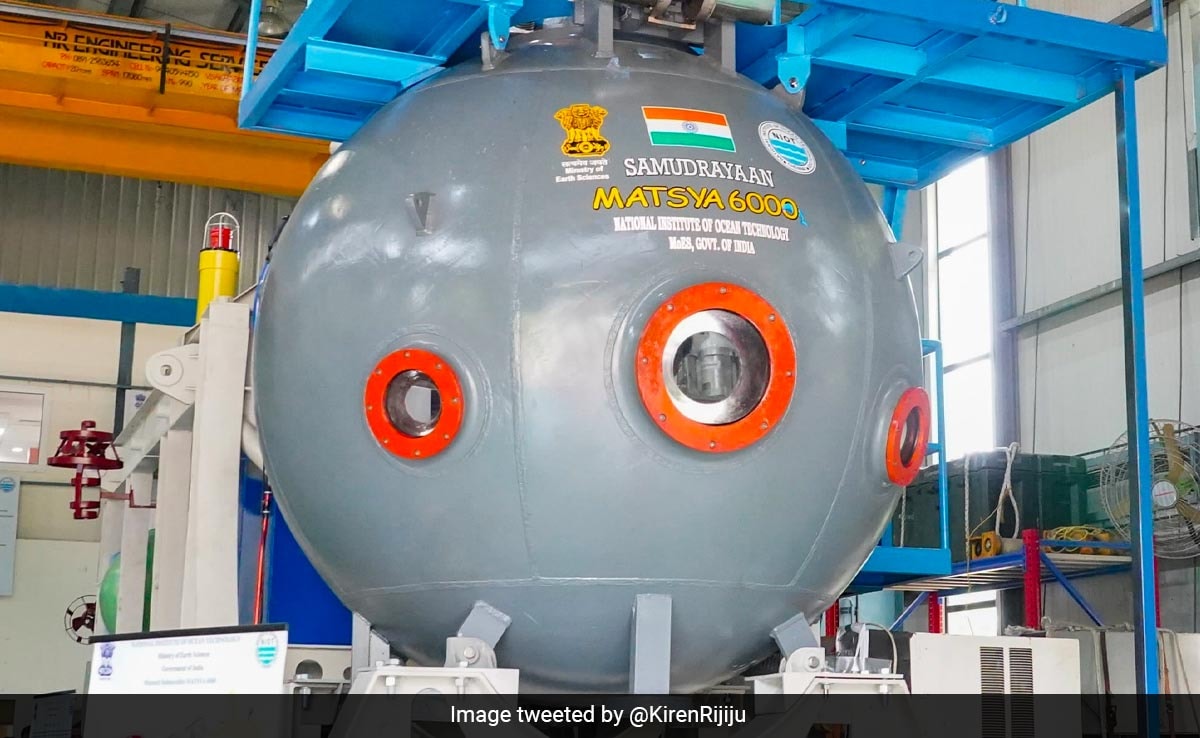
India is building its first manned submersible to explore the deep ocean.
Two Indian scientists will dive in it up to 6,000 meters deep.
Additionally, India is planning to create an underwater lab at the same depth by 2047.
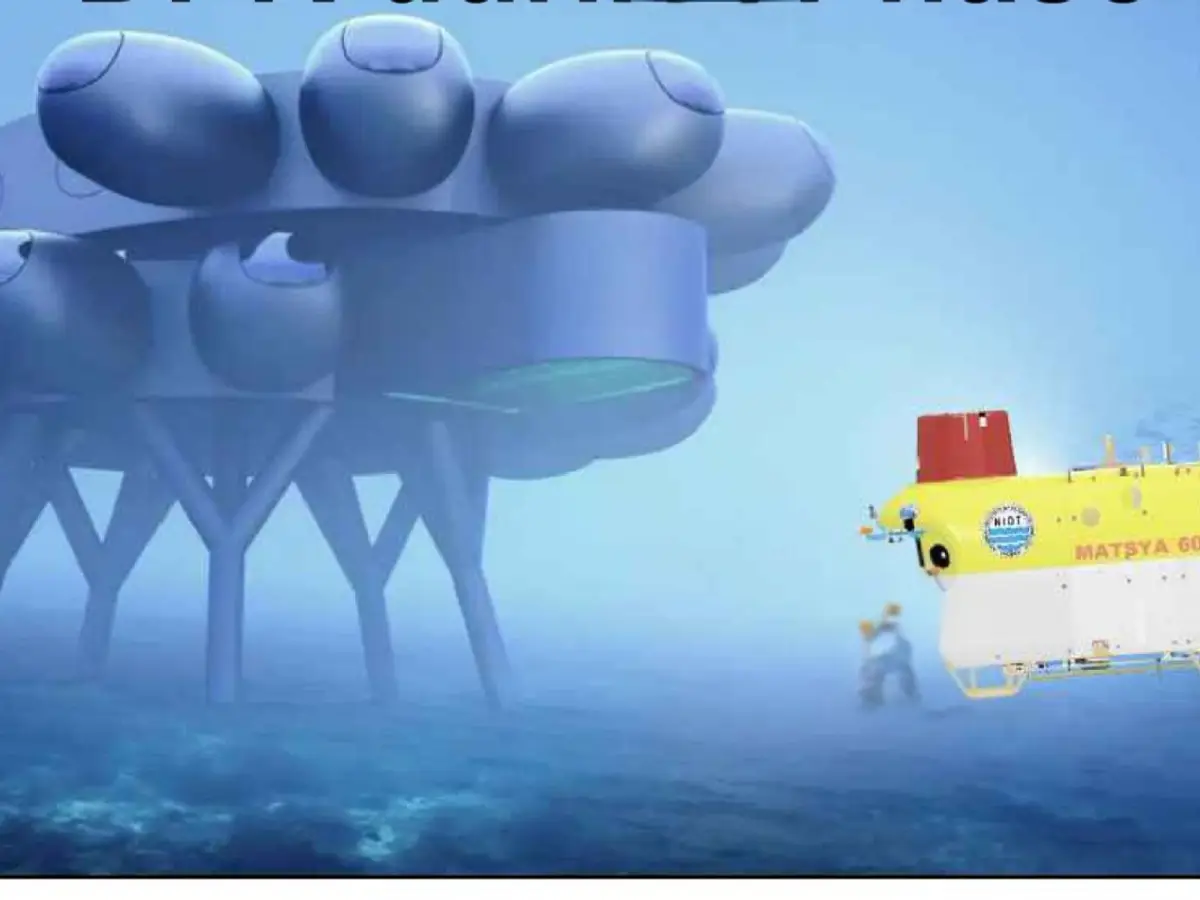
This lab would help scientists learn more about the ocean and its resources, just like how astronauts study space from the International Space Station.

India is developing its first manned submersible, Matsya-6000, to dive up to 6,000 meters depth.
Two Indian scientists will pilot the submersible off Chennai coast in early 2023.
The mission is part of India's Deep Ocean Mission and reflects self-reliance in deep-sea exploration.
NIOT is also exploring a future concept of establishing a long-term underwater lab at 6,000 meters depth by 2047.
The underwater lab would enable better insights into deep-ocean research and expand India's technological capabilities.
- Who
- Ramesh Raju and Jatinder Pal Singh, scientists from National Institute of Ocean Technology (NIOT), and future scientists for the underwater lab
- What
- will pilot India's first manned submersible, Matsya-6000, to explore ocean depths and establish an underwater lab
- When
- Early 2023 for the submersible mission, 2047 for the underwater lab
- Where
- Off Chennai coast for the submersible mission, 6,000 meters under the ocean for the underwater lab
- Why
- To explore the deep ocean, join the elite group of nations with such capabilities, harness ocean resources for economic growth, and advance scientific knowledge
Proponents of Deep-Sea Exploration
Challengers of Deep-Sea Exploration
Real-time Decision Making
Proponents of Deep-Sea Exploration
Human presence allows for real-time decision-making and in-situ experimentation, which automated systems cannot fully replicate.
Challengers of Deep-Sea Exploration
Autonomous underwater vehicles and robotic systems can minimize risks and reduce costs, making deep-sea exploration more feasible.
Technological Challenges
Proponents of Deep-Sea Exploration
Establishing an underwater lab requires significant technological advancements, such as reliable power supply, oxygen, and carbon dioxide removal systems.
Challengers of Deep-Sea Exploration
India's ongoing developments in autonomous underwater vehicles and robotic systems can serve as 'resident' vehicles in the underwater lab, extending its spatial range.
- Submersible Name
- Matsya-6000
- Maximum Depth
- 6,000 meters
- Pilots
- Ramesh Raju and Jatinder Pal Singh
- Launch Year (Submersible)
- 2023
- Primary Goal (Submersible)
- Explore the deep ocean and join the elite group of nations with such capabilities
- Underwater Lab Concept Year
- 2047
- Primary Goal (Underwater Lab)
- Expand learning and technological developments in deep-ocean research