

Archive · 19 Aug 2026
Trump Shifts Iran Strategy Toward Hormuz Pressure, Denuclearization
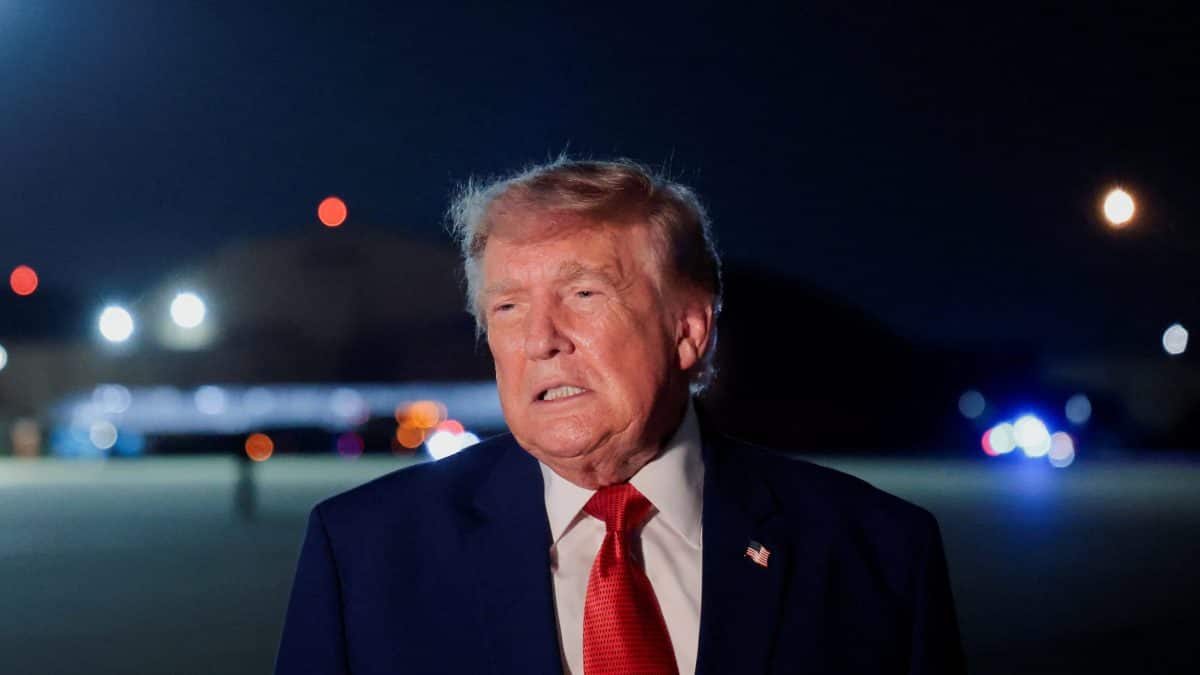
Donald Trump says the United States is changing how it deals with Iran.
First, he wants shipping to move freely through the Strait of Hormuz.
Later, he wants Iran to give up its nuclear program.
The United States says it may use ships, allies, and other pressure instead of relying mainly on direct fighting.
Iran has used its position near the strait as an important source of power.
Problems in the waterway could affect oil supplies and prices around the world.
Iranian officials do not trust the United States plan.
They want military attacks to stop and sanctions to be removed before making an agreement.
It is still unclear whether the plan will lead to talks or more conflict.

Donald Trump outlined a two-phase strategy focused first on reopening the Strait of Hormuz and later on Iran’s denuclearization.
The United States aims to reduce direct military involvement while maintaining pressure through maritime operations and allied cooperation.
Washington says Iran’s ability to control the waterway has weakened amid increased United States and allied activity.
The Strait of Hormuz is a major energy corridor whose disruption could affect oil prices and global energy markets.
Iranian officials remain skeptical of United States intentions and want military strikes and economic sanctions ended before any agreement.
- Who
- Donald Trump, the United States, Iran, and allied maritime forces are involved.
- What
- The United States is pursuing a two-phase strategy to reopen the Strait of Hormuz and push Iran toward denuclearization.
- When
- The strategy was outlined by Trump while speaking to reporters at the White House; the article does not provide a specific date.
- Where
- The strategy centers on the Strait of Hormuz, the Gulf region, and Iran.
- Why
- Washington wants to reduce Iran’s maritime leverage and direct United States military involvement while maintaining pressure for concessions.
Washington’s pressure strategy
Iranian demands and skepticism
How to handle the Strait of Hormuz
Washington’s pressure strategy
The United States says maritime operations and allied cooperation can help keep shipping routes open and weaken Iran’s control over the waterway.
Iranian demands and skepticism
Iran has historically treated its proximity to the strait as strategic leverage and has threatened blockades, tanker seizures, and other disruptions.
Path toward an agreement
Washington’s pressure strategy
Washington wants to use pressure over the strait to push Iran toward negotiations and eventual denuclearization while limiting direct military involvement.
Iranian demands and skepticism
Iranian officials remain skeptical of United States intentions and want military strikes to stop and economic sanctions to be removed as part of any agreement.
Risk of escalation
Washington’s pressure strategy
The United States is seeking to maintain pressure without triggering another escalation or a prolonged expansion of American military operations.
Iranian demands and skepticism
The article indicates that continued pressure and unresolved demands could instead lead to another cycle of confrontation in the Gulf.
- First phase
- Reopening the Strait of Hormuz.
- Second phase
- Addressing Iran’s nuclear program through denuclearization.
- Strategic aim
- Reduce Iran’s ability to use the strait as economic and strategic leverage.
- U.S. approach
- Maintain pressure through maritime operations, allied cooperation, and other measures.
- Energy significance
- The Strait of Hormuz carries a significant share of global seaborne oil shipments.
- Iranian conditions
- Iranian officials have demanded an end to military strikes and the removal of economic sanctions.
- Main uncertainty
- The strategy could encourage negotiations or trigger another cycle of confrontation in the Gulf.