

Archive · 9 Nov 2025
Growing Juicy Plums on Your Balcony Garden
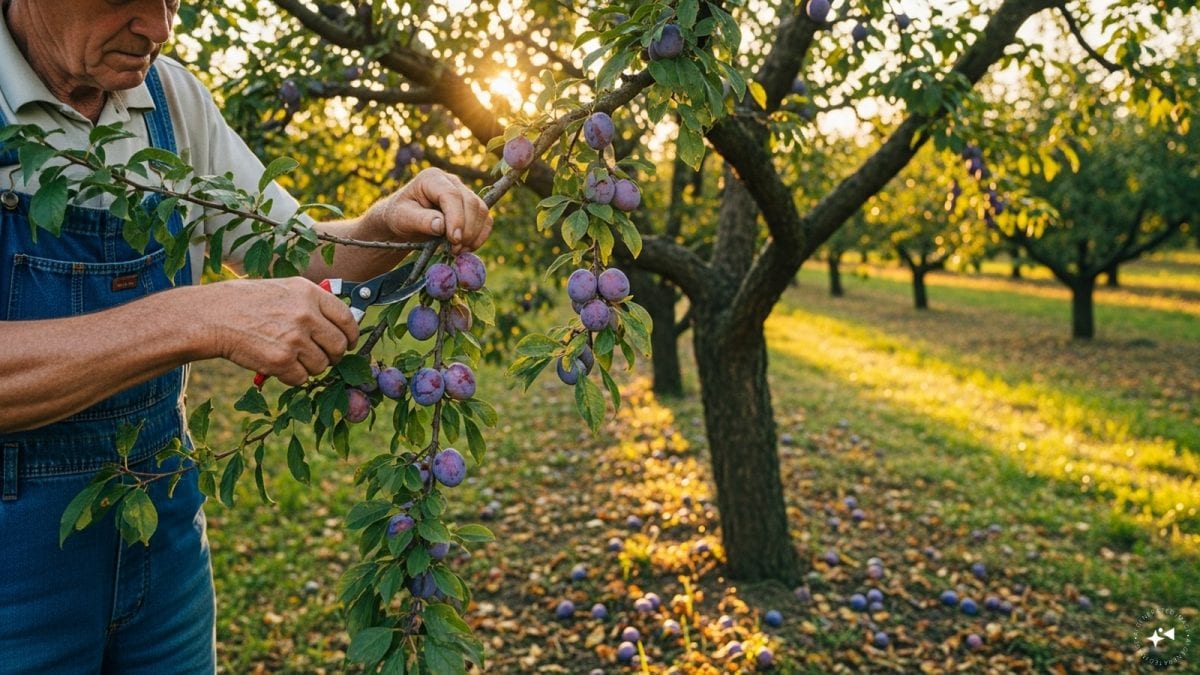
Even if you don't have a big yard, you can grow yummy plums on your balcony!
First, pick a small plum tree that likes pots, like the 'Santa Rosa' kind.
Then, get a really big pot, at least as wide as a car tire and just as deep, with holes so extra water can drain out.
Fill the pot with good dirt mixed with compost and sand.
Find the sunniest spot on your balcony because plum trees love sunshine for at least 6 hours a day!
Water the tree when the soil feels dry, but don't let it get too soggy.
Feed it with plant food every couple of months.
Trim off any dead branches to help the tree stay healthy and make good fruit.
Sometimes, plum flowers need help from a little brush to make fruit, especially if you only have one tree.
With these steps, you can have your own juicy plums!

Choose dwarf or container-friendly plum varieties suitable for small spaces.
Select a large container (18-24 inches diameter) with good drainage for deep root growth.
Use a well-draining soil mix of garden soil, compost, and sand.
Ensure the tree receives 6–8 hours of direct sunlight daily for flowering and fruiting.
Water regularly to maintain soil moisture and fertilize every 6–8 weeks during the growing season.
Prune regularly to improve air circulation, sunlight penetration, and fruit quality.
Hand-pollinate flowers if the chosen variety requires cross-pollination and only one tree is present.
- Who
- Balcony gardeners
- What
- Growing juicy plums in containers
- When
- Ongoing, with specific care during the growing season and reduced watering in winter
- Where
- Balcony gardens
- Why
- To produce delicious plums in small spaces with proper techniques.
- Suitable Varieties
- Dwarf or container-friendly plums like ‘Santa Rosa,’ ‘Methley,’ or ‘Hollywood’.
- Container Size
- At least 18–24 inches in diameter and depth.
- Soil Mix
- Equal parts garden soil, compost, and sand.
- Sunlight Requirement
- 6–8 hours of direct sunlight daily.
- Watering
- Keep soil moist but not soggy; reduce slightly in winter.
- Fertilizing Schedule
- Every 6–8 weeks during the growing season with balanced organic fertilizer.
- Pruning
- Regularly to remove dead branches and maintain shape for air circulation and fruit quality.
- Pollination
- Some varieties require cross-pollination; hand-pollination may be necessary.