

2 hrs ago
Column Criticizes Salman Rushdie’s Comments on Hindutva and RSS
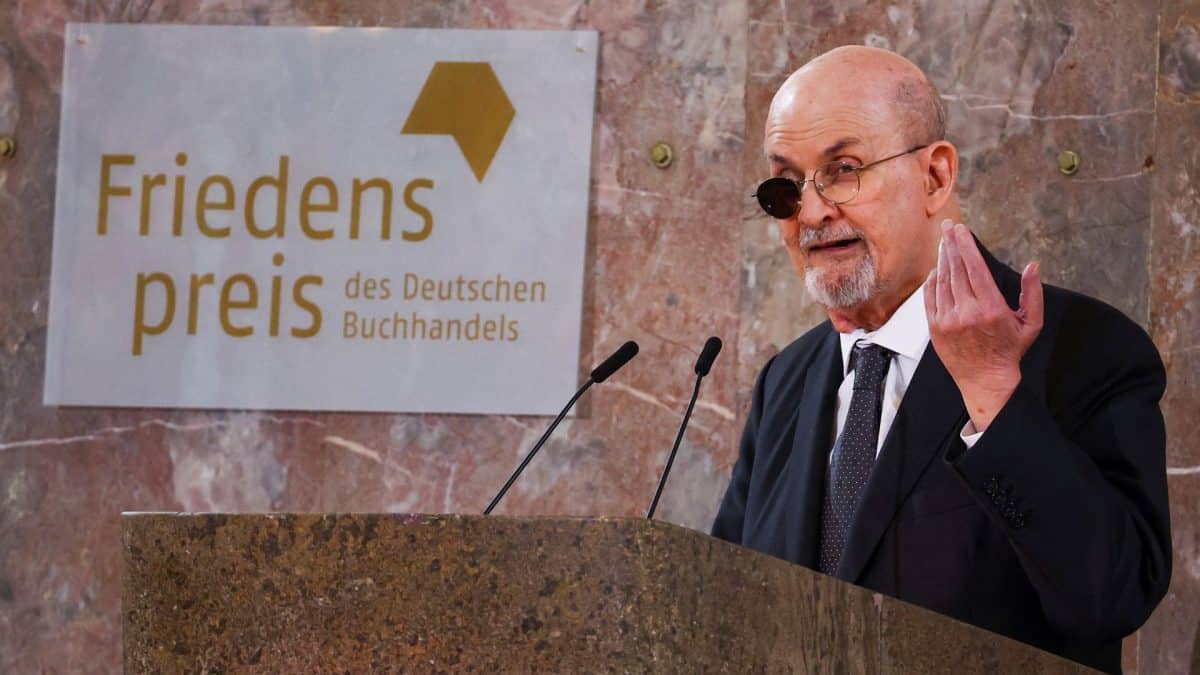
This opinion column criticizes writer Salman Rushdie for comments about Hindu nationalism in India.
Rushdie compared some Hindu Americans’ support for the RSS with Irish-American support for the IRA.
The author says this is unfair because the IRA carried out many violent attacks.
Rushdie also questioned whether secular India can return and discussed young people and women in India.
The column says he did not fully address the fact that many young Indians have voted for the BJP.
Rushdie also said Narendra Modi was partly responsible for the 2002 Gujarat violence.
The author notes that Modi was exonerated but says Rushdie questioned the meaning of that decision.
Overall, the columnist believes Rushdie attacks Hindutva more openly than Islamist extremism.
These judgments come from the columnist and are not presented as an independent investigation.

The column condemns Salman Rushdie’s comparison between Hindu-American support for the RSS and Irish-American support for the IRA.
It argues that Rushdie’s comparison overlooks the IRA’s history of bombings, shootings and killings during the Troubles.
The author says Rushdie’s comments about secular India and young Indian voters sidestep support for the BJP.
Rushdie is quoted questioning Narendra Modi’s possible responsibility for the 2002 Gujarat violence despite Modi’s exoneration by courts.
The column argues that Rushdie criticizes Hindutva more forcefully than Islamism because Hindutva is a safer target in Western intellectual circles.
- Who
- The column’s author, Utpal Kumar, critiques writer Salman Rushdie’s comments about the RSS, Hindutva, India and Narendra Modi.
- What
- Rushdie compared Hindu-American support for the RSS with Irish-American support for the IRA and discussed secularism and the Gujarat violence.
- Where
- The interview concerned India and the RSS chief’s visit to New York; the cited historical events occurred in India, Iran and Northern Ireland.
- When
- The comments were made in a recent interview; the article also refers to the 2002 Gujarat violence, the 1989 fatwa and Rushdie’s 2022 stabbing.
- Why
- The columnist argues that Rushdie’s comparison distorts the IRA’s violence and reflects a selective approach to criticizing political and religious extremism.
Rushdie’s Position
Columnist’s Critique
RSS and Irish Republican Army comparison
Rushdie’s Position
Rushdie compared support for the RSS among some Hindu Americans with Irish-American support for the IRA.
Columnist’s Critique
The columnist says the comparison is reckless because the IRA conducted extensive armed violence, including bombings and killings.
Secular India and younger generations
Rushdie’s Position
Rushdie expressed admiration for young people in India and women challenging restrictions, while suggesting that secular India may still be recoverable.
Columnist’s Critique
The columnist says this response avoids acknowledging that many young Indians, including women, have repeatedly voted for the BJP since 2014.
Narendra Modi and Gujarat violence
Rushdie’s Position
Rushdie said Modi was partly responsible for the 2002 Gujarat violence and questioned what his exoneration meant.
Columnist’s Critique
The columnist says Rushdie was improperly casting doubt on India’s judicial institutions after the country’s highest court addressed the allegations.
Key facts
- Central criticism
- The column says Rushdie’s comparison of Hindu-American support for the RSS with Irish-American support for the IRA is irresponsible.
- IRA violence cited
- The article says the Provisional IRA carried out more than 1,000 bomb attacks in 1972 and killed about 1,800 people between 1969 and 1994, including about 600 civilians.
- Rushdie on India
- Rushdie said that whether secular India is retrievable remains an open question, adding that “forever is a long time.”
- Political claim
- Rushdie said Narendra Modi was “in part responsible” for the 2002 post-Godhra Gujarat violence.
- Judicial finding
- The column states that India’s highest court dealt with allegations concerning Modi’s role and that Modi was exonerated.
- Historical threat
- The article recalls the 1989 fatwa issued by Ayatollah Ruhollah Khomeini against Rushdie and Rushdie’s subsequent years in hiding.
- Author
- The opinion piece was written by Utpal Kumar, who says the views expressed are personal.
Quotes

Salman Rushdie
Novelist and interview subject discussing Hindu nationalism and the RSS
“Many of us suspect that the leadership of Gujarat, one of the big states of India — and he was the chief minister — that the Hindu leadership of the state was involved in encouraging what became a murderous moment in the life of the state. I mean, look, we have to say that he was exonerated, but what does that mean, and who did the exoneration?”
 firstpost.com
“It is unfortunately the case that a lot of Indian Americans Hindu Americans are attracted to the idea of Hindu nationalism. You can compare it, if you want, to the way in which Irish Americans used to support the IRA.”
firstpost.com
Sources
Related news
Bhagwat’s New York Speech Sparks Debate Over Hindutva
Bhagwat’s New York Visit Sparks Debate Over Diaspora Power
India Rejects USCIRF Sanctions Call Against RSS Leaders
Owaisi Attacks RSS Over Bhagwat’s Remark On Muslims

USCIRF Seeks RSS Sanctions Before Bhagwat’s International Tour
BJP’s Ballari Chalo Ends as Vijayendra Vows Continued Karnataka Agitation
Telangana Government Whip Accuses BRS, BJP of Wasting Assembly Time

Chidambaram Questions India’s BRICS Gains as BJP Responds
BJP Expels Seven More Rebels, Bringing Rajasthan Total To 48
