8 months ago
AI Enhances Bionic Hands for Amputees
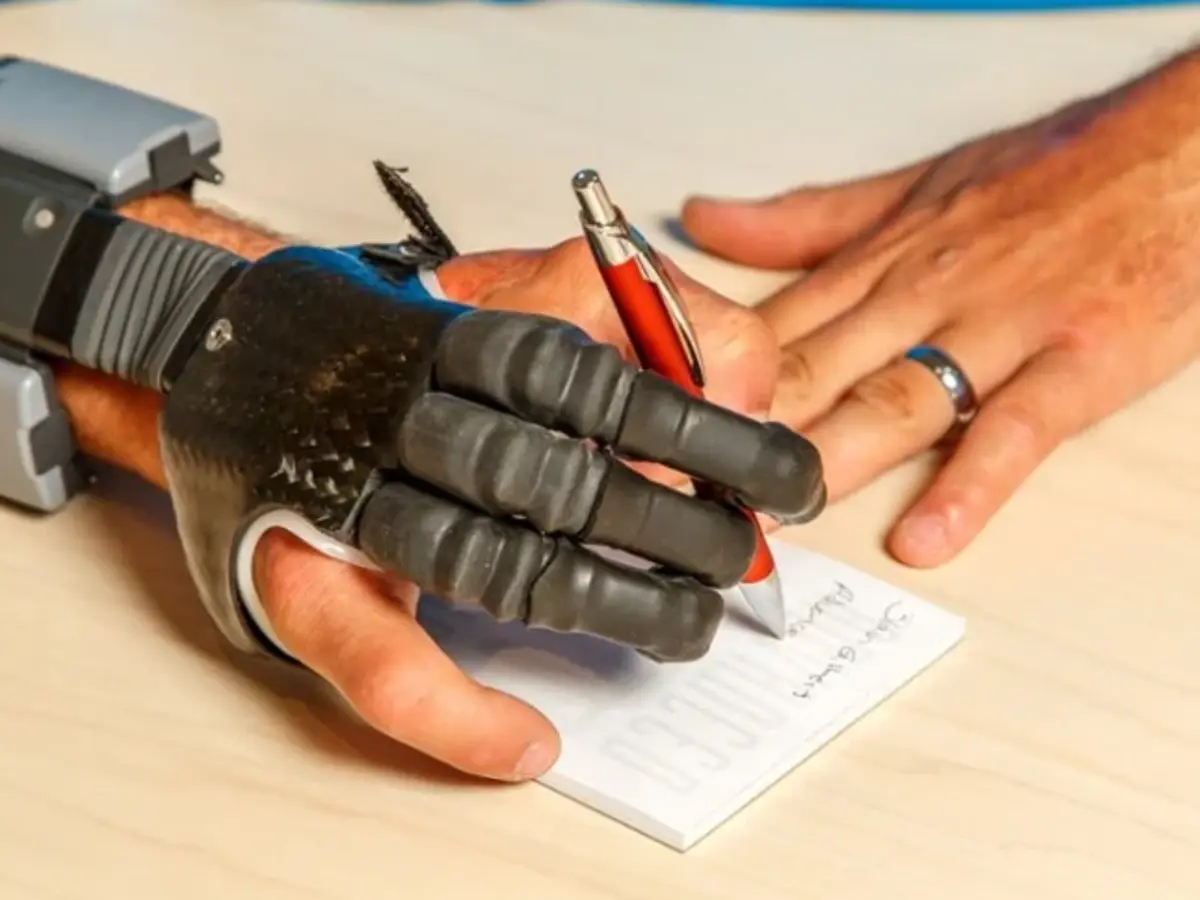
Researchers at the University of Utah have developed an AI-powered bionic hand that helps amputees use their prosthetic hands more easily.
Many people with bionic hands stop using them because they are hard to control.
The new AI system acts like a co-pilot, helping the hand adjust its grip automatically.
This makes it easier to pick up and hold things without crushing or dropping them.
In tests, the AI hand was much more successful at tasks like picking up a paper cup or moving fragile objects.
The researchers say the technology is still being tested and is not yet as natural as a real hand, but it shows a lot of promise.
They plan to test it in real-world settings and work with more people to improve it.

Up to 50% of amputees abandon advanced bionic prostheses due to control difficulties.
The AI-powered bionic hand uses sensors to detect distance and grip force in real time.
The AI system automatically adjusts each finger's movement, allowing users to focus less on controlling the hand.
In tests, the success rate for tasks like picking up a paper cup and moving fragile objects rose to 80-90% with AI assistance.
The technology is still in testing and not yet as natural as a biological limb, with real-world testing planned for the future.
- Who
- Researchers at the University of Utah, led by Jake George, an electrical and computer engineer.
- What
- An AI-powered bionic hand that automatically adjusts grip force and finger position.
- Where
- The research was conducted at the University of Utah.
- When
- The technology is still in testing, with real-world testing planned for the future.
- Why
- To make bionic arms more intuitive and reduce the mental burden on users.
Key facts
- AI-powered bionic hand
- A bionic hand with AI assistance that automatically adjusts grip force and finger position.
- Success rate
- With AI assistance, the success rate for tasks like picking up a paper cup and moving fragile objects rose to 80-90 per cent.
- Current technology
- The technology is still in testing and not yet as natural as a biological limb.
- Research team
- Researchers at the University of Utah, led by Jake George, an electrical and computer engineer.
- Next steps
- Real-world testing in home environments and partnerships for larger clinical trials.
Quotes
Jake George
Electrical and computer engineer at the University of Utah
“Our goal was to make bionic arms more intuitive, so users could perform tasks without having to think about every movement.”
 wionews.com
“The hand naturally adapts to the object. Each finger moves independently.”
wionews.com