Archive · 7 Oct 2026
Astronomers Find Candidate Phoenix Planet Around White Dwarf
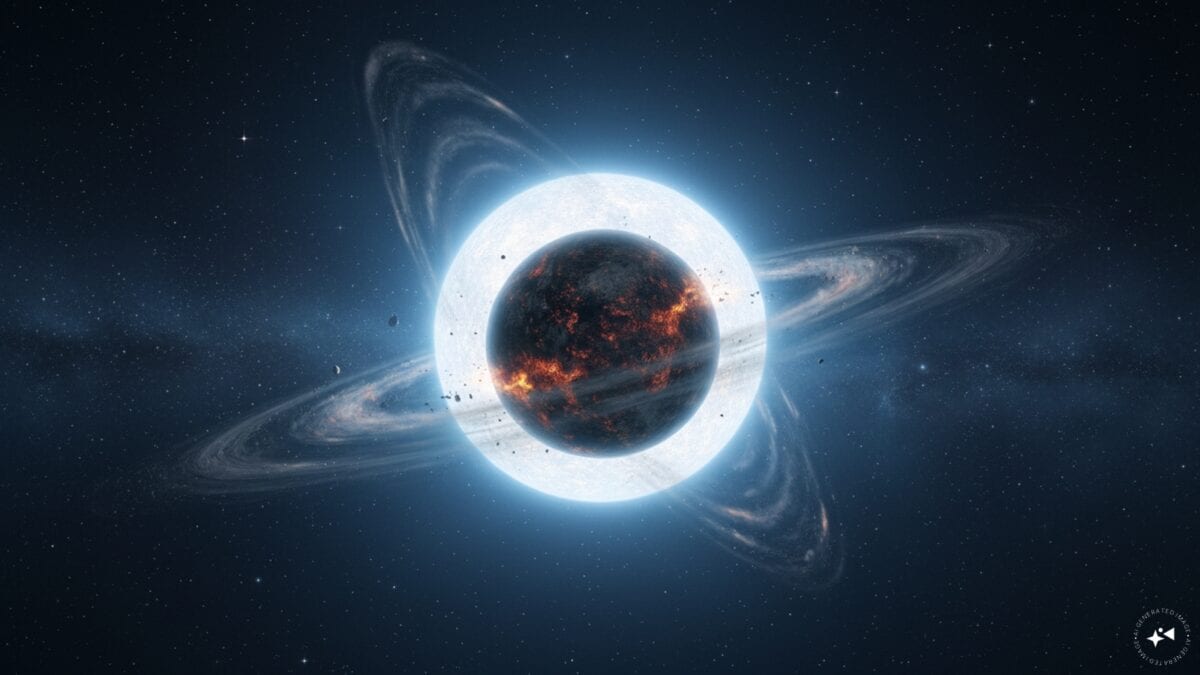
A white dwarf is the leftover centre of a star that has run out of fuel.
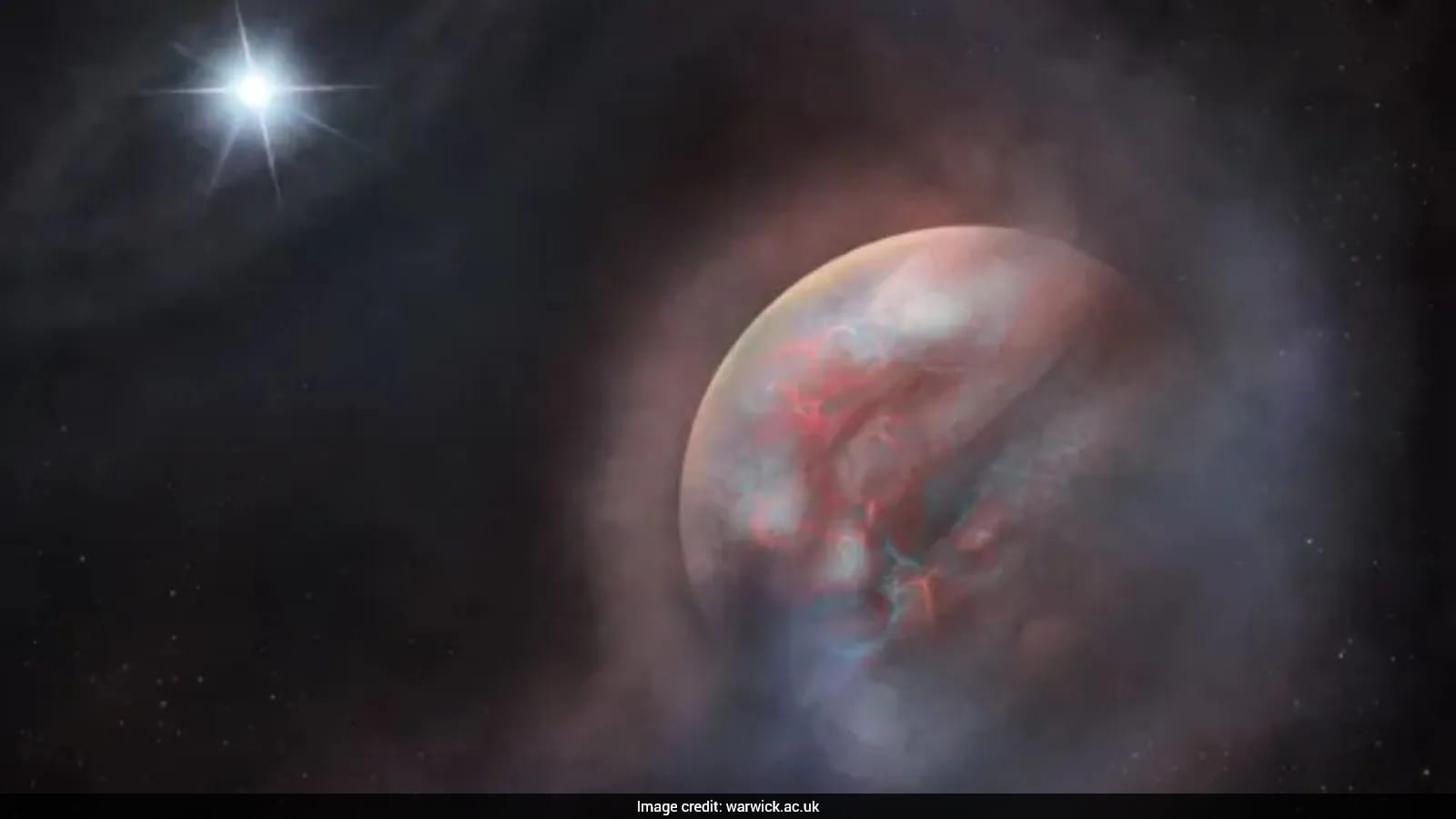
Astronomers found signs of a Jupiter-sized planet near a white dwarf called HS 0209+0832.
The planet goes around it every 4.4 days.
The system is about 270 light-years from Earth.
Hubble observations found unusual heavy elements in the white dwarf’s atmosphere, including niobium.
Researchers think the elements came from material the star threw off as it died.
They propose that some of this material formed a disc and then a new planet.
The white dwarf’s radiation is now stripping gas from the planet’s atmosphere.
The planet is still described as a candidate, and scientists say its origin is an interpretation of the evidence.

Astronomers report a candidate second-generation planet orbiting the white dwarf HS 0209+0832, about 270 light-years away.
The Jupiter-sized candidate completes an orbit every 4.4 Earth days.
Hubble observations detected heavy elements, including zinc, copper and unusually abundant niobium, in the white dwarf’s atmosphere.
Researchers interpret the elements as a signature of material expelled during the star’s red-giant phase and propose it formed a new disc and planet.
The team says radiation from the white dwarf is stripping the close-orbiting planet’s atmosphere; the planet and its proposed origin remain a candidate interpretation.
- Who
- Astronomers led by the University of Warwick; the candidate planet is associated with white dwarf HS 0209+0832.
- What
- Researchers reported evidence for a candidate second-generation planet orbiting a white dwarf.
- When
- The reports were published on October 7, 2026; the study appeared in Nature Astronomy.
- Where
- The HS 0209+0832 system, about 270 light-years from Earth.
- Why
- Unusual heavy-element signatures led researchers to propose that the planet formed from material expelled by the dying star.
Researchers’ Interpretation
Scientific Caveat
Planet’s origin
Researchers’ Interpretation
Researchers interpret the heavy-element signature as evidence that the planet formed from material expelled by its dying star, possibly gathered into a disc with help from an unseen companion.
Scientific Caveat
The reports call it a candidate; the proposed formation process is an explanation of the observations, not a directly observed sequence of events.
- White dwarf
- HS 0209+0832
- Distance
- About 270 light-years from Earth
- Candidate planet
- Jupiter-sized gas giant
- Orbital period
- 4.4 Earth days
- Notable atmospheric element
- Niobium was reported at about 1,000 times its abundance in the Sun.
- Observation instrument
- NASA’s Hubble Space Telescope
- Publication
- Nature Astronomy