

Archive · 5 Jan 2026
Voynich Manuscript May Hide Cypher Message
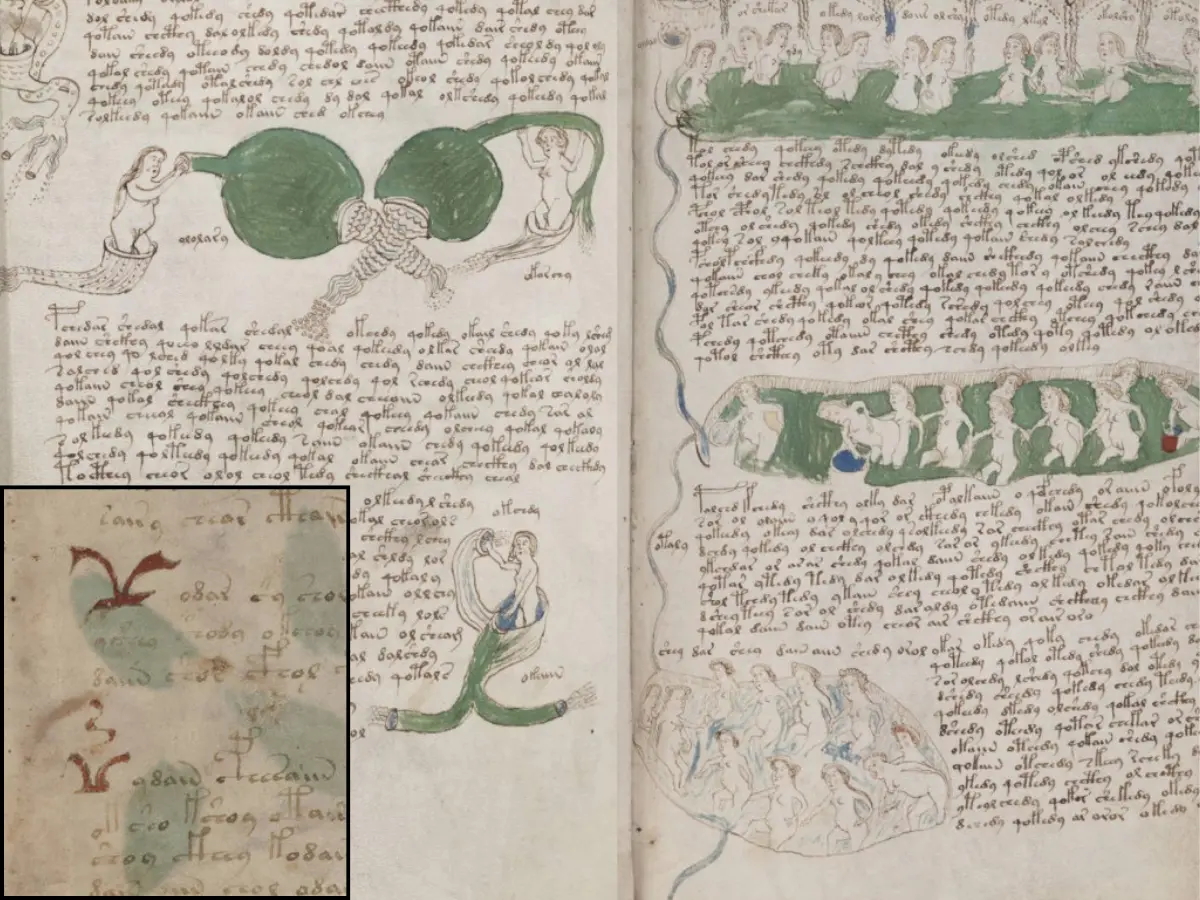
The Voynich Manuscript is a very old and mysterious book that no one can read.
It has strange pictures of plants, stars, and people, and the writing is in a code that no one has been able to crack.
Scientists have been trying to figure it out for a long time.
A new study suggests that the book might have been written using a special code, like a puzzle, from a long time ago.
The study used a method called the 'Naibbe cypher' to try to create text that looks like the writing in the book.
This method uses tables and random things like dice and playing cards to turn normal words into the strange writing seen in the manuscript.
Even though the book is still not fully understood, this new idea gives scientists a different way to think about how it might have been written.

The Voynich Manuscript is a mysterious book from the early 15th century with unknown script and illustrations.
Scientists have been unable to decode the manuscript, which contains strange illustrations and an unknown script.
A recent study in Cryptologia suggests the manuscript might use a historical cypher method called the 'Naibbe cypher'.
The Naibbe cypher uses structured tables and randomness from dice and playing cards to create text resembling Voynichese.
The study does not fully decode the manuscript but offers a new approach to understanding its content.
- Who
- Unknown author, studied by scientists and archaeologists
- What
- Voynich Manuscript, a mysterious book with unknown script and illustrations
- When
- Early 15th century
- Where
- Unknown origin
- Why
- To potentially hide a secret message using a cypher
- Manuscript Name
- Voynich Manuscript
- Estimated Age
- Early 15th century
- Content Type
- Unknown script, illustrations, diagrams
- Decoding Status
- Not fully decoded
- Study Journal
- Cryptologia
- Cypher Method
- Naibbe cypher
- Cypher Tools
- Dice, playing cards