

Archive · 28 Sep 2026
UK Study Finds Lower Inequality as Mohenjo-daro Urbanised
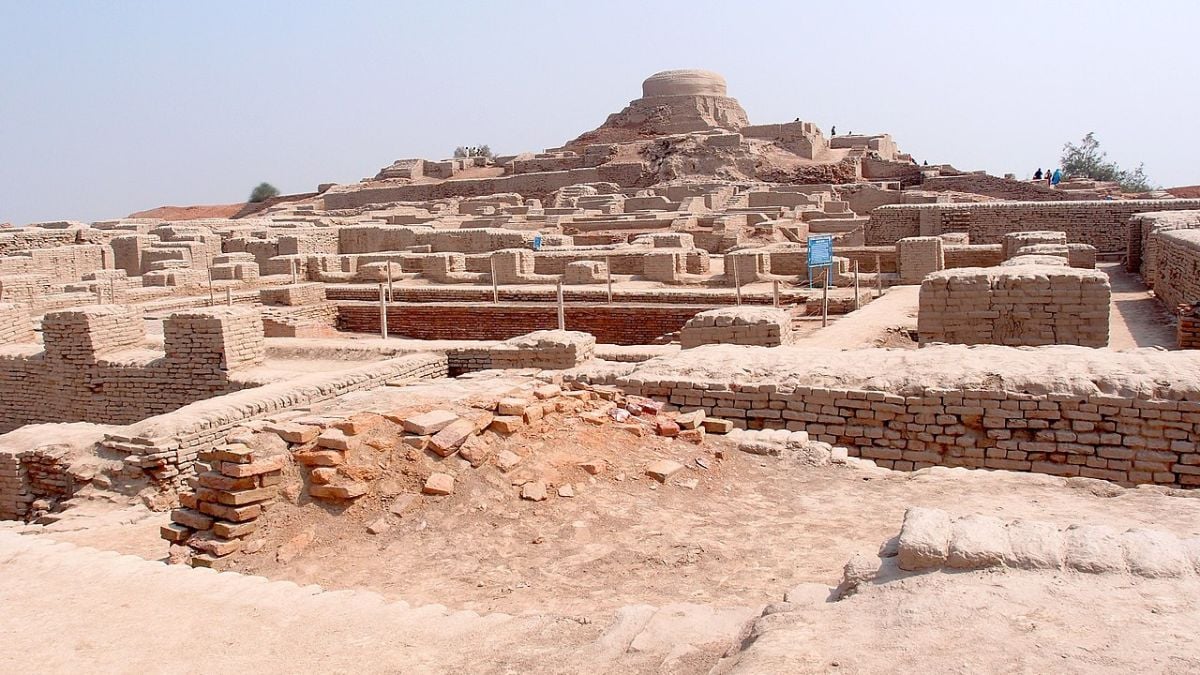
Researchers studied the sizes of houses in the ancient city of Mohenjo-daro.
They used house size as a rough clue about how equally wealth was distributed.
Their calculations suggest that differences between homes became smaller as the city grew.
In one part of the city, the inequality score fell from 0.39 to 0.23 between about 2500 and 2100 BCE.
The researchers think city planning and governance may have helped make residential space more equal.
However, a large house is not the only sign of wealth or status.
People may also have shown their importance through special crafts, rare materials, ornaments, seals, or control of trade.
Other archaeologists see signs of social differences and possible elite groups at Mohenjo-daro and elsewhere.
They say studying one city cannot fully explain the diverse Harappan world, especially its many villages and partly excavated sites.

A study in Antiquity estimates Mohenjo-daro’s overall residential Gini coefficient at 0.44.
In the DK South area, the coefficient fell from 0.39 around 2500 BCE to 0.23 around 2100 BCE.
The researchers interpret the decline as evidence that residential inequality decreased during urbanisation.
Critics caution that house size is only an indirect measure and may overlook wealth shown through objects, craft production, or trade.
Archaeologists also argue that understanding Harappan society requires evidence from villages, towns, ports, and other cities such as Dholavira and Rakhigarhi.
- Who
- Researchers Adam S. Green, Iqtedar Alam, and Cameron Petrie conducted the study; archaeologists including Disha Ahluwalia, Jonathan Mark Kenoyer, Massimo Vidale, Robin Coningham, and Mark Manuel contribute to the broader debate.
- What
- A study analyzed residential building sizes to estimate changes in economic inequality at Mohenjo-daro.
- When
- The study examines periods from about 2500 BCE to 2100 BCE; it was published recently in Antiquity.
- Where
- Mohenjo-daro in Sindh province, present-day Pakistan, particularly the DK South area.
- Why
- The research aimed to test the relationship between urbanisation and inequality in a Bronze Age city.
Lower Inequality Interpretation
Archaeological Caution
Meaning of house sizes
Lower Inequality Interpretation
Green, Alam, and Petrie interpret the falling residential Gini coefficient as evidence that inequality declined as Mohenjo-daro urbanised.
Archaeological Caution
House size may not capture wealth, status, craft specialisation, access to exotic materials, or control of production and trade.
Nature of Mohenjo-daro society
Lower Inequality Interpretation
The city’s layout, civic infrastructure, and lack of obvious palaces, temples, royal tombs, or aggrandising art may indicate collective or relatively egalitarian governance.
Archaeological Caution
Large architectural complexes and differences in buildings may indicate competing or overlapping elite groups and a heterarchical society rather than simple equality.
Scope of the evidence
Lower Inequality Interpretation
The study offers a quantitative way to examine a long-standing question about urbanisation and inequality.
Archaeological Caution
A single, incompletely excavated city cannot represent the wider Harappan world, which included villages, towns, ports, and other cities with different social arrangements.
- Publication
- The study, titled “Inequality declined in the Bronze Age city of Mohenjo-daro,” appeared in Antiquity.
- Sample
- About 309 residential buildings were used in the analysis.
- Overall Gini coefficient
- Mohenjo-daro’s estimated residential Gini coefficient was 0.44.
- DK South change
- The coefficient declined from 0.39 in the early urban phase around 2500 BCE to 0.23 around 2100 BCE.
- Measurement limitation
- Residential area was used as an indirect proxy for wealth and inequality.
- Broader archaeological context
- The Harappan world included more than 4,000 sites across about 1.32 million square kilometres, while only five major cities are identified in the article.