

Archive · 15 Aug 2026
Netaji's grand-nephews recall Bengal's role in Quit India Movement
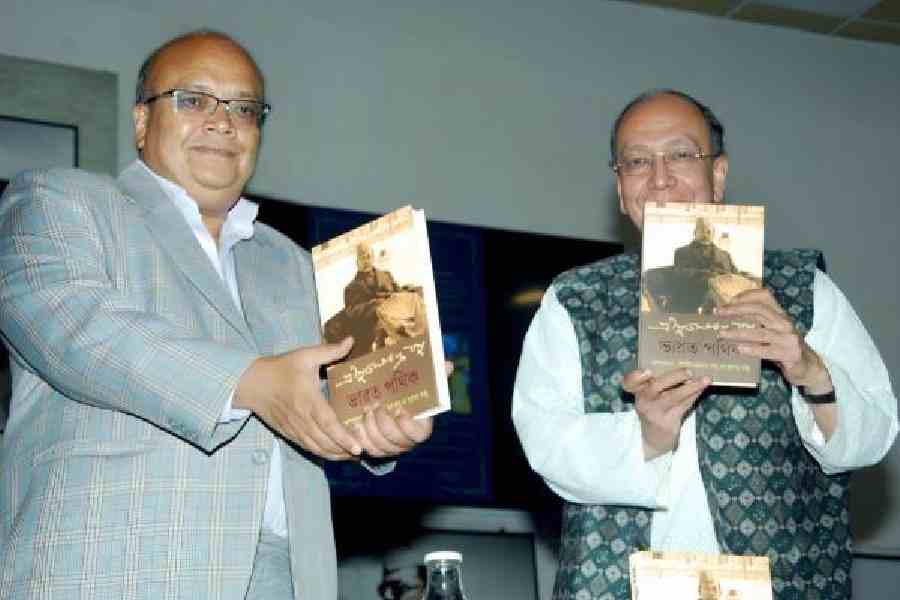
Many years ago, in 1942, huge crowds of people across India rose up and asked the British rulers to leave the country.
Mahatma Gandhi gave the famous call to 'Do or Die,' and the next morning he and other top leaders were arrested.
After that, students, young people and workers kept the protest going with rallies, class boycotts and secret underground networks.
On August 9, the Netaji Research Bureau held a special event in Calcutta to remember this great uprising.
Two of Netaji Subhas Chandra Bose's grand-nephews, Sugata and Sumantra Bose, spoke at the event.
They told the audience how important Bengal was in the movement and how areas like Medinipur were centres of resistance.
They also said that brave people set up their own small governments, such as the Tamralipta Jatiya Sarkar, and that women like Matangini Hazra played a big role.
They remembered how Sisir Bose led a student march in Calcutta and was badly hurt when the British police attacked the crowd.
The speakers were sad that the anniversary was 'almost invisible in Bengal,' and they said people should pay more attention to this history.
They also explained that the movement brought together the thinking of Gandhi and Netaji, who had wanted such an uprising years earlier.

The Netaji Research Bureau hosted a commemoration of the Quit India Movement on August 9, marking 84 years since the mass uprising of 1942.
Historian Sugata Bose called it India's biggest civilian uprising since the 1857 rebellion, led by middle-ranking leaders and spearheaded by students, youth and workers.
Gandhi gave the 'Do or Die' call at the Bombay session of the All India Congress Committee on August 8, 1942, and he and other top Congress leaders were arrested the next morning.
British administration collapsed in parts of Bihar, eastern UP, Bengal (especially Medinipur/Midnapore), Odisha and Bombay province, where parallel governments like the Tamralipta Jatiya Sarkar were set up.
Sumantra Bose criticised the 'shocking inattention' to the anniversary as 'almost invisible in Bengal' and called the movement a belated convergence of Gandhi and Netaji's thinking.
- Who
- Historians Sugata Bose and Sumantra Bose, grand-nephews of Netaji Subhas Chandra Bose, addressed an audience of historians, scholars and students at an event hosted by the Netaji Research Bureau.
- What
- A commemoration of the Quit India Movement recounting Bengal's role in the 1942 mass uprising.
- When
- August 9, 84 years after the movement launched with Gandhi's call on August 8-9, 1942.
- Where
- Netaji Bhawan in Calcutta; the 1942 uprising's epicentres spanned Bengal (especially Medinipur/Midnapore), parts of Bihar, eastern UP, Odisha and Satara in Bombay province.
- Why
- To honour the Quit India rebels and remember Bengal's contribution, while the speakers decried the 'shocking inattention' to the anniversary in the state.
- Event
- Quit India Movement of 1942
- Commemoration
- August 9, 84th anniversary
- Host and venue
- Netaji Research Bureau at Netaji Bhawan, Calcutta
- Gandhi's call
- 'Do or Die,' August 8, 1942, at the Bombay session of the All India Congress Committee
- Epicentres
- Medinipur (Midnapore) in Bengal; parts of Bihar, eastern UP, Odisha and Satara in Bombay province
- Parallel government
- Tamralipta Jatiya Sarkar, headed by Satish Chandra Samanta
- Notable figures
- Matangini Hazra; Sisir Bose, injured in a police assault on a student procession in Calcutta
- Also marked
- Nagasaki Day, with homage to victims of the Hiroshima and Nagasaki bombings