

3 weeks ago
India's Retail Inflation at 4.45% in July, Above RBI Midpoint
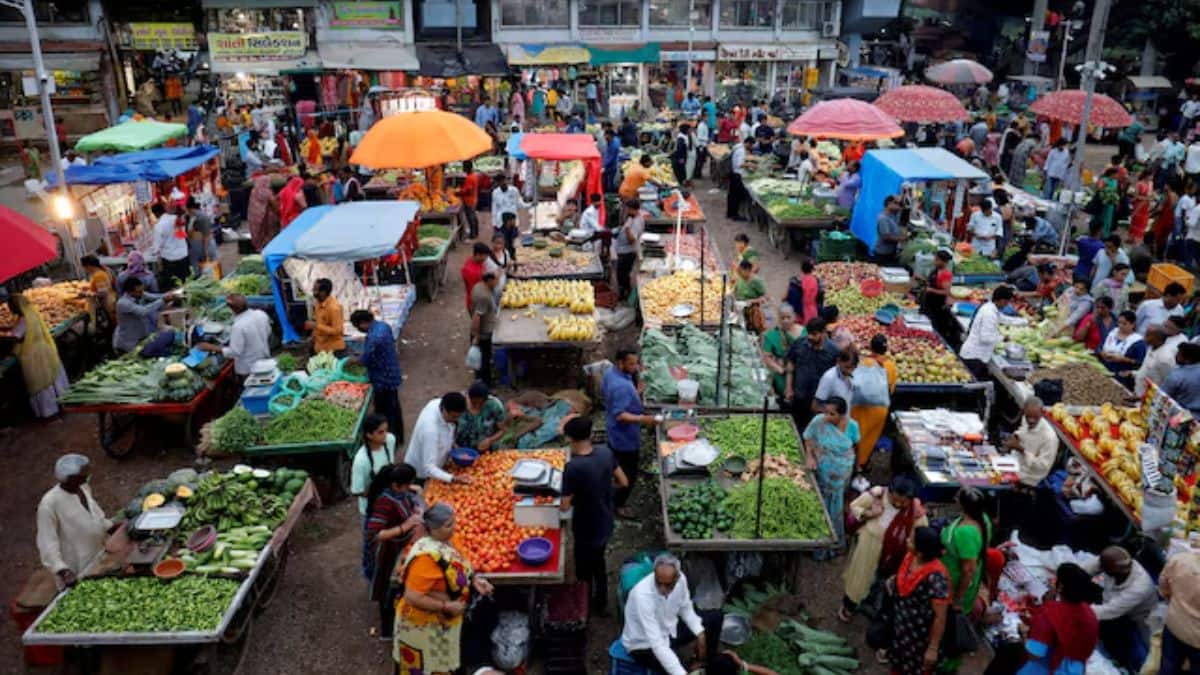
Inflation means the prices of the things we buy go up.
In India, prices rose a bit faster in July, reaching 4.45% as measured by the Consumer Price Index.
That is above the 4% goal the Reserve Bank of India, the country's central bank, likes to aim for, but still inside its allowed range of 2% to 6%.
The rise happened mainly because food and fuel got more expensive.
Food prices alone went up by 5.52%, especially for cooking oils, pulses, and vegetables like onion, ginger and garlic.
Crude oil, which becomes petrol and diesel, also got pricier because of tension in West Asia and worries about shipping through the Strait of Hormuz.
The RBI kept interest rates the same for now and expects prices to rise about 5% this year.
Some economists worry that too much rain could damage crops and make food even costlier in the coming months.

India's retail inflation, measured by the Consumer Price Index, rose to 4.45% in July, breaching the RBI's 4% midpoint target for the second consecutive month.
Food inflation accelerated to 5.52% in July from 5.32% in June, with pulses, edible oils and vegetables like onion, ginger and garlic under pressure.
Brent crude climbed 7-8% to over $89 a barrel amid US-Iran tensions in West Asia and Strait of Hormuz shipping concerns, lifting transport services inflation to 4.43%.
The RBI's Monetary Policy Committee kept the repo rate unchanged at 5.25% with a neutral stance, cut its FY27 inflation projection to 5%, and Governor Sanjay Malhotra called fuel the main driver.
The new CPI series, rebased to 2024 using the 2023-24 Household Consumption Expenditure Survey, means July data cannot be compared with the year-ago period.
- Who
- The Ministry of Statistics and Programme Implementation released the provisional data; the Reserve Bank of India's Monetary Policy Committee, led by Governor Sanjay Malhotra, sets interest-rate policy; Indian consumers face the higher prices.
- What
- India's retail inflation rose to 4.45% in July, breaching the RBI's 4% midpoint target for the second consecutive month, driven by higher food and fuel prices.
- Where
- Nationwide in India, with the highest inflation in Andhra Pradesh, Telangana, Tamil Nadu, Karnataka, Madhya Pradesh, Odisha and Ladakh, and the lowest in Delhi, Mizoram, Tripura, Meghalaya and Nagaland.
- When
- July, with provisional data released on a Wednesday in August; inflation has risen every month since the new CPI series debuted in January.
- Why
- Higher food prices, petrol and diesel price hikes, and Brent crude above $89 a barrel amid West Asia tensions and Strait of Hormuz shipping concerns pushed inflation above the RBI's midpoint target.
RBI likely to stay patient
Rate hike risk ahead
Interest-rate outlook
RBI likely to stay patient
Core inflation is contained at an estimated 3.9-4%, the headline reading is within the 2-6% tolerance band, and economists expect the RBI to remain on hold at its October meeting.
Rate hike risk ahead
Some economists expect inflation to move above 5% from September, and a rate hike before the end of the year is increasingly being discussed if food and fuel pressures persist.
Food inflation outlook
RBI likely to stay patient
If monsoon rainfall improves, food price pressures could moderate in the coming months, giving the RBI room to stay patient.
Rate hike risk ahead
Excess rains have damaged crops, and Bank of Baroda Chief Economist Madan Sabnavis expects pulses and edible oil prices to stay high, keeping food inflation elevated.
Key facts
- Retail inflation (July)
- 4.45%
- Food inflation (July)
- 5.52% (up from 5.32% in June)
- RBI repo rate
- 5.25% (unchanged, neutral stance)
- RBI FY27 inflation projection
- 5% (cut from 5.1%)
- Brent crude price
- Over $89 per barrel (up 7-8%)
- Core inflation (July estimate)
- 3.9-4%
- GDP growth FY26
- 7.7% (RBI FY27 forecast: 6.7%; World Bank and ADB: 6.6%)
- New CPI base year
- 2024
Quotes
Madan Sabnavis
Chief Economist, Bank of Baroda
“Core inflation, excluding food and fuel, is estimated near 4%, kept elevated by gold and silver prices amid geopolitical risk aversion and firm crude‑linked transport costs. For Q2 FY27, we expect headline inflation to average around 4.5‑4.7%, with a mild uptick likely in September as base effects turn less favourable.””
 livemint.com
“We see higher inflation potential in future given the state of monsoon and area under cultivation. This, combined with a longer cropping period and hence harvest, will push up prices of pulses in particular. Global prices of edible oils are also high, which is being felt in domestic markets.””
livemint.com
Sources

Related news
India's retail inflation hits 19-month high of 4.45%
Retail Inflation Rises to 4.45% in July on Food Prices
India's July retail inflation rises to 4.45%, above RBI target

Retail Inflation Climbs to 4.45% in July on Food Prices

India's Retail Inflation Rises to 4.45% on Food Prices

FCNR(B) Inflows Cross $100 Billion as RBI Closes Window
Indian Bond Yields Near 7% as Rate Hike Bets Rise

India Hosts BRICS 2026 Amid US-Iran War Tensions

Finance Ministry Flags Global Yield and Inflation Risks for India
HDFC Bank CEO Jagdishan Opts Out of Reappointment
