

Archive · 23 Jul 2026
Birds Use Ants for Feathers: Scientists Still Puzzled
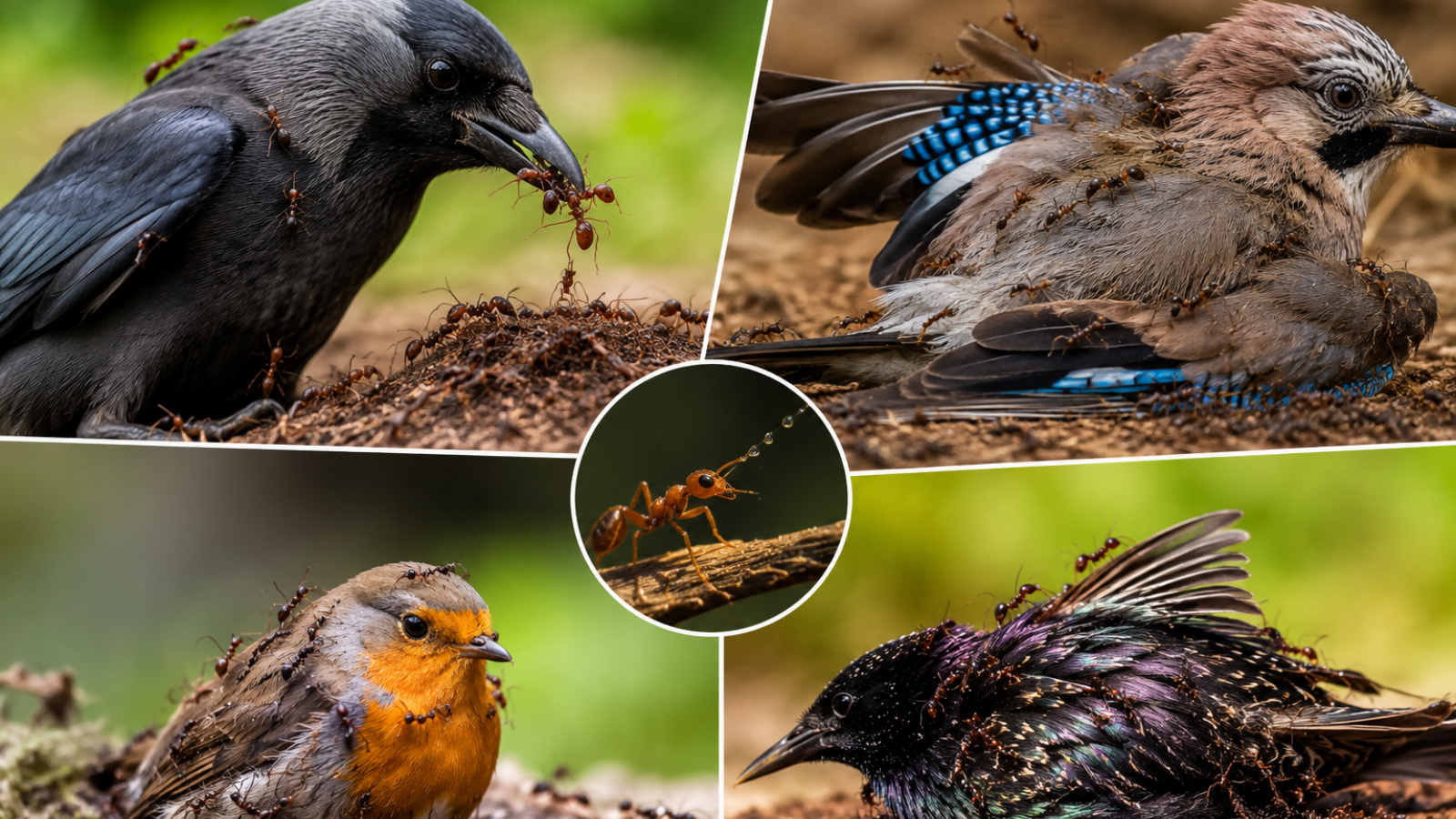
Some birds, like crows and robins, have a strange habit called anting.
They rub ants on their feathers or lie near ant nests.
Scientists think this might help them stay safe from predators or keep their feathers clean.
Over 200 bird species do this, but we're still not sure why they do it.
It's like they're using ant perfume!

Over 200 bird species exhibit anting behavior.
Anting involves rubbing ants into feathers or lying near ant nests.
Scientists propose chemical defense and parasite control as possible reasons.
Common anting birds include crows, blue jays, robins, starlings, and some parrots.
The exact purpose of anting remains debated among scientists.
- Who
- Over 200 bird species, including crows, blue jays, robins, starlings, and some parrots
- What
- Anting behavior where birds rub ants into their feathers or lie near ant nests
- When
- Observed for many years, but exact purpose still debated
- Where
- Observed in various environments where these bird species inhabit
- Why
- Scientists propose theories of chemical defense and parasite control, but exact reason remains unclear
Chemical Defense Theory
Parasite Control Theory
Purpose of Anting
Chemical Defense Theory
Birds use ants to release formic acid, which acts as a chemical defense against predators.
Parasite Control Theory
Birds use ants to control parasites and maintain feather health.
- Behavior Name
- Anting
- Number of Species Observed
- More than 200
- Common Anting Birds
- Crows, Blue Jays, Robins, Starlings, Some Parrots
- Main Anting Methods
- Rubbing ants with beak, lying near ant nests
- Key Chemical
- Formic Acid