Archive · 25 Sep 2026
Bangladesh Inflation Reflects Structural Weaknesses and Policy Challenges
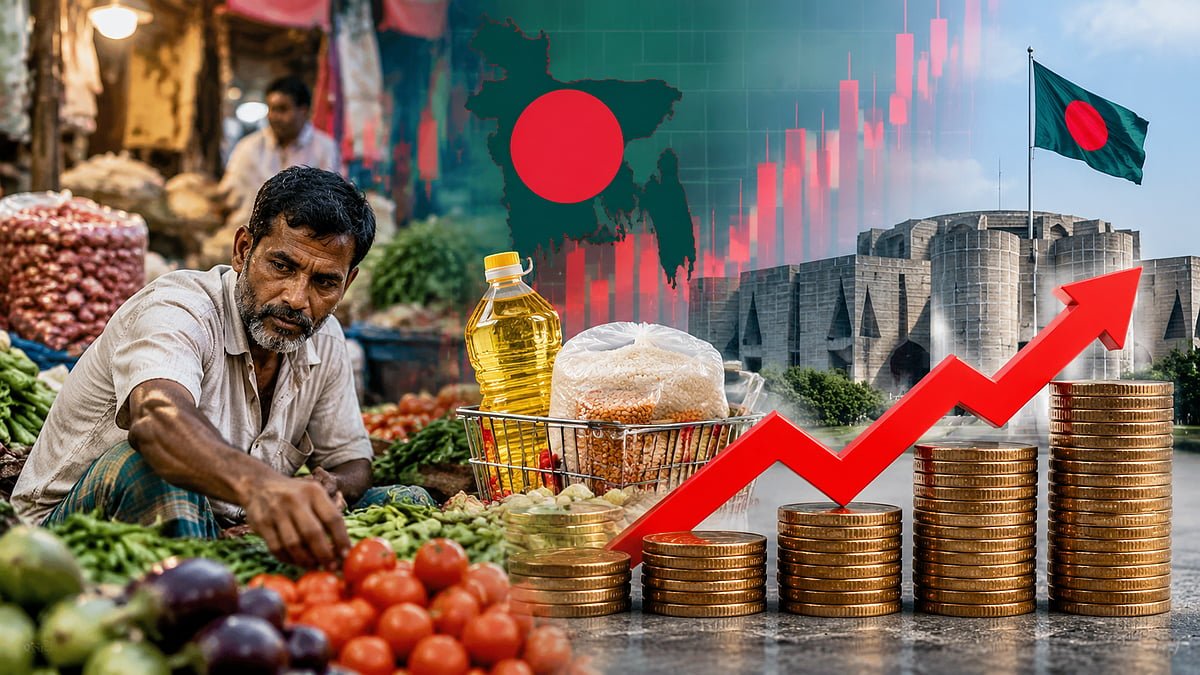
Bangladesh is facing high prices for many goods and services.
A report says the problem is caused by weaknesses inside the economy, not just by temporary shortages or events in other countries.
Some markets have too little competition, allowing prices to rise quickly and fall slowly.
Transport, storage, energy, and supply-chain problems also increase costs.
A weaker currency and more expensive imported fuel make some products costlier.
The government may need to borrow more because its spending is higher than its reliable income.
Too much borrowing could add to inflationary pressure.
The report recommends better revenue planning, energy reforms, stronger market oversight, and policies that encourage private investment.

A report attributes Bangladesh’s persistent inflation to structural economic weaknesses and policy failures, not only temporary shortages or global volatility.
Weak competition, market concentration, supply-chain bottlenecks, and inadequate transport and storage are identified as major pressures.
The Asian Development Bank forecasts average inflation of 8.7% in fiscal 2025–26 and 9% in fiscal 2026–27.
The 2026–27 budget projects a Tk2.26 lakh crore deficit, including Tk1.25 lakh crore in planned domestic financing.
The report calls for sustainable revenue planning, energy-sector reforms, stronger competition policy, and measures to restore private-investment confidence.
- Who
- The Business Standard, citing an Asian Development Bank forecast, reported on Bangladesh’s inflation; one article version also included political criticism of the BNP.
- What
- Bangladesh’s persistent inflation is being linked to structural weaknesses, policy challenges, supply-chain problems, higher food and fuel costs, and currency depreciation.
- When
- The report was published around September 25, and the cited forecasts cover fiscal 2025–26 and 2026–27.
- Where
- Bangladesh.
- Why
- Weak competition, market concentration, inadequate infrastructure, delayed macroeconomic adjustments, weak revenue collection, borrowing pressures, and higher imported costs are contributing to inflation.
Structural-Economic Analysis
Political Criticism
Main cause of inflation
Structural-Economic Analysis
The report argues that persistent inflation is rooted mainly in structural weaknesses, faulty policymaking, weak competition, supply-chain problems, and delayed macroeconomic adjustments.
Political Criticism
A social-media post included in one article version blamed the BNP government for sharply higher fuel prices and described the situation as a political failure after six months in power.
Role of fuel prices
Structural-Economic Analysis
The report identifies higher imported fuel costs and energy-sector inefficiencies as among several contributors to inflation and calls for review of fuel pricing and petroleum taxation.
Political Criticism
The political criticism focuses specifically on increased fuel prices, alleging that the government’s fuel-price decisions helped trigger protests.
- Inflation forecast, fiscal 2025–26
- 8.7% annual average, according to the Asian Development Bank forecast cited in the report
- Inflation forecast, fiscal 2026–27
- 9% annual average, according to the cited forecast
- Projected budget deficit, fiscal 2026–27
- Tk2.26 lakh crore
- Planned domestic financing
- Tk1.25 lakh crore of the projected deficit
- Reported inflation drivers
- Food prices, exchange-rate depreciation, imported fuel costs, supply-chain bottlenecks, and weak competition
- Private-investment concerns
- Policy uncertainty, regulatory complications, energy shortages, and institutional weaknesses
- Recommended reforms
- A credible medium-term revenue plan, energy-sector reform, improved market monitoring, and stronger competition policy