

Archive · 6 Aug 2026
Brahmaputra floods and youth-led protests analyzed for UPSC aspirants
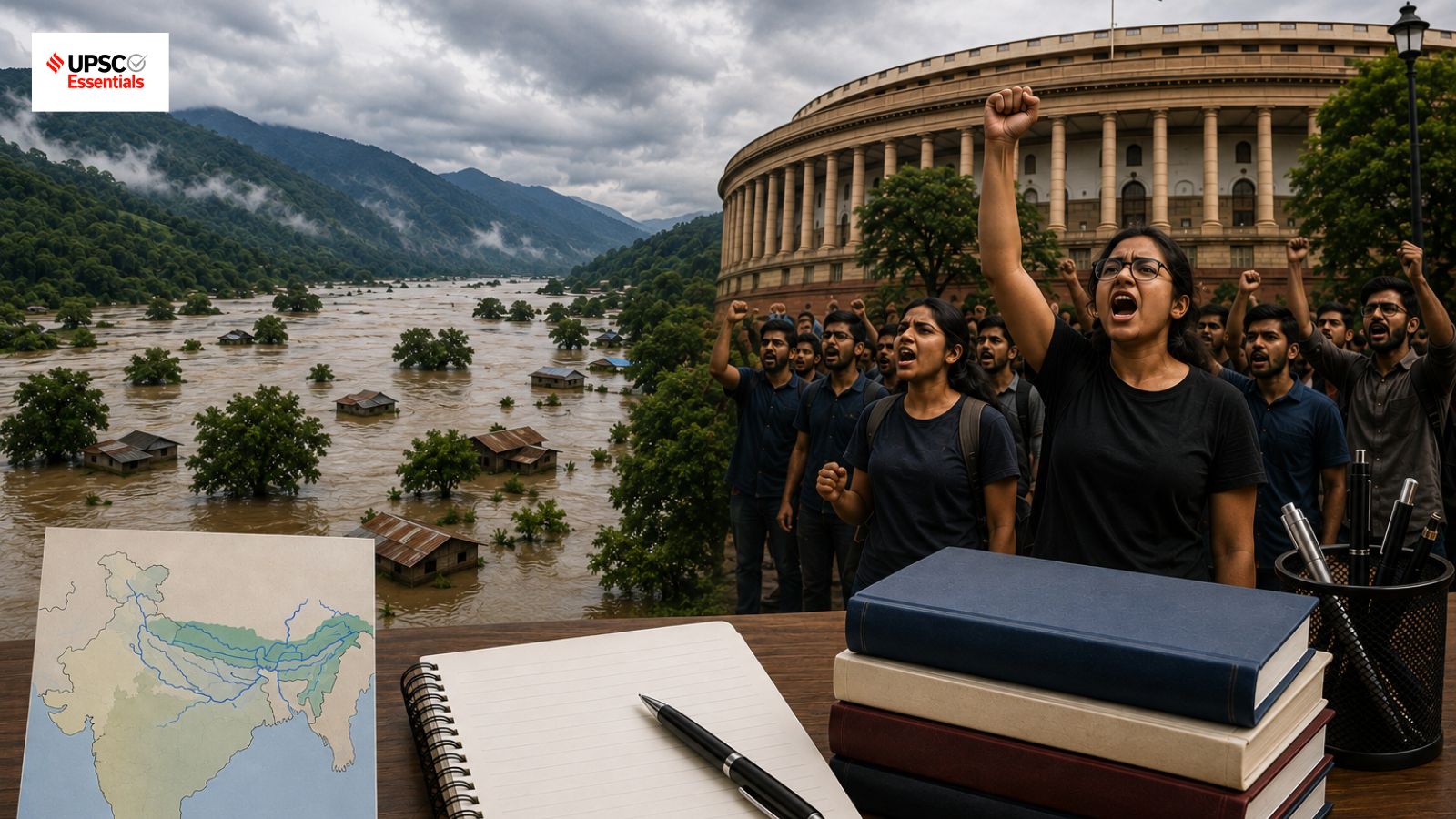
This story is about a study guide from a big Indian newspaper that looks at two serious problems in India.
The first problem is the Brahmaputra, a giant river that flows down from the Himalayas and often floods the state of Assam.
Flooding there is natural, but it is happening more often and more strongly now.
That is because of climate change, heavier rain, and things people do, like cutting down trees and building houses where the river likes to spread.
The guide says we should look after the whole river together, protect wetlands, and give people early warnings so they can stay safe.
The second problem is that many young people in India are unhappy and are protesting about exams and jobs.
They feel the exam system is unfair and that finding good work is very hard.
Young people use social media to organise quickly, and their protests can push leaders to make things fairer.
But if leaders do not listen, the protests could also cause division and spread false information.

The Brahmaputra basin is one of the world's most active river systems, with a dense sediment load, braided channels and a vast floodplain.
Floods in Assam are becoming more frequent and violent due to climate change, heavier monsoon rain, silt deposition, deforestation and encroachment on floodplains.
Suggested mitigation includes Integrated River Basin Management (IRBM), restoring wetlands and floodplains, and improved flood forecasting with early warning systems.
Youth-led protests in India are driven by exam irregularities, recruitment delays, transparency concerns, unemployment and underemployment, and social media mobilisation.
A protest over the NEET paper leak had entered Day 26; the analysis warns that unaddressed grievances risk societal division and misinformation.
- Who
- India's youth, including students protesting the NEET controversy, and communities in Assam affected by Brahmaputra basin floods.
- What
- An analysis of the geographical causes of increasingly complex flooding in the Brahmaputra basin and of the factors driving youth-led protests across India.
- When
- Not explicitly stated; the protest over the NEET paper leak had entered Day 26, and the study material references the July 2026 edition of UPSC Essentials.
- Where
- Brahmaputra basin in Assam, India; youth protests occurring across India.
- Why
- Floods are worsening due to climate change, heavier rainfall, sedimentation, deforestation and floodplain encroachment, while youth protest over exam irregularities, unemployment and declining institutional trust.
Reformist view
Cautionary view
Youth protests in India
Reformist view
Protests are valid democratic tactics for demanding transparency, accountability and responsive governance, and can drive reform of education and public institutions.
Cautionary view
Mobilisation through digital channels risks spreading disinformation, and if grievances are not handled, protests could deepen societal division.
Seasonal vs violent flooding
Reformist view
Floods have become more frequent and violent dangers caused by climate change and human actions such as deforestation, floodplain encroachment and mining, requiring intervention.
Cautionary view
Seasonal flooding is a normal hydrological process in one of the world's most active river systems, so it cannot be treated only as a disaster or fully prevented.
- Source
- Indian Express, UPSC Essentials, GS 1 Mains Answer Practice, Week 166
- Brahmaputra basin
- One of the world's most active river systems with a dense sediment load, braided channels and a vast floodplain
- Flood drivers
- Climate change, intensified monsoon rainfall, silt deposition, deforestation in upper catchments, floodplain encroachment, sand and stone mining
- Suggested mitigation
- Integrated River Basin Management (IRBM), wetland and floodplain restoration, basin-wide flood management, better forecasting and early warning systems
- NEET protest status
- Protest over the NEET paper leak had entered Day 26
- Protest drivers
- Exam irregularities, recruitment delays, transparency concerns, unemployment and underemployment, psychological stress, social media
- Noted implications
- Stronger democratic accountability, more civic participation, pressure for institutional reform; risk of division and misinformation if concerns are unaddressed