Archive · 20 Jul 2026
Night owls linked to higher belly fat and blood sugar

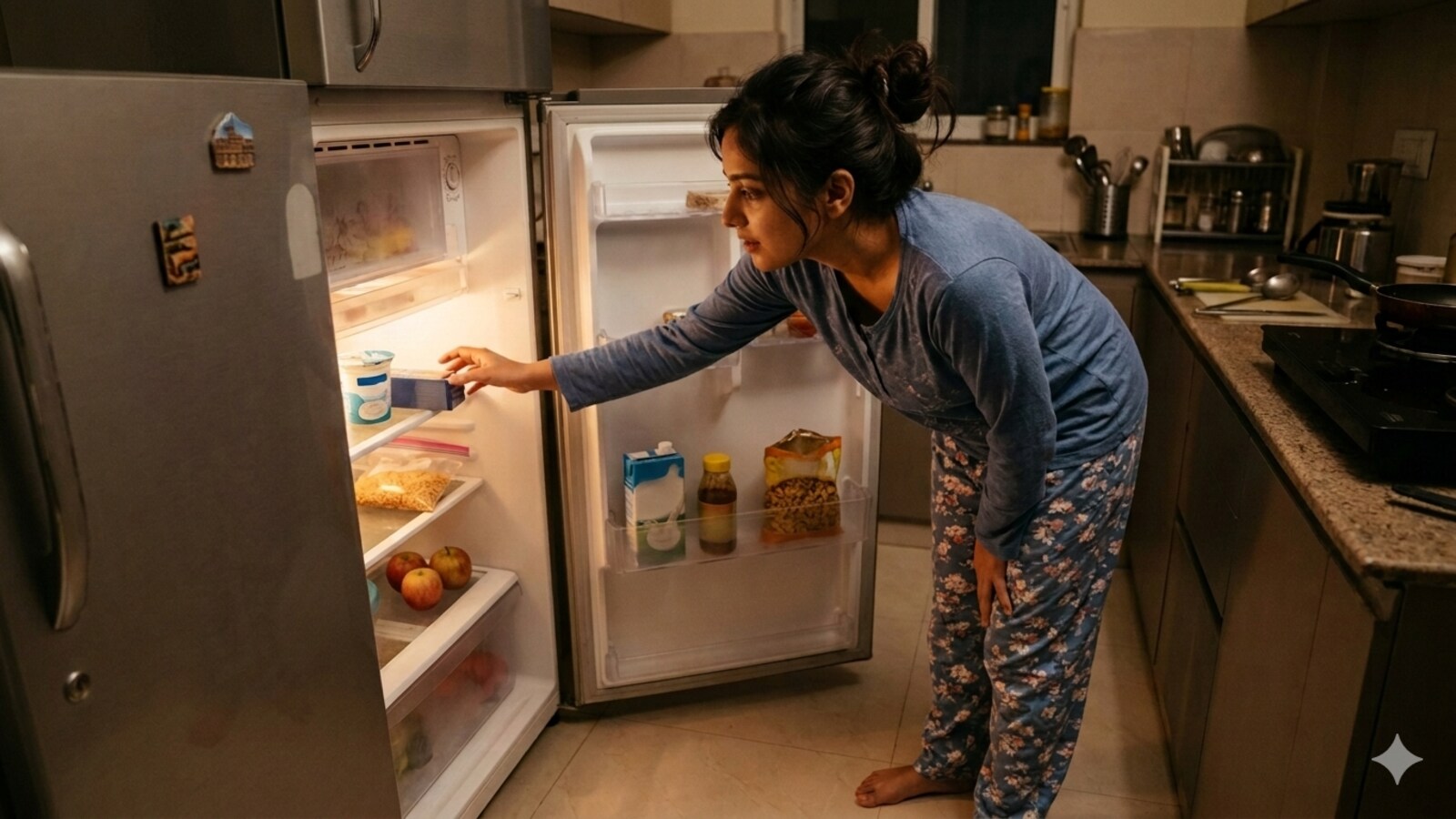
A study found that people who stay up late, called night owls, tend to eat more high-energy, high-carb, and high-fat foods late at night.
This can lead to more belly fat, higher blood sugar, and poorer health.
The study looked at 287 women and found that night owls eat less healthy food in the morning and more unhealthy food at night.
Eating late at night can make it harder for the body to use the food, leading to more fat storage and worse health.
The researchers suggest that eating earlier in the day could help night owls stay healthier.

Night owls consume more high-energy, high-carb, and high-fat foods late at night.
Evening types have higher body fat percentage, belly fat, and higher blood sugar levels.
Night owls have poorer lipid profiles and less favorable glucose regulation indicators.
Morning types consume more food in the earlier part of the day, while night owls eat more at night.
Targeting meal timing, particularly reducing late-night eating, could improve health outcomes for night owls.
- Who
- 287 women aged 18-45 from Europe and Pacific New Zealand
- What
- Study on the impact of chronotypes on eating habits and health
- When
- Study published in Frontiers in Nutrition
- Where
- Research conducted at Griffith University, Australia
- Why
- To understand the relationship between chronotypes, eating habits, and health outcomes
- Study Participants
- 287 European and Pacific New Zealand women aged 18-45
- Chronotypes Studied
- Morning types (early birds) and evening types (night owls)
- Key Finding
- Evening types consume more high-energy, high-carb, high-fat foods late at night
- Health Impact
- Higher body fat percentage, belly fat, blood sugar, and poorer lipid profiles
- Study Journal
- Frontiers in Nutrition
- Author
- Rozanne Kruger, Griffith University
- Key Recommendation
- Targeting meal timing, particularly reducing late-night eating, could improve health